Wolwefontein
Description
There is a legend that the place was named after British settlers discovered brown hyenas drinking from a nearby spring and that, mistaking the hyenas for wolves, named it accordingly. This seems somewhat unlikely though for two reasons; firstly, why would supposedly ignorant English-speakers name the place in Afrikaans (or Dutch) and, secondly and more importantly, “wolf” is Afrikaans for hyena. It is thus more plausible that the place had already been named (correctly) after the hyenas by Afrikaans-speakers before the arrival of the British.
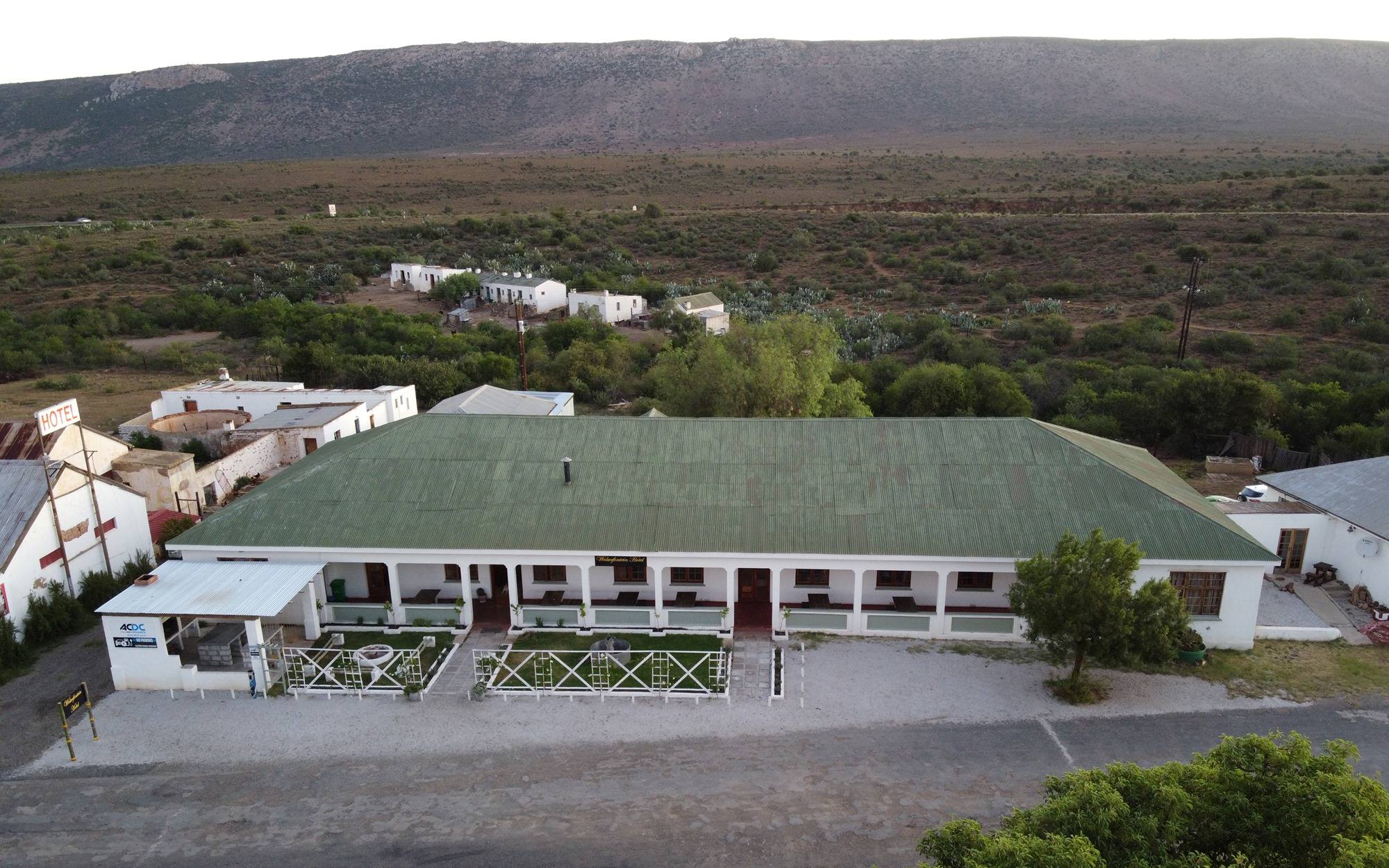
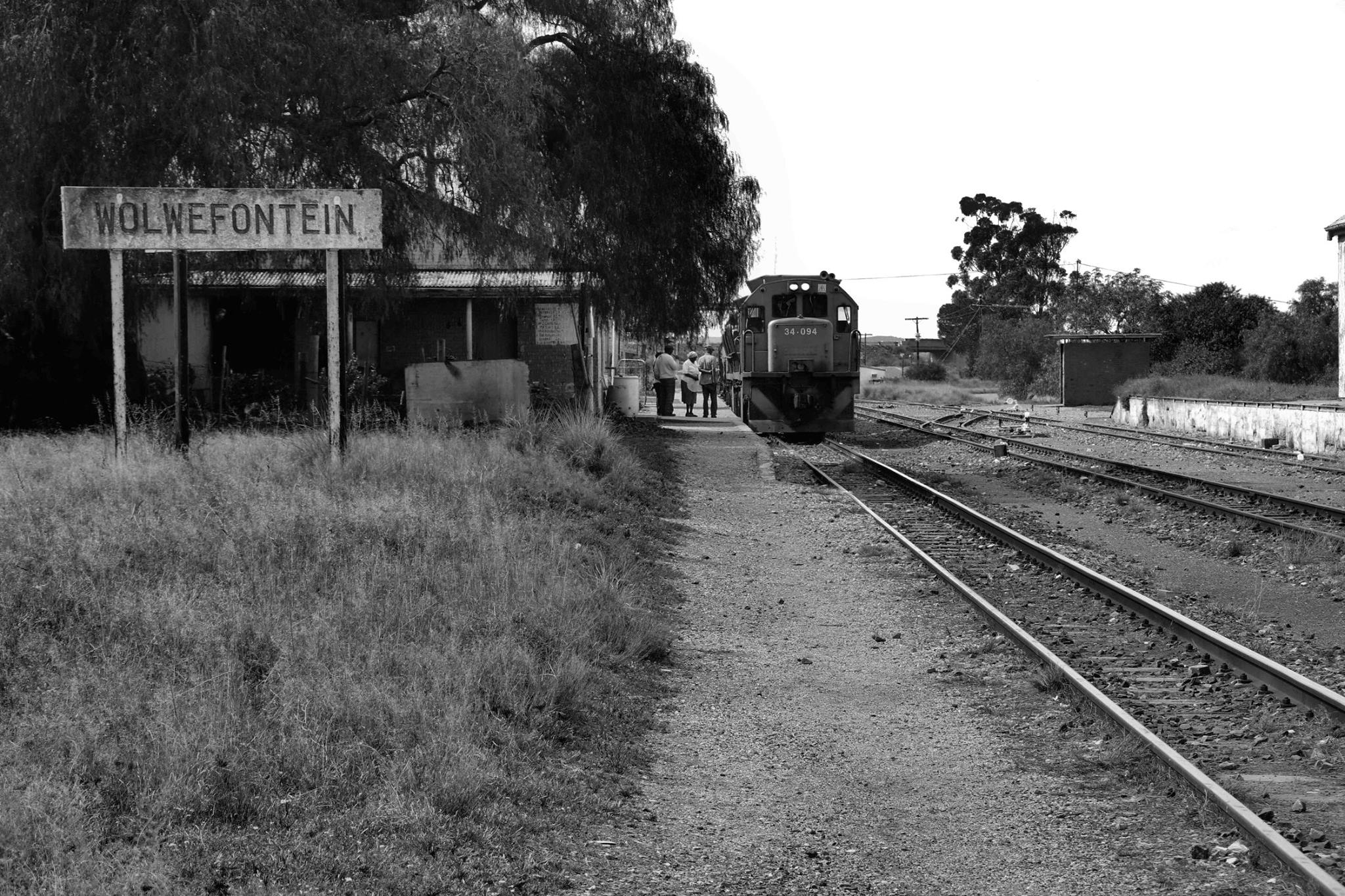
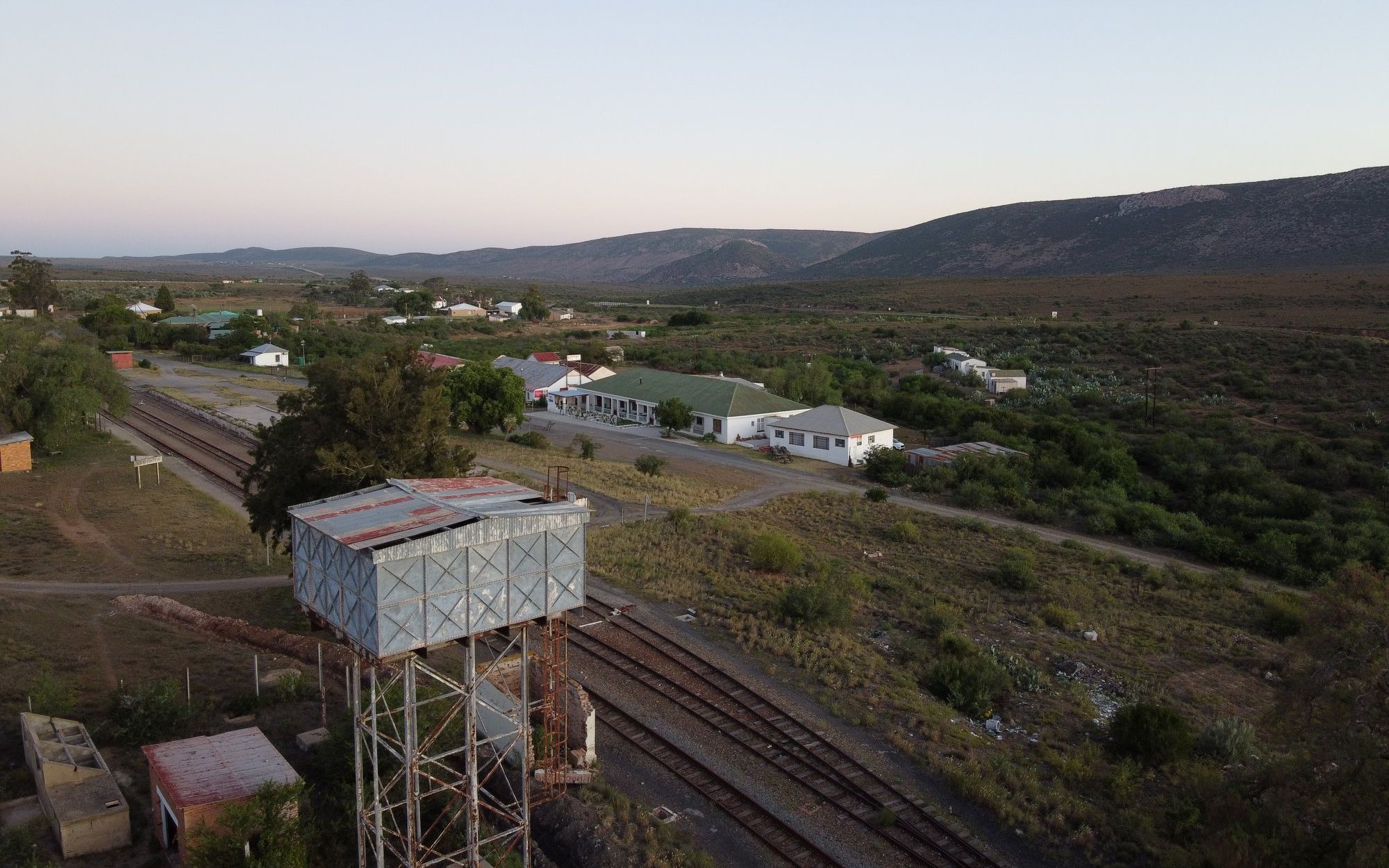
This first hotel was built in the 1890s to host travellers and pedlars along this route. The railway station followed in 1896 and soon became a focal point of the district and a social hub. Then came the second hotel, built in 1920 by local farmer, Harry Watson, and a young Jewish lad, Hymie Glazer, who arrived in town with only a donkey and £2 in his pocket. Finding Hymie to be a likeable young man, Harry took him under his wing and together they got going on building a new hotel. When it was finished, Hymie turned the first hotel building into a shop. From the outset, Hymie was keen to please his customers. He went out of his way to take care of their needs – nothing was ever too much trouble. Hymie dealt with all the passing smouse (pedlars) and bargained for the best prices. He developed the store into an excellent general dealership.
Wolwefontein Hotel, one of only four remaining railway hotels in South Africa, is the curator of many stories, some linked to the community and others to the railways. It was a popular stop for road travellers and for engine drivers. When the trains stopped at Wolwefontein to take on water at the station, the drivers often nipped up to the hotel to quench their own thirsts.