Karoo Heartland

The Graaff-Reinet Jewish community

The Graaff-Reinet Jewish community

FIRST JEW TO ARRIVE IN GRAAFF-REINET

Graaff-Reinet’s Jewish population was always small. It fluctuated with the prosperity of the village, but among the Jews who settled there were some who played major roles in South African history.

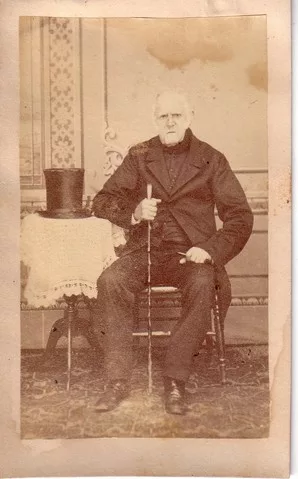
Isaac Baumann (who became one of the first mayors of Bloemfontein in 1849) was the first Jew to arrive in Graaff-Reinet. He came from Hesse-Cassel in Germany in 1837 and, once he had settled, he opened a trading store. Two years later, he was joined by relatives, Joseph Baumann and his wife, Rosa.  By 1854, his brothers Jacob and Louis had arrived and soon they were joined by another brother, August, and his wife Bertha, who arrived in 1862 and remained in Graaff-Reinet for almost 30 years. Among prominent family members were Dr Emil Baumann, an authority on child care, who became a Member of Parliament in 1933 and Richard, who established the law firm, Baumann & Gilfillan in Johannesburg in 1902.

The Mosenthal brothers, Adolph and Joseph, also from Hesse-Cassel, came to South Africa in about 1842 and they also settled in Graaff-Reinet where they set up their mercantile business. In time, it had a network of enterprises spanning almost the entire Eastern Cape/Karoo.  To staff these businesses and help them run their empire efficiently, they brought out scores of family members and friends. Among them were the Lilienfeld, Hanau, Hotfa, Alsberg, Nathan and Weinthal families. Edward Nathan served as mayor of Graaff-Reinet from 1862 to 1865; Emil Nathan became a prominent lawyer in Johannesburg and a member of the House of Assembly in 1910 and Dr Manfred Nathan became an Income Tax Court judge. He was also the author of several works on South African law and history and served as president of the Jewish Board of Deputies in 1906. Leo Weinthal became a well-known writer and journalist. He founded the Pretoria News in 1898. The Mosenthal’s also brought a Pole, Phoebus Caro, to Graaff-Reinet in 1856 after he survived a shipwreck.

OTHER PIONEERS

Among other Jewish pioneers of the 1850s and 1860s were the Benjamin brothers – Joseph and Michael Henry, who was elected to the Cape House of Assembly in 1864. Then came Maurice and Louis Joseph, Hermann Wertheim and a man called Rothschild. The town’s Hebrew congregation, the third to be established in South Africa was founded around 1850.   Ground for a Jewish cemetery, now one of the oldest cemeteries in South Africa, was granted by the governor, Sir George Grey and consecrated in 1858.  It was proclaimed a national monument in 1985, states the Jewish Digital Archives project. Over the years many Jewish settlers, came to the Karoo. Mostly they were from Germany and England, but only a few remained in the area because the region suffered through depression, war and droughts.

The Jewish population of Graaff-Reinet dwindled and almost died out during the 1880s, but it was revived again between 1890 -1910 with a new wave of immigrants, mostly from Lithuania and Latvia, where anti-Semitism was rife. Among those who came from Lithuania were the Balkind, Brett, Levy, Lipschitz and Michelson families. From Latvia came the Nurick, Rubens and Suttner families; the Herbsteins came from Rumania (Moritz Herbstein was the first chairman of the local Zionist Association, founded in the late 1890s and soon Graaff-Reinet became the centre of Jewish and Zionist life. His son, Mr Justice Joseph Herbstein was a judge of the Supreme Court in Cape Town from 1947 to 1963); the Gruss family came from Austria; the Bregers from Galicia; and John Ruben from England. The numbers of Jews in this part of the Karoo were boosted at the turn of the century by the Boer War when refugees from the then Transvaal poured into the region, but once again, in time, poor economic prospects forced many Jews to leave Graaff-Reinet.

RISE OF THE PEDDLERS

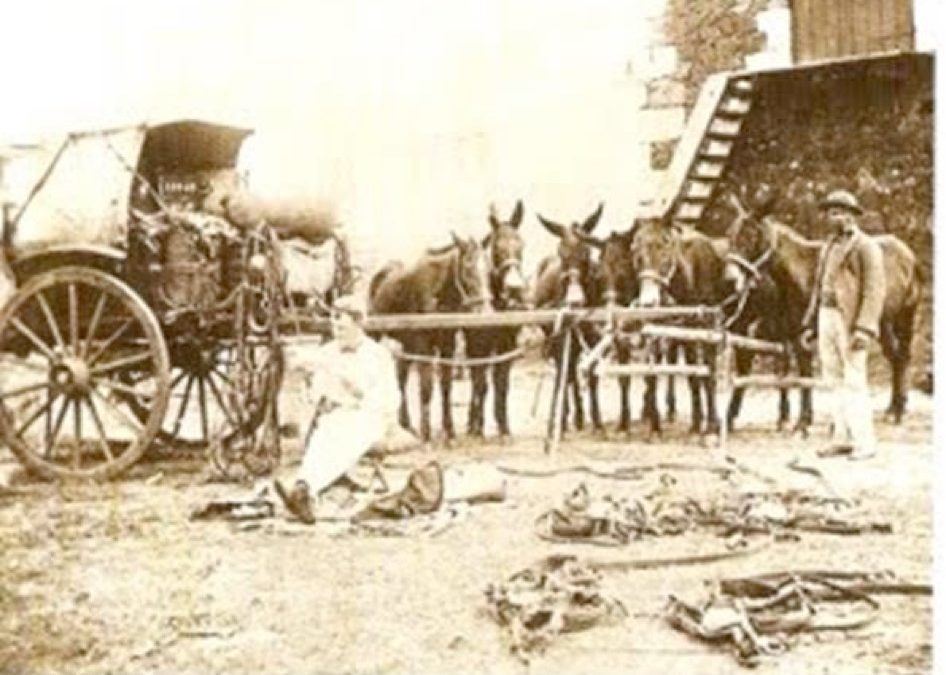
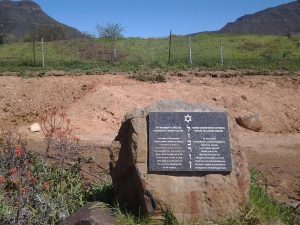
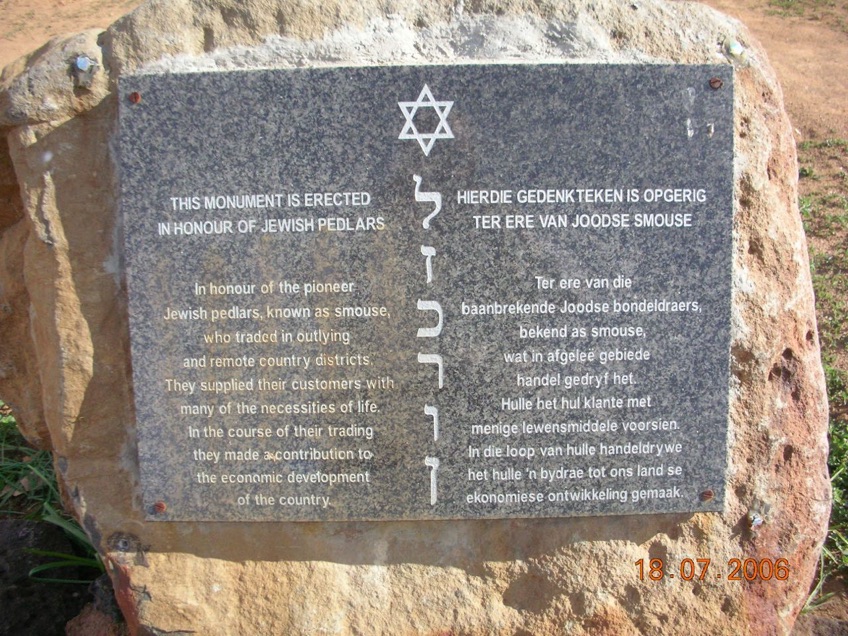
As sheep and goat farming increased in the Graaff-Reinet area so did wool and mohair production. The town’s most prosperous early years were from 1850 to 1860. During this time two Jewish doctors arrived as well as some traders, merchants and shopkeepers, including a butcher, furniture dealer, garage and bottle store owners, hoteliers, a cinema proprietor, accountant, solicitor and town engineer, soon joined the ranks. The Rosenthal’s trading stores led to the rise of Jewish peddlers. Known as ‘smouse’, they popped up across the Karoo and a monument honouring them was erected in Graaff-Reinet in 1989.

Others Jews to arrive in the Karoo included the Solomon, Raphael and Horwitz families. Harry Solomon became a member of the first Transvaal Legislative Council in 1903 and president of the Jewish Board of Deputies in 1904;  Frank Horwitz was a town councilor for 25 years and  twice elected mayor of Graaff-Reinet; and Sylvia Raphael was an Israeli Intelligence agent who served 22 months in a Norwegian jail in 1974 for her role in the murder of a suspected Black September terrorists.  Community records indicate that there were 37 Jewish families in Graaff-Reinet in 1875. The highest recorded number of Jews in this town was 82 in 1904.

Source – https://kehilalinks.jewishgen.org/graaff_reinet/Rose.html

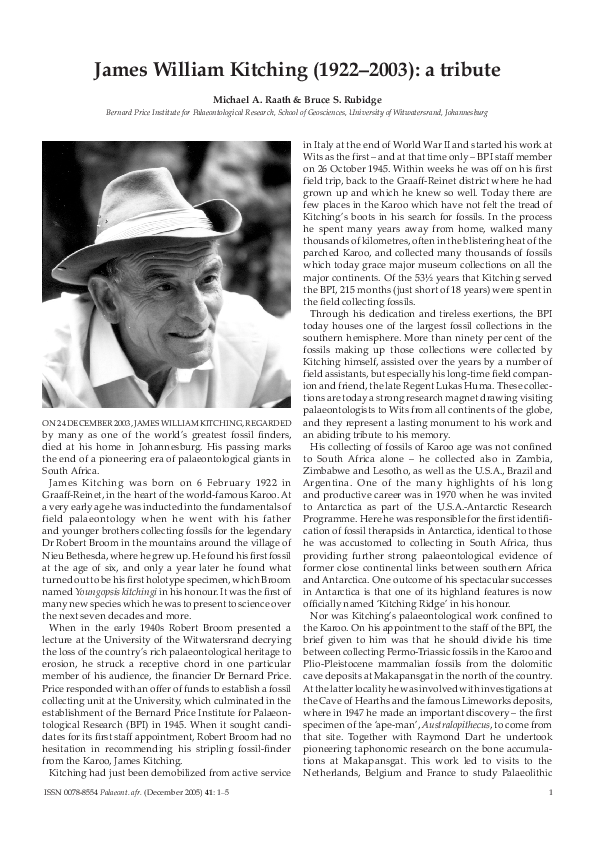
James Kitching – Legendary fossil hunter of the Karoo

James Kitching – Legendary fossil hunter of the Karoo

As you walk around the Kitching Fossil Exploration Centre in the Karoo village of Nieu-Bethesda, you will see, among all the grinning skulls of ancient beasts, a battered old hat on display under glass.

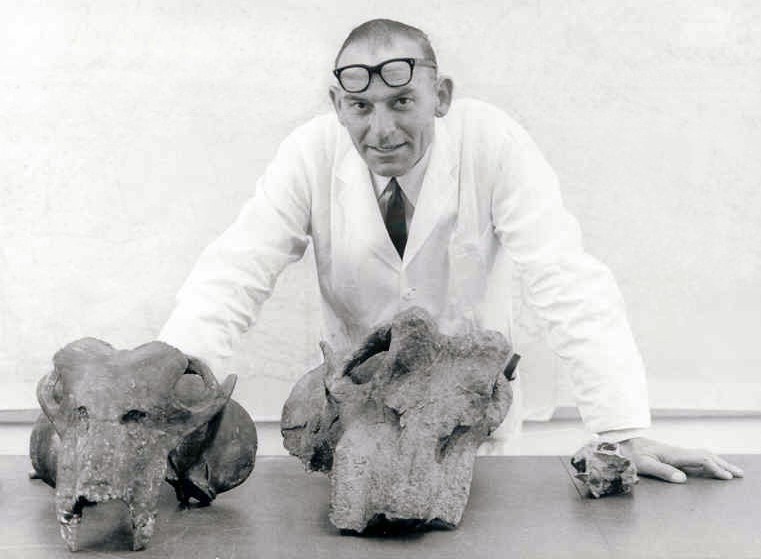
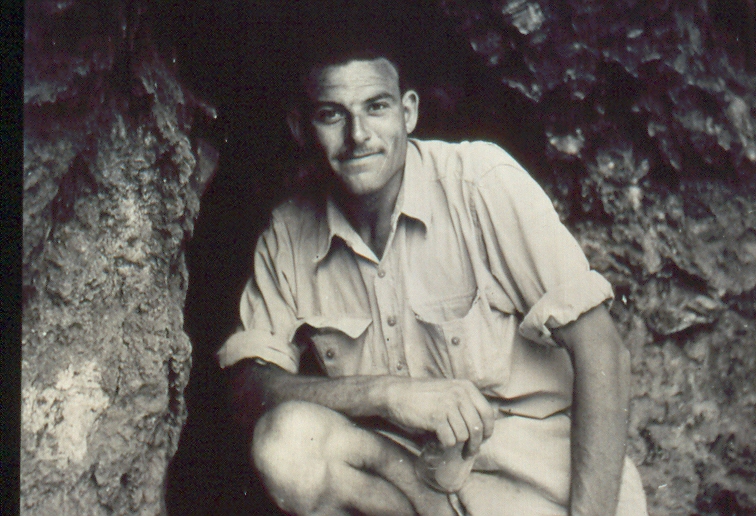
It’s the hat of the man who helped confirm the theory of continental drift, and who had an ancient lizard-like species named after him when he was only a lad of 7. He was also known as the ‘grand old man of Karoo palaeontology’ – James Kitching, South Africa’s king of old-bone detectives. He grew up in what some call South Africa’s ‘palaeontological paradise’: the mountains and valleys around Nieu Bethesda, in Eastern Cape province. His dad was Croonie Kitching, a local road builder, who was always collecting bones and stones during his working day. Croonie roped young James in to hunt for fossils, and the 7-year-old soon found his first new species, which was then named Youngopsis kitchingi.

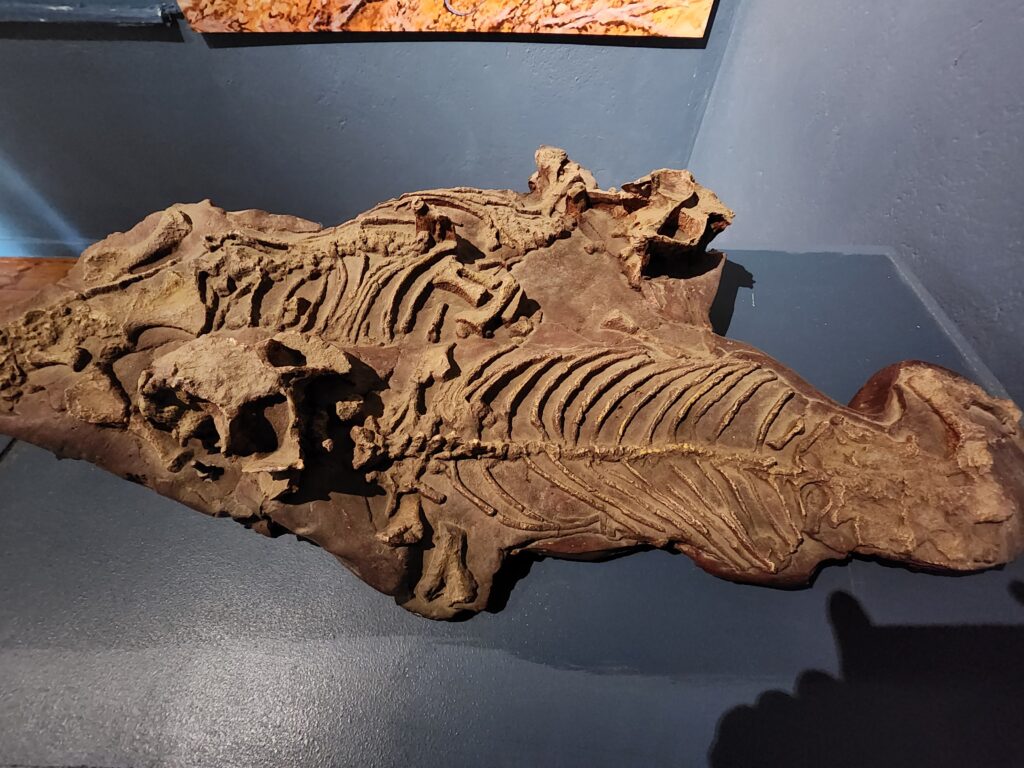
After World War II, James went to work as a fossil hunter for the brand-new Bernard Price Institute for Palaeontological Research at the University of the Witwatersrand in Johannesburg. But his real ‘office’ was 800km south, in the vastness of the Karoo. For decades, working on more than 900 sites, Kitching and his devoted field staff combed the Karoo for fossils. He was also famous for growing fresh vegetables and sourcing the best meat cuts wherever he camped. Visitors would describe a Kitching camp as being a beautiful little patch of green in the middle of the brown Karoo. Kitching developed a deep insight into life in the Permian Period, populated by mammal-like reptiles called therapsids. This was a crucial time, more than 251-million years ago, when reptiles began evolving into mammals. And Kitching was on their case – he was almost superhuman in his ability to spot a fossil lurking deep in a rock formation.


Not only did he find thousands of important pre-dinosaur fossils from more than 250-million years ago, but Kitching also established compelling evidence for the theory of continental drift. Nowadays, it’s not a controversial idea that Africa was once part of a much larger land mass (which we call Gondwana) that included Antarctica, India, South America and Australia – but in the 1970s, established science was still arguing about the ‘shifting continents’ theory fiercely.  At one stage, there was a lot of debate about whether Gondwana had ever existed, so Kitching was recruited to fly from Africa to Antarctica and look for fossils common to both continents. And it was there, on a rocky shelf with snow falling all around, that he and US colleague James Collinson found the fossilised skeleton of Thrinaxodon, just like the one Kitching had found near Bethulie in South Africa’s southern Free State.

Interviewed by the prestigious New Scientist magazine in 1996, Kitching had this to say about the length and breadth of his travels: ‘My colleagues here tell me I’ve walked the equivalent of three times round the globe, but I don’t believe them. I’d say it was only about once round the world…’

Read more about James Kitching on Wikipedia

Sandra Antrobus of Cradock: A tribute

Sandra Antrobus of Cradock: A tribute

https://www.litnet.co.za/sandra-antrobus-of-cradock-a-tribute/

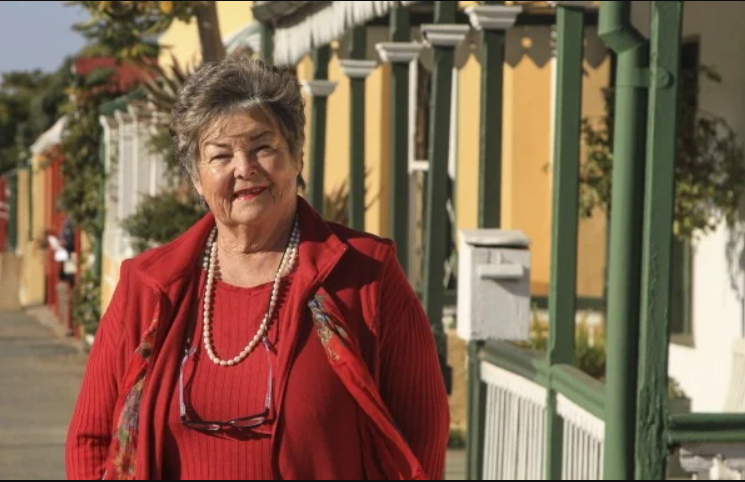
Sandra Antrobus, a local farmer’s wife who restored an entire Victorian streetscape of houses in Market Street, Cradock. Her legacy remains in every one of these beautiful buildings.

The restored streetscape of Die Tuishuise and Victoria Manor Hotel is Cradock’s most recognisable tourism and heritage asset, along with the Great Fish River, the Mountain Zebra National Park and the gorgeous Moederkerk. It would never have happened without the love and passion of a local farming couple, Sandra and her husband Michael.

Market Street’s Tuishuise and the Victoria Manor Hotel stand as a legacy to Sandra Antrobus’s vision and passion.

When Sandra Moolman of Middleton near Somerset East married Michael Antrobus of Cradock in 1968, they set up home together at Longacre Farm on the banks of the Great Fish River, owned by his family since 1918. The farmhouse where they raised their children (Cherie, Lisa and Philip) is one of the oldest buildings in the district. The inner core of it was completed in 1794, a full 20 years before Cradock was founded. It has yellowwood ceiling beams the exact length of the wagon that originally transported them. Like most such buildings, it was added to in piecemeal fashion to accommodate growing families over the centuries.

It was clear to Sandra that the velour and vinyl furniture of the early seventies would never look right in such a venerable home. So it was Longacre that fired her lifelong passion for period furniture, antiques and their harmonious relationship with classic Karoo and Victorian building styles.

In 1975, a picturesque farmhouse called Doornhoek, within what is now the Mountain Zebra National Park, was chosen as the setting for one of the first filmed versions of The story of an African farm, arguably Olive Schreiner’s most famous book. Many locals from the Cradock district, where Schreiner had written her book, were used as extras – including Sandra’s older daughter, Cherie. A few years later, Sandra was asked to help restore the farmhouse, first built in 1838. Now a national monument, it remains one of the park’s most popular accommodation options.

Then came the 1980s, a decade when her life and that of Cradock would intersect and change forever.

From pumpkin beginnings

It all started when her husband, Michael, decided to plant pumpkins. But just before harvest, the beautiful vegetables were ruined by a hailstorm. Rather than waste them, the couple thriftily brought in some pigs to eat up the bounty.

Sandra made a profit selling the pumpkin-fat pigs, and with this windfall she bought up some period furniture. By now, she had restored the Longacre farmhouse and a building in Cradock “which was in total ruin”. This became her new antique store, called Die Wakis (The Wagon Chest).

Self-taught and passionate, Sandra became a home-grown expert on Karoo building styles, their escutcheons, and Bible-and-cross doors and architraves. She was a regular at the auctions and antique shops around the heritage-rich Eastern Cape.

Schreiner House

From 1868 to 1870, a young Olive Schreiner lived in a brakdak-style Karoo house in Cradock with her siblings Theo, Ettie and Will. In the mid-1980s, an insurance company bought the building and asked Sandra and other experts to help restore the house to what it would have looked like a century before, when the Schreiners lived there. The house, now a national monument, was later donated to the National English Language Museum, now Amazwi (the South African Museum of Literature).

“While I was working on the Schreiner house in Cross Street, I would drive there via Market Street, and I itched to restore all those other old cottages.”

Most of the residences in Market Street were built in the 1850s and had once belonged to artisans who made and fixed wagons, wheels, whips and harnesses. As time passed, schoolteachers and bank managers moved in. It was a thriving and interesting part of town, but sank into a spiral of neglect for decades after the national railway system and the motor car replaced horses and ox wagons.

Sandra bought one old house for a song, then another and another, restoring them with no precise goal in mind. But things became much clearer when a rather avant-garde movie was filmed in Cradock. Released in 1987, An African dream starred John Kani and was about friendship and relationships across colour lines. By then, Sandra had renovated the first cottage in Market Street and called it Victoria House. But it wasn’t nearly enough for the 50 people who made up the film crew and actors.

“I hired and furnished houses for them all over town. It was a tremendous injection of income into Cradock.”

The film had the effect of making Sandra think bigger. She and Cherie worked side by side, renovating more houses, and accommodating and feeding tourists.

The magic street

Today, the Tuishuise complex embraces about 30 houses and cottages, an entire preserved streetscape unique in South Africa. Each house is like an authentic Karoo home, and just as welcoming.

Sandra could often be seen in Market Street with a team of handymen, constantly maintaining Die Tuishuise and Victoria Manor Hotel.

Few truly appreciate how much dedication to detail this took. Many of the houses had been clumsily modernised over the years, several sporting inappropriate metal-frame windows. These had to be replaced with original sash windows – more than 100 of them – along with about 50 Bible-and-cross doors.

The Victoria Manor Hotel at the end of the road, also built in the 1850s, degenerated into a bit of a dive until Sandra bought it in 1994. She really only wanted the kitchen and dining room section. But she couldn’t resist fixing up the rooms, one by one.

Sandra Antrobus and her two daughters, Cherie and Lisa.

Lisa Ker and husband Dave signed up with the business in 2004, handling the marketing, staff and administration. Cherie also rejoined a few years later, taking charge of the kitchens and bar.

It wasn’t only Market Street that Sandra worked on. She also fought hard to preserve Cradock’s heritage, preventing many historic houses from being knocked down or insensitively altered. She was the force behind Cradock’s Heritage Committee.

A family affair

“So it is a real family enterprise of old-fashioned Karoo values, hospitality and heritage,” Sandra once told us. “We know we can trust one another.”

The Tuishuise and Victoria Manor support no fewer than 40 staff – a major job creator for a small town like Cradock. Some of them have been here for more than 20 years.

“For every guest at all times, there is a friendly smile, a helpful touch and time to chat. This is the real magic of our hotel,” said Lisa.

Houses that are over 150 years old often need tweaks and repairs.

Few people of any age could keep up with Sandra. She was a woman powered by tea, starting with the five cups that Michael made her every morning. This was their special time together. Then she would be off and running. By 8:30 am, while guests were having breakfast, Sandra was walking up and down the street checking what needed to be done, after having a quick chat with night porter Vernon Douglas.

In the afternoon, Sandra would usually be found sitting at a small table in the reception area, welcoming arriving guests in person, going over the rooming list and having intermittent meetings with Lisa, Cherie, Dave and the hotel’s unofficial majordomo, Amos Nteta.

They brought us to the Karoo

Our connection to Michael and Sandra Antrobus began in 2003, while we were on a magazine assignment through the Eastern Cape and staying overnight at Die Tuishuise. We interviewed them over a long, at times hilarious, lunch out at Longacre Farm.

Michael and Sandra Antrobus on the banks of the Great Fish River, which runs past their farm, Longacre.

This extraordinary couple made such an impression on us that within a few hours, we were thinking: these are the kind of people we want to live with. They were kind, humorous, gracious, hospitable, plucky, well informed and generous with their knowledge. It was not long before we bought a house in Cradock, made the permanent move from Joburg and put down roots in this little river town.

The best mentor

Over the years and during all manner of extended road trips and local adventures together, Michael became a special mentor to us. There was so much going on in his head. He could recite poetry from Guy Butler, he could name the geological layers and special qualities of the Karoo Supergroup, he knew the arcane names of fossils, he told us not only about the grasses but about their various uses, and he pointed out the palatable bossies in the veld.

We called him a philosopher-farmer, but in reality Michael Antrobus was much more. Much more. He saw the whole picture, how the geology and the soil and the biodynamics underpinned everything. He delighted in lending us books he thought might help us really get to know the Karoo.

Michael observed everything. He remembered conversations from long ago. He taught us about the issues that plagued local farmers. He delighted in making puns, both crackingly funny and excruciatingly bad.

The Mountain Zebra National Park out there on Cradock’s doorstep was, in Michael’s opinion, just one of the finest in the country, especially from a scenic point of view. He told us how the English played chess up in the steeple of the Moederkerk and out at Saltpeterkrans, heliographing their moves to one another, and how the local boers, who spoke excellent English, would intercept the messages.

When he and Sandra moved to town, he referred to himself as a second-hand farmer.

“What can an old farmer do? Well, as a friend of mine said, we can still count sheep, but they must darem come slowly.”

And each time we published a new book on the Karoo, Michael and Sandra always got the very first copy, handed over with love and admiration.

Sandra Antrobus in front of the 40 Something, one of the distinctive Tuishuise cottages of Market Street, Cradock.

Michael passed away on 16 July 2018 and Sandra on 8 April 2025. But their legacy will live on in Cradock’s Market Street, through their legendary hospitality and via their children.

John Kepe, the Bandit of the Boschberg

John Kepe, the Bandit of the Boschberg

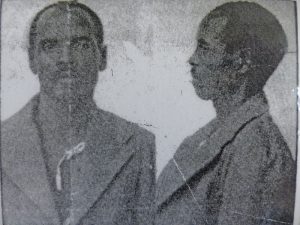
During the late 1940s and early 1950s a notorious vagabond called John Kepe had the town of Somerset East up in arms with a series of petty burglaries, incidences of stock theft and mountainside muggings on the locals.
John Kepe
By the year 1950, local police were logging approximately one incident a week of stock theft and house burglaries from farmers in the Boschberg area. In the meantime, Kepe had succeeded in keeping his true identity as the mysterious Boschberg outlaw a secret. He came into town from time to time to socialise at the community drinking hall and would even join search parties and go on the hunt for himself. John Kepe had garnered a reputation among locals. He lived in a secret cave up in the Boschberg and stashed all his ill-gotten gains in another cave nearby.
John Kepe
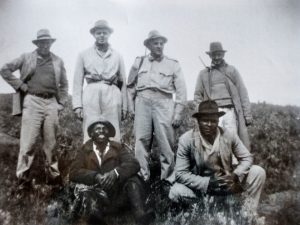
In December 1951 Kepe killed a shepherd and the search for him was stepped up. On the night of 25 February 1952, he was arrested in an ambush and later found guilty by a court of law and executed by hanging at the Pretoria.
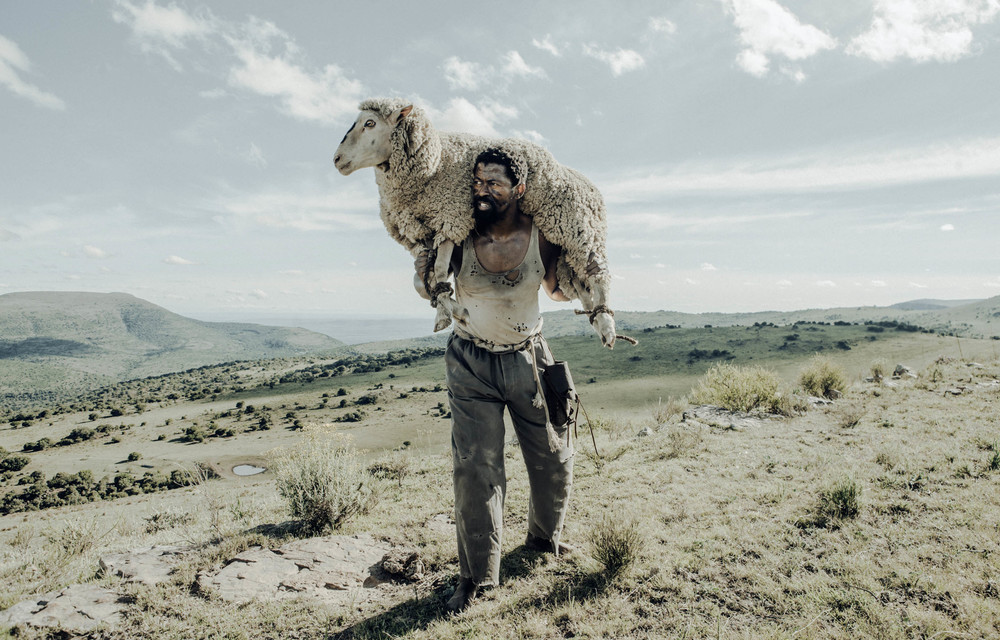
A film called “Sew the Winter to My Skin” based on the story of Kepe came out in 2018.
John Kepe
Robert Hart – Father of Somerset East

Robert Hart – Father of Somerset East

The early history of Somerset East and Glen Avon Farm is tied to the history of Robert Hart.
When Robert Hart stepped off a boat at the Cape of Good Hope in 1795, he was 18 years old, a private in the Argyllshire Highlanders and penniless. Yet this young Scottish lad was destined to play a major role in taming the old Cape colony’s wild eastern flank. After surviving the dangers of being a soldier on the turbulent eastern frontier, he took a short break in England before returning to the Cape Colony in 1807 as a commissioned officer in Colonel Graham’s newly formed Cape Regiment.
By now he was also married to Hannah Tamplin, and the couple settled at the military base that later became Grahamstown. After a while, Robert took over Somerset farm, established in the Zuurveld by the government to supply the army. While there the Harts welcomed the Scottish party of 1820 settlers who ventured inland to the Baviaans River valley. Those were tough times for the Scots, but luckily they had a helpful friend in Robert.
In 1825 Somerset Farm was shut down and the land was set aside for the new town of Somerset East. Left with a small state pension, Robert Hart moved with his family to land he had acquired a short distance away in a fertile valley below the Bosberg. A beautiful place he named Glen Avon.
 
Through hard work and great insight, he soon made his farm a landmark in the region. He bred top merino sheep, a breed introduced to SA by Colonel Graham, and so contributed greatly to what became an important industry. His orchards produced a fantastic bounty of fruits, especially citrus, and his flood-irrigated fields delivered huge harvests of grain that soon justified a private mill. The machinery for this was shipped out from Scotland and then transported by ox wagon from Algoa Bay over the Zuurberg Pass. The mill could produce two tons of meal a day and soon Robert was grinding all the wheat grown between Pearston, Ann’s Villa and Zwagershoek.
The amazing legacy of Robert Hart, who died in 1867 at the ripe old age of 90, is remarkable because everything has been so well looked after by his direct descendants. Their dedication preserved the old mill and the two homesteads as well as Hart Cottage.
 
But who and what was Robert Hart?
Robert Hart, II
Birthdate: January 05, 1777
Birthplace: Strathaven, Avondale, Lanarkshire, Scotland (United Kingdom)
Death: September 14, 1867 (90)
Place of Death: ‘Glen Avon’ Farm, Somerset East, Cape Colony, South Africa
Place of Burial: Cape Colony, South Africa
Immediate Family:
Son of James Hart, III and Isabel Hart
Husband of Hannah May Hart
Father of Ann Stretch; Harriet Hart; Susannah Hart; Robert Hart, III; Caroline Hart; Cecilia Hart; Margaretha Birt. Fleischer; Eleanor Evelyn Pringle; Sarah Elizabeth Bowker (Hart); Richard Hart and Lieut. James Hart IV
Brother of Andrew Hart and Grizel Campbell (Hart)
Occupation: Soldier (Captain), Farmer and Businessman
    
Sylvester the Lion – the Karoo escape artist

Sylvester the Lion – the Karoo escape artist

The Karoo National Park is famous for many wonderful reasons, however in 2015 the most famous reason would be the grand escape of Sylvester the lion.

The story begins during the night of the 4th June 2015 when a 3-year-old lion escaped from the Karoo National Park, triggering a long and arduous chase lasting 24 days. This event had the nation watching and waiting with bated breath and saw the start of a wild goose chase involving many devoted individuals, sniffer dogs and even a couple of helicopters and a microlight.

The first day’s spoor was picked up and it was gathered that Sylvester had more than likely escaped through a gully on the western side of the Park after rain had caused the fence to lift.

By day 3 the media had run with the story and Sylvester was now a nationwide sensation. By now a select team of SANParks’ trackers, Honorary Rangers and various people had “noses” to the ground and were in hot pursuit of their wanderer. By day 12 the action started to increase as the spoor was picked up along the plateau above the Nuweveld Mountains.

Day 15 saw a Gyrocopter and microlight taking off in the hopes of getting an aerial view of Spook. A dog handler and the state vet from Beaufort West, were also brought on-board at this stage. By day 18 the SAPS (South African Police Services) from Fraserburg had joined the search with everyone putting their heart and soul into this great search.

On the 24th day Sylvester had travelled approximately 371km and had been spotted a mere 4 times in the search, killed 27 sheep, 1 kudu and 1 Nguni cow. The start of the capture began about 20km from the Karoo National Park along the steep cliffs of the Nuweveld Mountains. Sylvester was finally darted by Dave Zimmerman, a SANParks’ veterinarian, from within a helicopter. He was then loaded into a sling while the helicopter hovered dangerously close to the edge of the mountain
with blades no more than 2m from the edge – a risky heart-stopping moment for all.

Sylvester was flown back to the Karoo National Park and released into an enclosure for a wellness check. He survived his walkabout in good health and has been fitted with a tracking collar.

The other male lions within the Karoo National Park were making life very difficult for Sylvester, therefore, provoking his intention to roam. When Sylvester managed to escape from the Park again within a matter of months, fearing for his life SANParks made the decision to move Sylvester.  It was then that Gerard De Lange, conservation manager at Kuzuko Lodge, stepped in and offered Sylvester a home on the reserve bordering the Addo Elephant National Park.

Sylvester

As of the end of May 2016, he arrived at his new 15,000 ha home. Sylvester had no trouble making friends and finding love. He quickly bonded with two lionesses in the reserve and formed a coalition with a younger male lion named Fielies. He grew especially close to his favourite lioness, Angel, and in June 2018 she gave birth to two cubs.

Kuzuko’s game drives have almost daily sightings of Sylvester. The infamous escape artist also kills regularly and has seemingly developed quite the appetite for adult eland bulls.

Sources:
https://www.south-africa-info.co.za/country/article/1255/the-great-escape-and-capture-of-sylvester-spook-the-lion
https://www.kuzuko.com/sylvester-the-lions-new-life-in-addo/