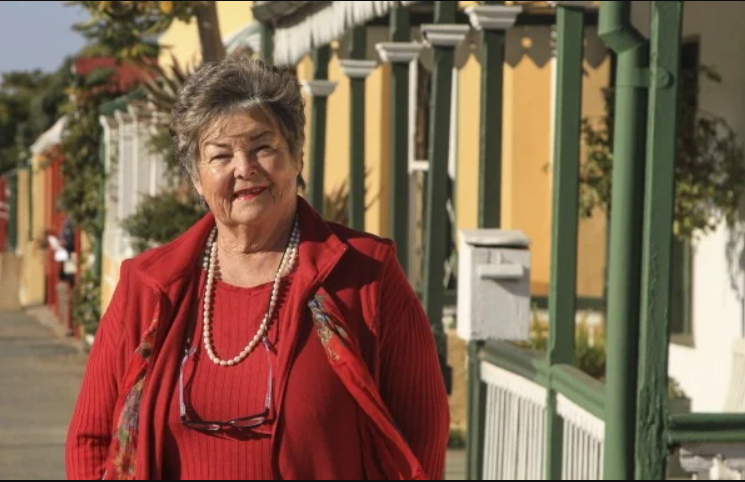

Sandra Antrobus, a local farmer’s wife who restored an entire Victorian streetscape of houses in Market Street, Cradock. Her legacy remains in every one of these beautiful buildings.
The restored streetscape of Die Tuishuise and Victoria Manor Hotel is Cradock’s most recognisable tourism and heritage asset, along with the Great Fish River, the Mountain Zebra National Park and the gorgeous Moederkerk. It would never have happened without the love and passion of a local farming couple, Sandra and her husband Michael.

Market Street’s Tuishuise and the Victoria Manor Hotel stand as a legacy to Sandra Antrobus’s vision and passion.
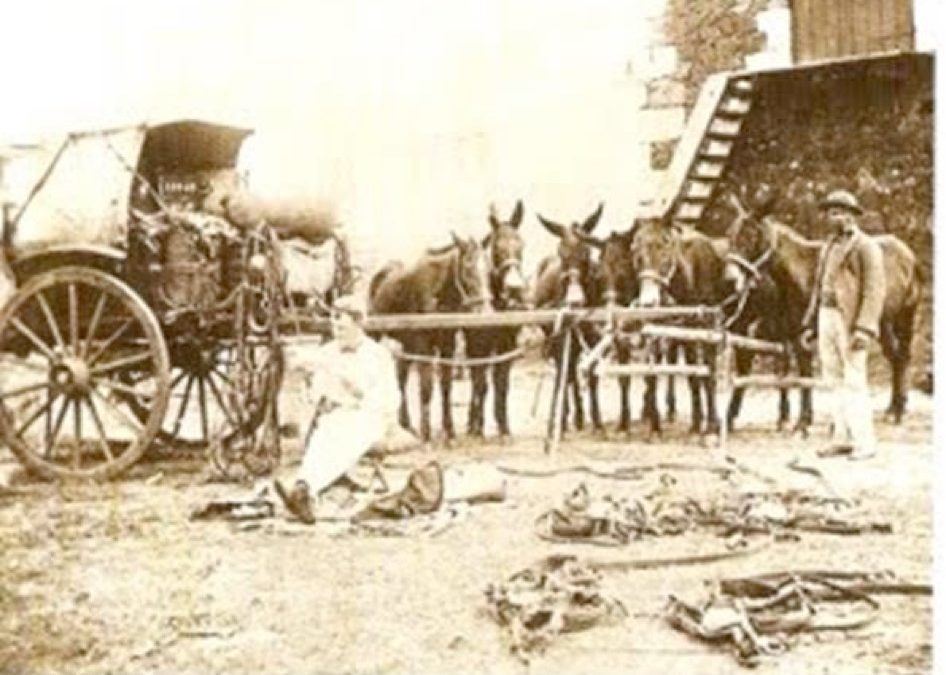
When Sandra Moolman of Middleton near Somerset East married Michael Antrobus of Cradock in 1968, they set up home together at Longacre Farm on the banks of the Great Fish River, owned by his family since 1918. The farmhouse where they raised their children (Cherie, Lisa and Philip) is one of the oldest buildings in the district. The inner core of it was completed in 1794, a full 20 years before Cradock was founded. It has yellowwood ceiling beams the exact length of the wagon that originally transported them. Like most such buildings, it was added to in piecemeal fashion to accommodate growing families over the centuries.
It was clear to Sandra that the velour and vinyl furniture of the early seventies would never look right in such a venerable home. So it was Longacre that fired her lifelong passion for period furniture, antiques and their harmonious relationship with classic Karoo and Victorian building styles.
In 1975, a picturesque farmhouse called Doornhoek, within what is now the Mountain Zebra National Park, was chosen as the setting for one of the first filmed versions of The story of an African farm, arguably Olive Schreiner’s most famous book. Many locals from the Cradock district, where Schreiner had written her book, were used as extras – including Sandra’s older daughter, Cherie. A few years later, Sandra was asked to help restore the farmhouse, first built in 1838. Now a national monument, it remains one of the park’s most popular accommodation options.
Then came the 1980s, a decade when her life and that of Cradock would intersect and change forever.
From pumpkin beginnings
It all started when her husband, Michael, decided to plant pumpkins. But just before harvest, the beautiful vegetables were ruined by a hailstorm. Rather than waste them, the couple thriftily brought in some pigs to eat up the bounty.
Sandra made a profit selling the pumpkin-fat pigs, and with this windfall she bought up some period furniture. By now, she had restored the Longacre farmhouse and a building in Cradock “which was in total ruin”. This became her new antique store, called Die Wakis (The Wagon Chest).
Self-taught and passionate, Sandra became a home-grown expert on Karoo building styles, their escutcheons, and Bible-and-cross doors and architraves. She was a regular at the auctions and antique shops around the heritage-rich Eastern Cape.
Schreiner House
From 1868 to 1870, a young Olive Schreiner lived in a brakdak-style Karoo house in Cradock with her siblings Theo, Ettie and Will. In the mid-1980s, an insurance company bought the building and asked Sandra and other experts to help restore the house to what it would have looked like a century before, when the Schreiners lived there. The house, now a national monument, was later donated to the National English Language Museum, now Amazwi (the South African Museum of Literature).
“While I was working on the Schreiner house in Cross Street, I would drive there via Market Street, and I itched to restore all those other old cottages.”
Most of the residences in Market Street were built in the 1850s and had once belonged to artisans who made and fixed wagons, wheels, whips and harnesses. As time passed, schoolteachers and bank managers moved in. It was a thriving and interesting part of town, but sank into a spiral of neglect for decades after the national railway system and the motor car replaced horses and ox wagons.
Sandra bought one old house for a song, then another and another, restoring them with no precise goal in mind. But things became much clearer when a rather avant-garde movie was filmed in Cradock. Released in 1987, An African dream starred John Kani and was about friendship and relationships across colour lines. By then, Sandra had renovated the first cottage in Market Street and called it Victoria House. But it wasn’t nearly enough for the 50 people who made up the film crew and actors.
“I hired and furnished houses for them all over town. It was a tremendous injection of income into Cradock.”
The film had the effect of making Sandra think bigger. She and Cherie worked side by side, renovating more houses, and accommodating and feeding tourists.
The magic street
Today, the Tuishuise complex embraces about 30 houses and cottages, an entire preserved streetscape unique in South Africa. Each house is like an authentic Karoo home, and just as welcoming.

Sandra could often be seen in Market Street with a team of handymen, constantly maintaining Die Tuishuise and Victoria Manor Hotel.
Few truly appreciate how much dedication to detail this took. Many of the houses had been clumsily modernised over the years, several sporting inappropriate metal-frame windows. These had to be replaced with original sash windows – more than 100 of them – along with about 50 Bible-and-cross doors.
The Victoria Manor Hotel at the end of the road, also built in the 1850s, degenerated into a bit of a dive until Sandra bought it in 1994. She really only wanted the kitchen and dining room section. But she couldn’t resist fixing up the rooms, one by one.

Sandra Antrobus and her two daughters, Cherie and Lisa.
Lisa Ker and husband Dave signed up with the business in 2004, handling the marketing, staff and administration. Cherie also rejoined a few years later, taking charge of the kitchens and bar.
It wasn’t only Market Street that Sandra worked on. She also fought hard to preserve Cradock’s heritage, preventing many historic houses from being knocked down or insensitively altered. She was the force behind Cradock’s Heritage Committee.
A family affair
“So it is a real family enterprise of old-fashioned Karoo values, hospitality and heritage,” Sandra once told us. “We know we can trust one another.”
The Tuishuise and Victoria Manor support no fewer than 40 staff – a major job creator for a small town like Cradock. Some of them have been here for more than 20 years.
“For every guest at all times, there is a friendly smile, a helpful touch and time to chat. This is the real magic of our hotel,” said Lisa.

Houses that are over 150 years old often need tweaks and repairs.
Few people of any age could keep up with Sandra. She was a woman powered by tea, starting with the five cups that Michael made her every morning. This was their special time together. Then she would be off and running. By 8:30 am, while guests were having breakfast, Sandra was walking up and down the street checking what needed to be done, after having a quick chat with night porter Vernon Douglas.
In the afternoon, Sandra would usually be found sitting at a small table in the reception area, welcoming arriving guests in person, going over the rooming list and having intermittent meetings with Lisa, Cherie, Dave and the hotel’s unofficial majordomo, Amos Nteta.
They brought us to the Karoo
Our connection to Michael and Sandra Antrobus began in 2003, while we were on a magazine assignment through the Eastern Cape and staying overnight at Die Tuishuise. We interviewed them over a long, at times hilarious, lunch out at Longacre Farm.

Michael and Sandra Antrobus on the banks of the Great Fish River, which runs past their farm, Longacre.
This extraordinary couple made such an impression on us that within a few hours, we were thinking: these are the kind of people we want to live with. They were kind, humorous, gracious, hospitable, plucky, well informed and generous with their knowledge. It was not long before we bought a house in Cradock, made the permanent move from Joburg and put down roots in this little river town.
The best mentor
Over the years and during all manner of extended road trips and local adventures together, Michael became a special mentor to us. There was so much going on in his head. He could recite poetry from Guy Butler, he could name the geological layers and special qualities of the Karoo Supergroup, he knew the arcane names of fossils, he told us not only about the grasses but about their various uses, and he pointed out the palatable bossies in the veld.
We called him a philosopher-farmer, but in reality Michael Antrobus was much more. Much more. He saw the whole picture, how the geology and the soil and the biodynamics underpinned everything. He delighted in lending us books he thought might help us really get to know the Karoo.
Michael observed everything. He remembered conversations from long ago. He taught us about the issues that plagued local farmers. He delighted in making puns, both crackingly funny and excruciatingly bad.
The Mountain Zebra National Park out there on Cradock’s doorstep was, in Michael’s opinion, just one of the finest in the country, especially from a scenic point of view. He told us how the English played chess up in the steeple of the Moederkerk and out at Saltpeterkrans, heliographing their moves to one another, and how the local boers, who spoke excellent English, would intercept the messages.
When he and Sandra moved to town, he referred to himself as a second-hand farmer.
“What can an old farmer do? Well, as a friend of mine said, we can still count sheep, but they must darem come slowly.”
And each time we published a new book on the Karoo, Michael and Sandra always got the very first copy, handed over with love and admiration.

Sandra Antrobus in front of the 40 Something, one of the distinctive Tuishuise cottages of Market Street, Cradock.
Michael passed away on 16 July 2018 and Sandra on 8 April 2025. But their legacy will live on in Cradock’s Market Street, through their legendary hospitality and via their children.
- All images by Chris Marais, www.karoospace.co.za