
History of Aberdeen
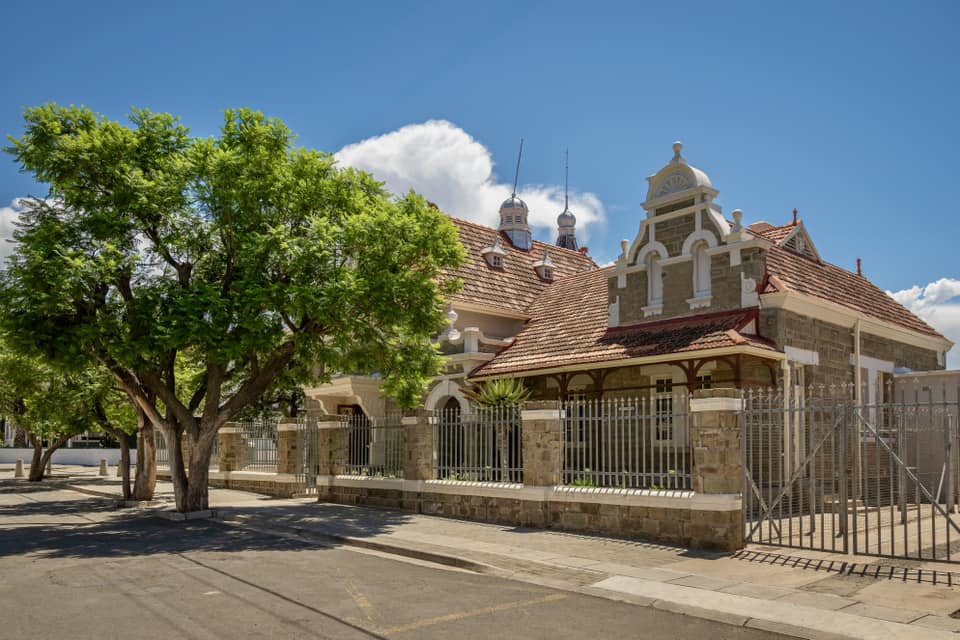
The earliest known history of Aberdeen dates back to the late seventeenth century when Ensign Shriver was sent by Governor Simon van der Stel to barter trade goods for the sheep and cattle of the Inqua Khoisan under the leadership of Heykon. The first meeting between the Inqua and Ensign Shriver took place some 30-kilometres north west of Aberdeen in the lee of the Onder Sneeuberge in January 1689.
In 1777 Captain Robert Jacob Gordon, an employee of the Dutch East India Company, travelled along the Kraai River in the vicinity of Aberdeen and with the assistance of a draughtsman drew a panoramic view of the Camdeboo Mountains from the crest of a small koppie or hillock some seven kilometres from Aberdeen. This koppie later became known as Gordon’s koppie and is situated close to the N9 highway towards Graaff-Reinet.
The original title deeds for the land on which Aberdeen is situated were signed by the British Governor Lord Charles Somerset in 1817.
Aberdeen began as one of six Dutch Reformed Church congregations* established in 1855 in what was then the Cape Colony. On 10 September 1855, the church council of the NG congregation of Graaff-Reinet, the oldest congregation in the Eastern Cape, considered a request for the separation of a new congregation in the vicinity of where Aberdeen would later be established. Like many towns in the former Cape Colony, Aberdeen was founded as a church town. On 16 October, the Presbytery of Graaff-Reinet, the so-called third precinct (after Cape Town and Swellendam) formally separated the congregation. The Brakkefontein farm was selected as the location for the town and church.
Brakkefontein was sold by its owner Jan Vorster to the Dutch Reformed Church in 1855. The new settlement was named Aberdeen in honour of the birthplace of the Reverend Andrew Murray (senior). Many of the title deeds for property in Aberdeen date back to 1857 when the Dutch Reformed Church Council began to sell land to early residents in the precinct surrounding the church.
The 2nd Anglo Boer War caused tremendous dissension between Dutch and English residents of Aberdeen in line with many of the smaller towns scattered across the hinterland of the Cape Colony. During the war, 139 residents of Aberdeen rebelled against the Colonial Administration and joined up with the Boers fighting on behalf of the Orange Free State and the Transvaal. By so doing they were technically traitors as all residents of the Cape Colony irrespective of whether they spoke Dutch or English were British citizens.
* Jansenville was first on 4 February, Ceres was second on 21 March, Sutherland third, then Aberdeen, Heidelberg fifth and Simon’s Town sixth.
Follow Us
Follow us on our Karoo adventures.
Subscribe
