
History of Middelburg
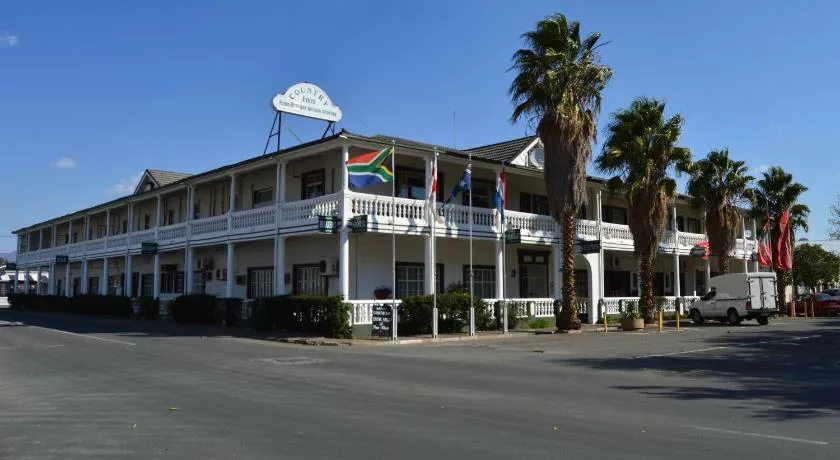
Middelburg in the Eastern Cape was founded in 1852, as a midway point between Graaff-Reinet and Colesberg.
A site for Middelburg was chosen, as its name implies, in the very center of a circle of other platteland towns – thus providing a hub for the secular and spiritual life of a pioneer farming community, which was, till then, very far from anywhere.
As far back as 1786, the nearby town of Graaff-Reinet was proclaimed. On the 6th of February 1837, the Cape Government proclaimed the district of Colesberg with the field-cornetts of Middelveld, Upper-Sea Cow River, Lower-Sea Cow River, Nieu-Hantam and Agter-Suurberg. The distance between Graaff-Reinet & Colesberg was 130 miles (200km). Therefore, it was decided to find a town in between. The Dutch Reformed Church of Colesberg permitted a new congregation to secede. Thus, the Middelburg Dutch Reformed Church came into being on 19 May 1852, and according to the government Gazette of 19 June 1852, the Seat of Magistracy was announced in Middelburg.
Three farms, namely Kleinfontein, Grootfontein & Driefontein, were considered for the town. A commission consisting of Willem Smit and Henning Coetzee bought the farm Driefontein from Jan Coetzee for 40,000 riksdaalders (R6,000). The farm was given the name Middelburg, for it lay in the middle of the surrounding towns. The first erven were sold on 12 & 13 August 1852.
The town grew rapidly in the early years, and by 1860 it had a population of over 1,000 people. Middelburg became an important trading post for the surrounding area, and its economy was based on agriculture, livestock, and wool.
The town played a significant role in the Anglo-Boer War of 1899-1902. The British established a military camp and training centre at Grootfontein, a farm just outside Middelburg. About 7,000 troops from the Third Manchester Regiment were stationed at Grootfontein, and some of them were married, so about 3,000 women and children also lived there.
After the war, Middelburg continued to grow and prosper. The town’s economy diversified, and new industries such as brickmaking, tanning, and furniture making were established. Middelburg also became a popular tourist destination, due to its scenic location in the Great Karoo.
Today, Middelburg is a thriving town with a population of over 15,000 people. The town is home to a number of historical buildings, including the Dutch Reformed Church, the Grootfontein College of Agriculture, and the Ouberg Hill Monument. Middelburg is also a popular destination for hiking, birdwatching, and other outdoor activities.
Follow Us
Follow us on our Karoo adventures.
Subscribe
