Our Heritage Arts Hub – Old Congregational Church
Description
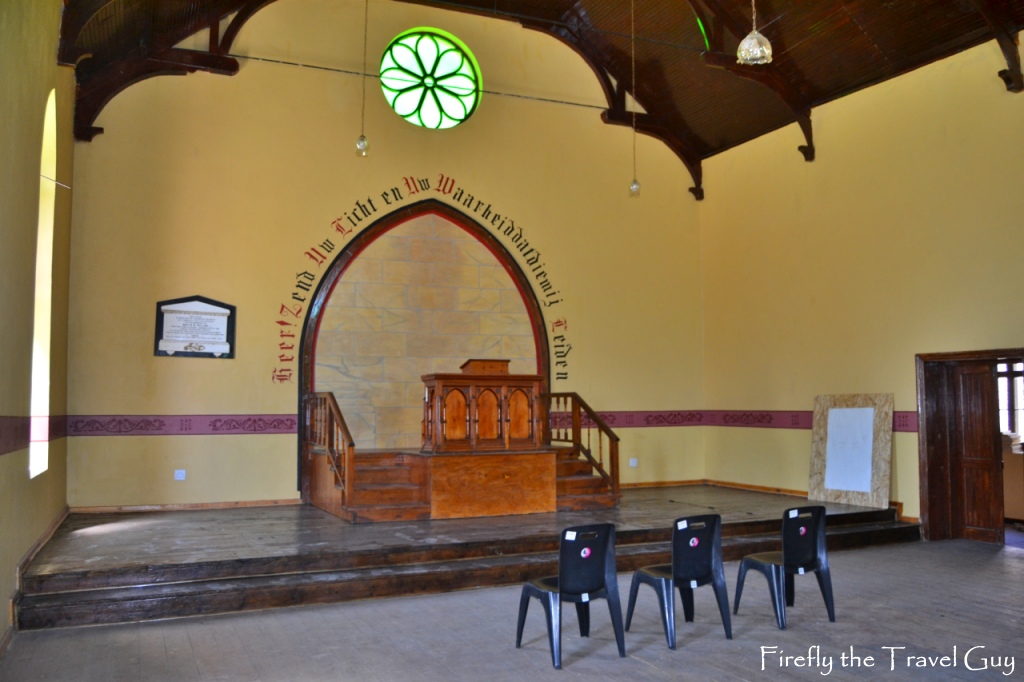
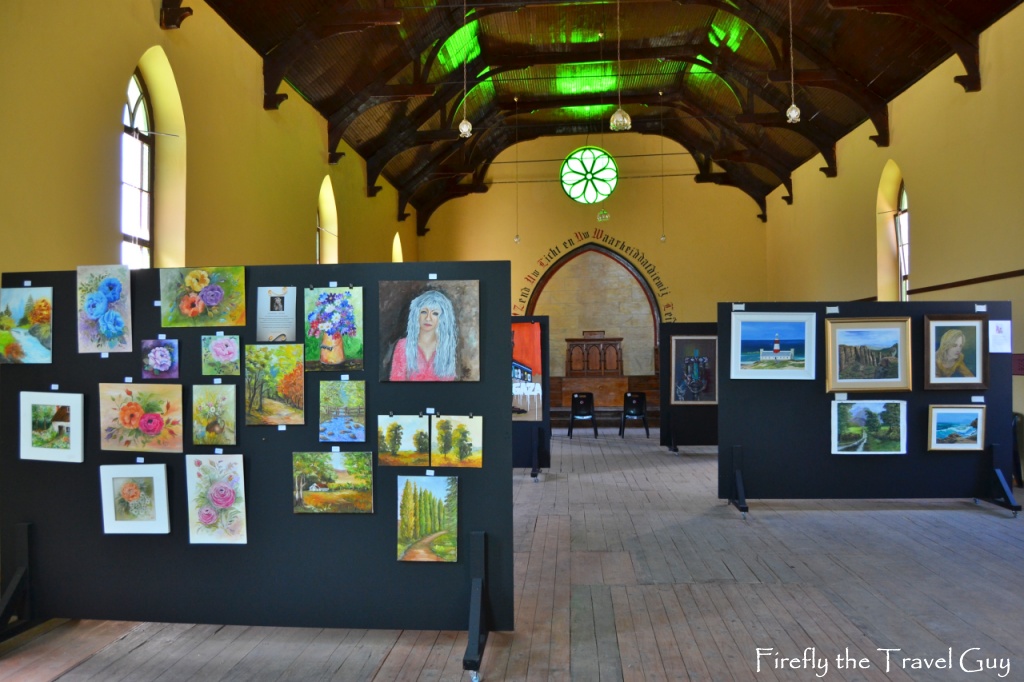
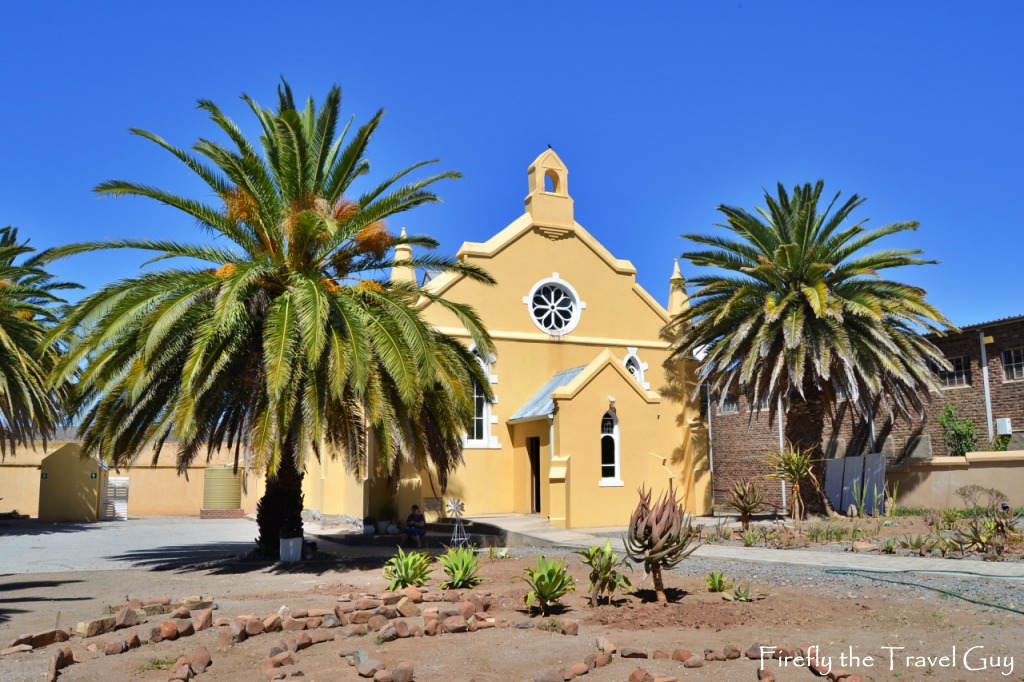
Arguably the oldest church in Cradock and definitely the oldest church building in Cradock, the Old Congregational Church is being transformed into a space to provide a platform for the incredibly talented Cradock region artist community, a monthly “Growers & Makers” market and a Heritage Hub that visually tells the story of the rich history of the church in Cradock. The space will also be used for special church services, art exhibitions, performances, artistic workshops and community events.
The history of the church:
As a result of a London Missionary Society outreach programme, a congregational church was started in Cradock in 1820. Rev George Baker, who was born in Essex in 1789 and who had come to South Africa in 1815 to serve as a missionary with the LMS, moved to Cradock as the town’s first preacher in 1821. John Munro, who was in charge of the Bethelsdorp congregation, also moved there in December 1839 to become the town’s first teacher at the Congregational School. He worked in Cradock until his retirement in 1846.
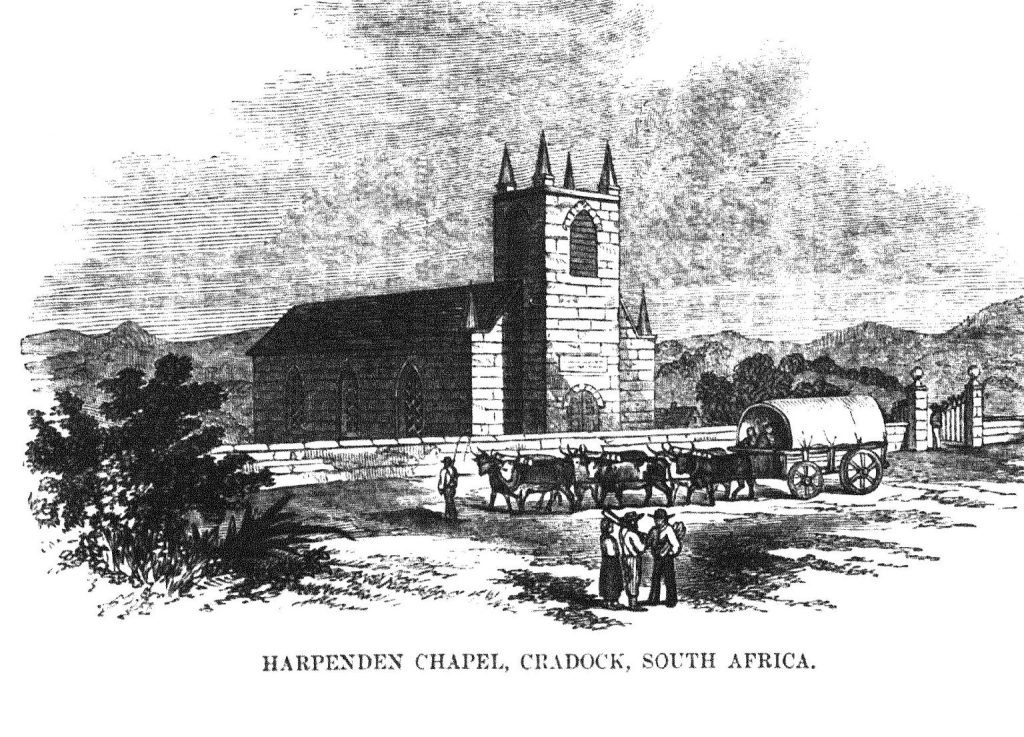
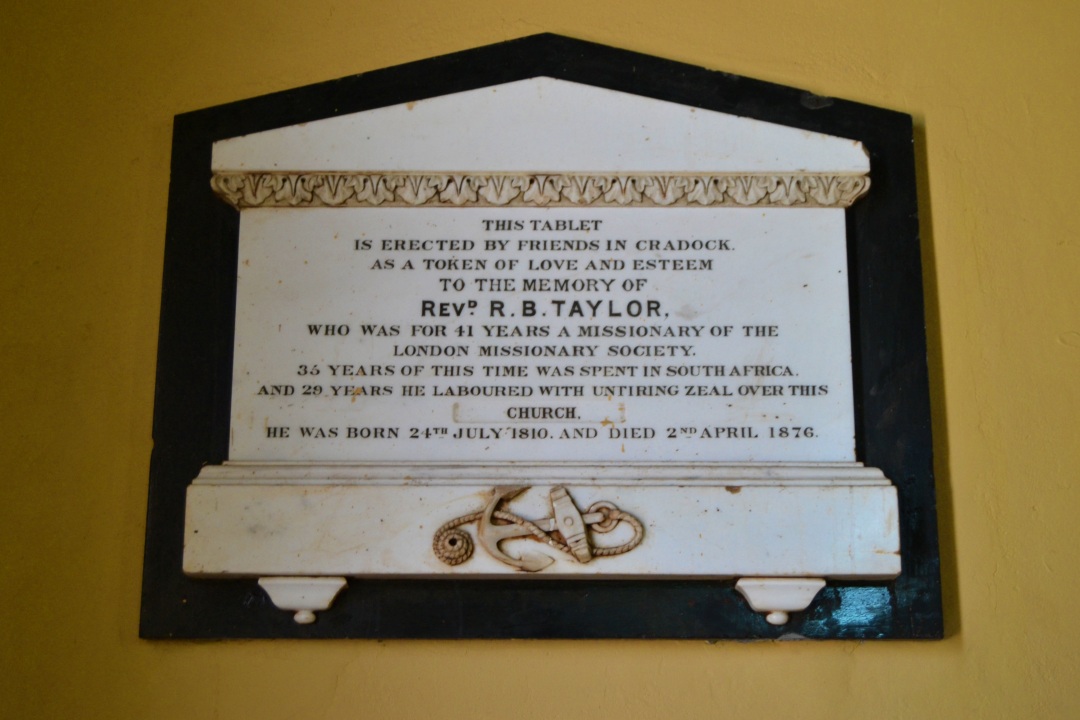
Robert Barry Taylor joined this community on 26 August 1848. Up until his arrival the school had doubled as a church, but he did not find this satisfactory and he motivated the community to collect funds and to build itself a church. This Neo-Gothic building with yellowwood doors was inaugurated on 24 July 1853. The church was a small scale a replica of the Harpenden Church in England. (although the chapel was described as: ‘an exact replica of the Harpenden chapel in England, this cannot be corroborated at present as the Congregational Chapel at Harpenden was demolished. This does however seem unlikely as this Gothic Revival structure forms part of the specific architectural expression of this movement found in the drier parts of South Africa and is a direct result of materials and skill available; a localised vernacular’.)
It had a square tower with four small turrets on the corners. Sadly, these did not survive. Initially it was called the Harpenden Chapel, then the Harpenden Independent Church. Later, its English links faded and it was known as the United Congregational Church. A few years after its completion, the building was destroyed by storm and earth tremor. The first minister was the Rev. John Taylor, who was sent by the London Missionary Society (LMS). It was common for ministers sent by the LMS to ‘transfer’ to the Dutch Reformed Church. In 1826 Taylor had baptised Paulus Kruger, the future president of the short-lived South African Republic. He also married Kruger’s parents.
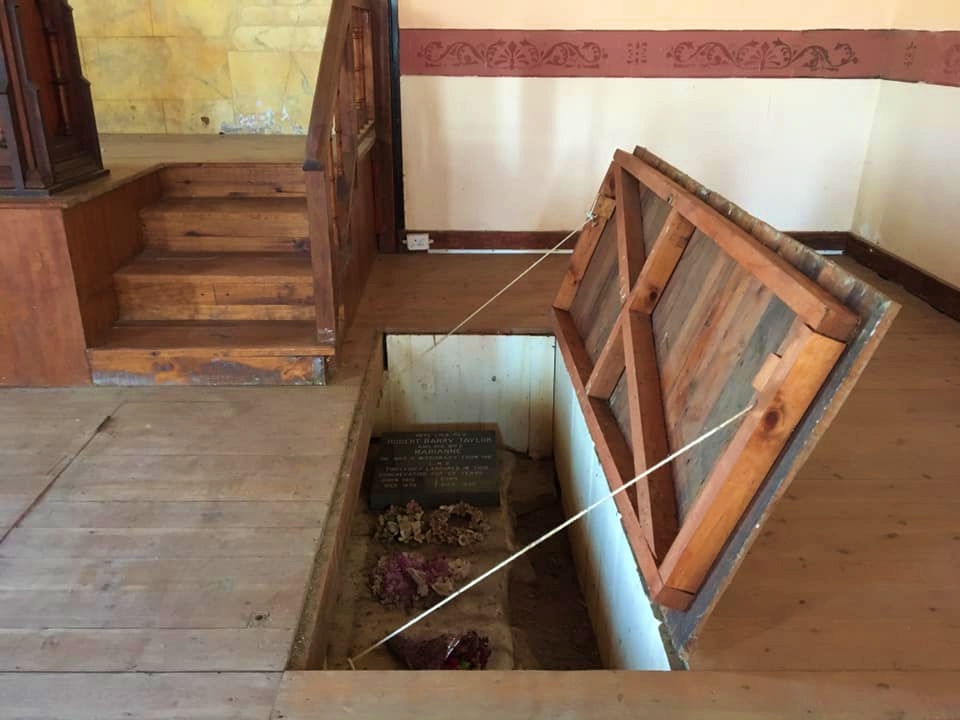
Undaunted, Robert Barry Taylor simply began raising funds again for restoration work. This time a front porch and clock tower were added. The church was enlarged during the time of Pastor J G Weis (1906–1914). In 1974, the building was seriously damaged in a flood, but the congregation leapt into action to rescue it. The congregation felt it owed a great deal to Rev RB Taylor and his wife, Marianne, so they buried them beneath the pulpit.
Under the Group Areas Act 1950 the location was barred in 1977 to non-whites as it lay just within Cradock. This prevented both non-white occupation of the premises and attendance by the inhabitants of the adjacent black township. It went out of use and was not reopened after the repeal of the Group Areas Act in 1991.
Source – https://www.harpenden-history.org.uk/harpenden-history/topics-cms/churches-and-chapels/the_harpenden_chapel_cradock_south_africa