Art Experiences

Outsider art abounds in the Karoo Heartland
WHERE TO GO

There is no place like the Karoo Heartland, and our artists tend to dream as large as our big sky above. From the delightfully quirky Walter Battiss – creator of the iconic Fook Island – to beloved Helen Martin’s Owl House in Nieu-Bethesda, each Karoo art experience is unique. There must be something inspiring about our golden Karoo air because the ancient Khoikhoi would use a cave wall to express their creativity in the form of paintings even in ancient times! This is an inspiring and thought-provoking experience for all art lovers.

Art in the Karoo
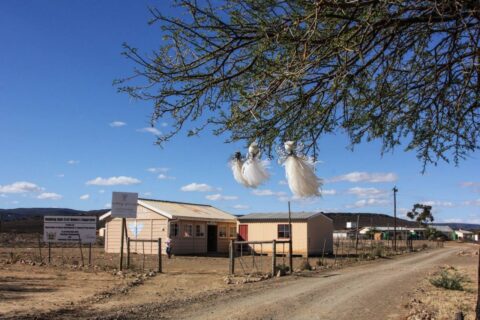
About 17km south of Jansenville stands a couple of gnomes surveying the ...

This listing contains excerpts from The Art of Nieu-Bethesda by Chris Marais and Julienne ...

Art

The hamlet of Vondeling consists of scattered homesteads that house 29 families alongside ...

The Stone Folk is a new permanent outdoor installation of stone figures ...

Art

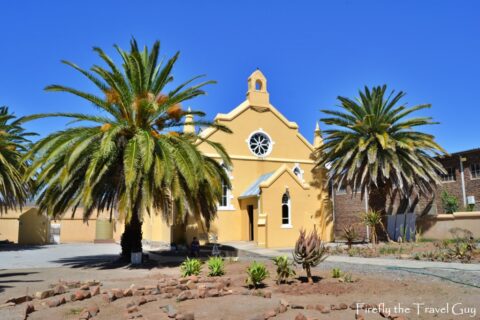
Arguably the oldest church in Cradock and definitely the oldest church building ...

Art

Weird to some, wonderful to others, the Owl House in Nieu-Bethesda is ...

Art

Follow Us  

Follow us on our Karoo adventures.


Subscribe 

The town grew rapidly in the late 19th century, and by the early 20th century it had a population of over 2,000 people. Willowmore was a major trading center for the surrounding area, and it also had a thriving Jewish community. However, the town's growth was interrupted by the Second Boer War (1901-1902), during which it was attacked twice by Boer commandos.

After the war, Willowmore's economy recovered and the town continued to grow. In the 1920s, the town was connected to the national railway network, and in the 1950s it was connected to the national electricity grid.

Today, Willowmore is a small town with a population of about 10,000 people. It is still a major trading center for the surrounding area, and it is also a popular tourist destination, due to its proximity to the Baviaanskloof Wilderness Area, a UNESCO World Heritage Site.

Steytlerville is situated on the right bank of the Groot River, where the river emerges from a valley in the Grootrivierberge at Noorspoort. In 1875, the farm Noorspoort was purchased from the Cape Government to establish a town and church. A surveyor was contracted to subdivide the farm and to survey 200 erven. The town was established in 1876 and named after Reverend Abraham Isaac Steytler (1840-1922), a minister of the Dutch Reformed Church also served as the first mayor of Steytlerville.

whose efforts resulted in the establishment of a new Dutch Reformed Congregation.

The exceptionally wide Main Street of Steytlerville was designed at the time to allow ox wagons to turn around at both ends. Nowadays it is divided by flower boxes planted with bougainvillas in the centre and the lamp poles are adorned with the coats of arms of families associated with the town and area. Houses provide fine examples of Edwardian and Victorian architecture.

The history of Steytlerville can be traced back to the early 1800s, when the area was first settled by Trekboers, or nomadic farmers. The first permanent settlement was established in 1875, when the Dutch Reformed Church purchased the farm Noorspoort. The church established a mission station on the farm, and soon a small town began to grow around it.

The town grew rapidly in the late 19th century and was an important trading center for the surrounding farming community  

Steytlerville played an important role in the Anglo-Boer War (1899-1902). The town was garrisoned by British troops, and it was used as a base for operations against the Boer commandos. The town was also the site of a number of battles during the war.

After the war, Steytlerville continued to grow and prosper. The town became a major center for the mohair industry, and it also developed a number of other industries, including agriculture, manufacturing, and tourism.

Today, Steytlerville is a small but thriving town. It is home to a number of historical buildings, including the Dutch Reformed Church, the Lady de Waal Bridge, and the Steytlerville War Memorial. The town is also a popular destination for tourists, who come to experience the Karoo landscape and to visit the mohair farms in the area.