Cookhouse
Description
The Great Fish River that runs past Cookhouse formed the eastern boundary of the Cape Colony until 1819. Today, Cookhouse is located on what used to be part of the Roodewal farm.
Frans Johannes van Aardt (born in the Somerset East district on 12 September 1777 and died at Roodewal in 1856) farmed at Roodewal from 1797. Frans Johannes was married twice; first to Susanna Wilhelmina Tregardt on 21 October 1798. She died in 1825, after which he married Maria Johanna Mentz in 1826.
The crossing point over the Fish River was located nearby. Riders and soldiers would camp here waiting to cross the river. It is said that Susanna van Aardt supplied provisions to these soldiers and travellers from her “cookhouse” (or outdoor kitchen). The cookhouse would have been a small stone building used for cooking, but also would have acted as shelter if the weather was bad. The spot would have been referred to by the soldiers as “The Cookhouse”, and this is where the town’s name came from.
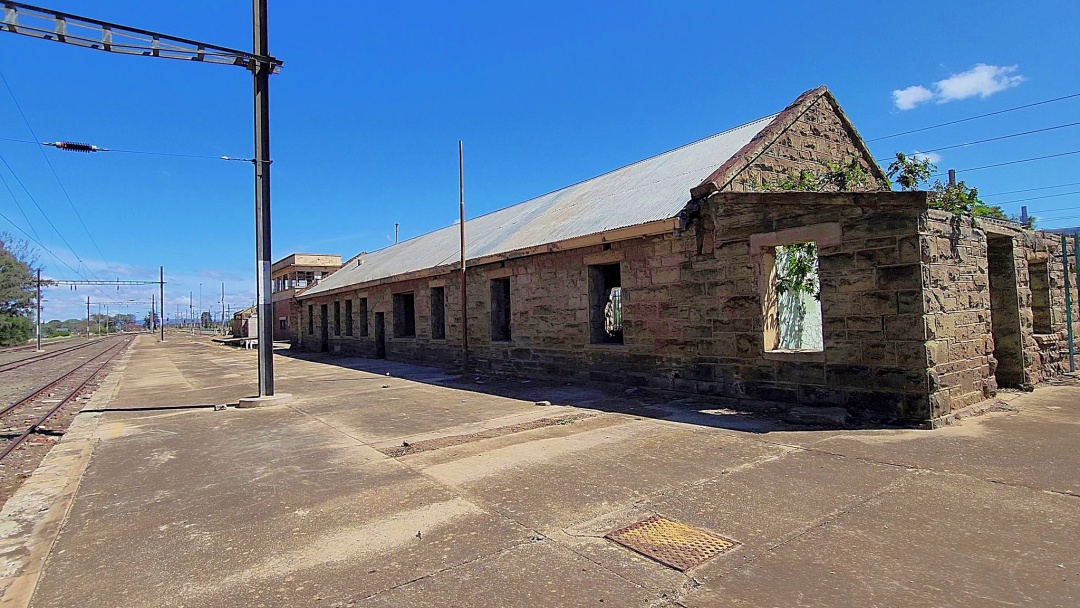
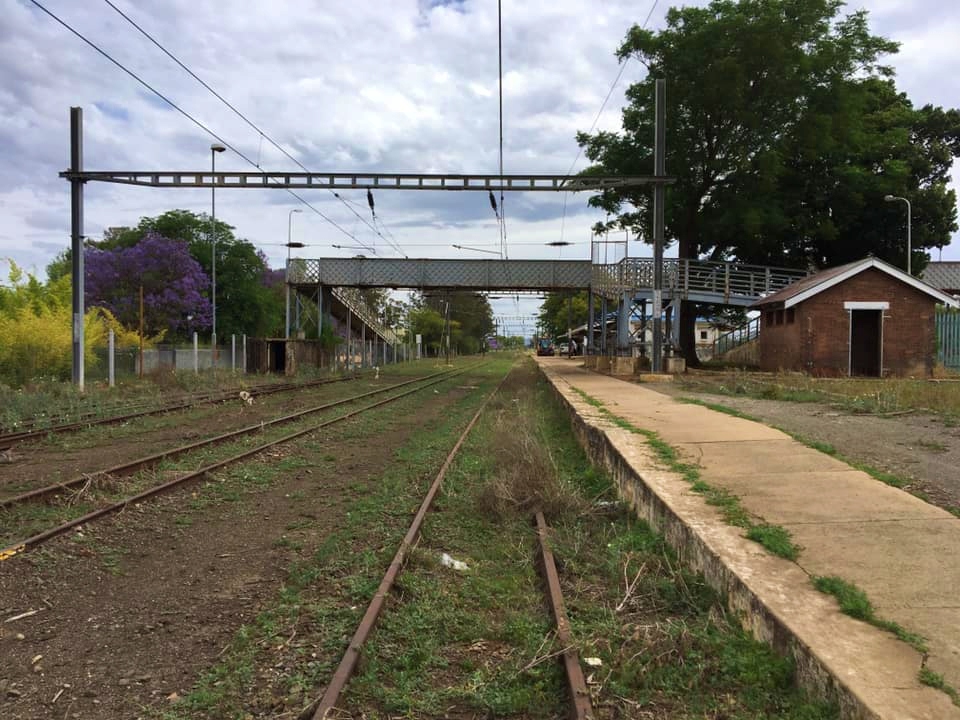
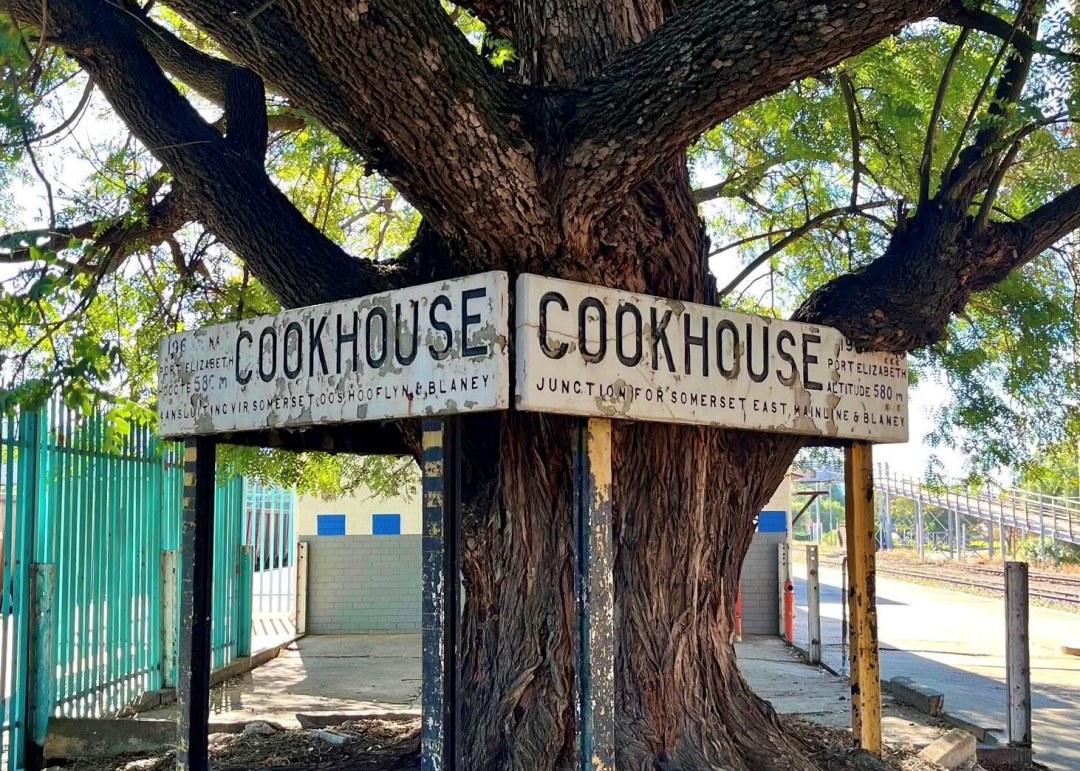
In the 1870s, the government of Prime Minister John Molteno oversaw a massive expansion of the Cape Colony’s railway system, and a route northwards to De Aar from Port Elizabeth and Port Alfred was chosen by the Cape Government Railways to pass through what is now Cookhouse. A station was built here, which became an important railway junction, and a small settlement formed around this connection. Sadly the railway has declined badly and big parts of the station are now dilapidated.
———————————————————————————–
The station was immortalized by Chris Mann in his poem Cookhouse Station:
If you ever pass through Cookhouse Station
make certain you see what is there.
Not just the long neat platform beneath the escarpment
and the red buckets
and the red and white booms
but the Christmas beetle as well
which zings like a tireless lover
high in the gum-tree all the hot day.
And whether your stay is short
and whether your companions
beg you to turn away from the compartment window
does not matter, only make certain you see
the rags of the beggarman’s coat
before you choose to sit again.
And even if there might be no passengers
waiting in little heaps of luggage when you look
make certain you see
the migrant worker with his blankets
as well as the smiling policeman,
the veiled widow as well as the girl
the trainee soldiers whistle at, otherwise
you have not passed that way at all.
And if it is midday in December
with a light so fierce
all the shapes of things tremble and quiver
make certain you see
the shades of those who once lived there,
squatting in the cool of the blue-gum tree
at ease in the fellowship of the after-death.
And if you ever pass through Cookhouse Station
make certain that you greet those shades well
otherwise
you have not passed that way at all.
———————————————————————————–
The Iron Spine: A Reflection on Railways and the Rise and Fall of Cookhouse By Fezekile Cotani | Freelance Community Writer
Hartland Nuus – 28 May 2026
To walk the quiet, windswept streets of Cookhouse today is to witness a ghost. The town is not a ruin, but it is a place held in a state of suspended animation, a relic of a rhythm that has since stopped. Its entire being, from its chaotic naming after a mid-19th-century field kitchen to its strategic layout, was dictated by one thing: the railway. The iron spine that gave Cookhouse life is the same skeleton that now lies exposed as the flesh of purpose has withered away. Reflecting on this town is to understand the railway as a force of genesis, growth, and ultimately, gentle obsolescence.
The Genesis: Junction as Destiny
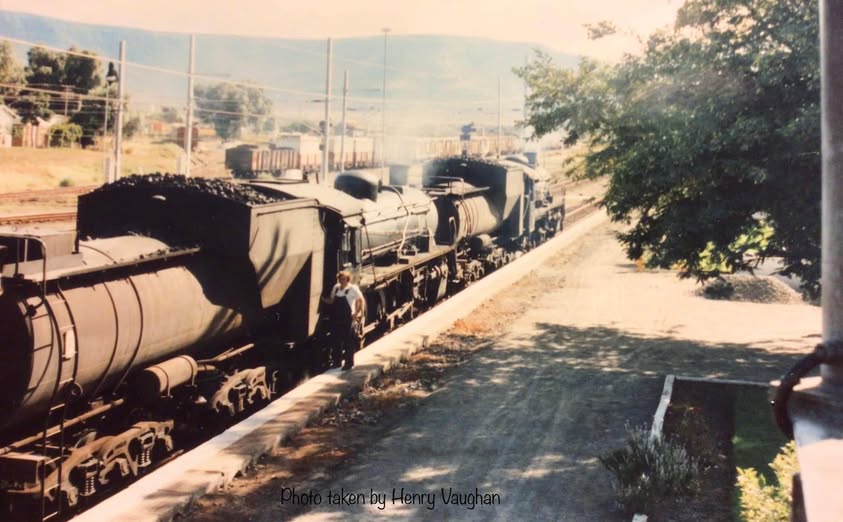
Cookhouse’s role was never to be a destination, but a connection. Its moment of conception arrived not with a town planner, but with a rail engineer. When the Cape Government Railways pushed its line north from Port Elizabeth towards the diamond fields of Kimberley and the gold of the Rand, it needed a point where the branch line from the east and the line from the south could meet the main arterial line to the north. That point was a lonely farm called Cookhouse. The railway did not just serve Cookhouse; the railway was Cookhouse. The town grew not from a church square or a market, but from the station master’s office, the water tower, and the sprawling marshalling yard. The locomotive was the local deity. Water, essential for steam engines, was drawn from the nearby Great Fish River. Coal was stockpiled. Crews changed shifts. The town’s first heartbeat was the clang of a coupling and the hiss of steam.
Growth and Development: The Great Enabler
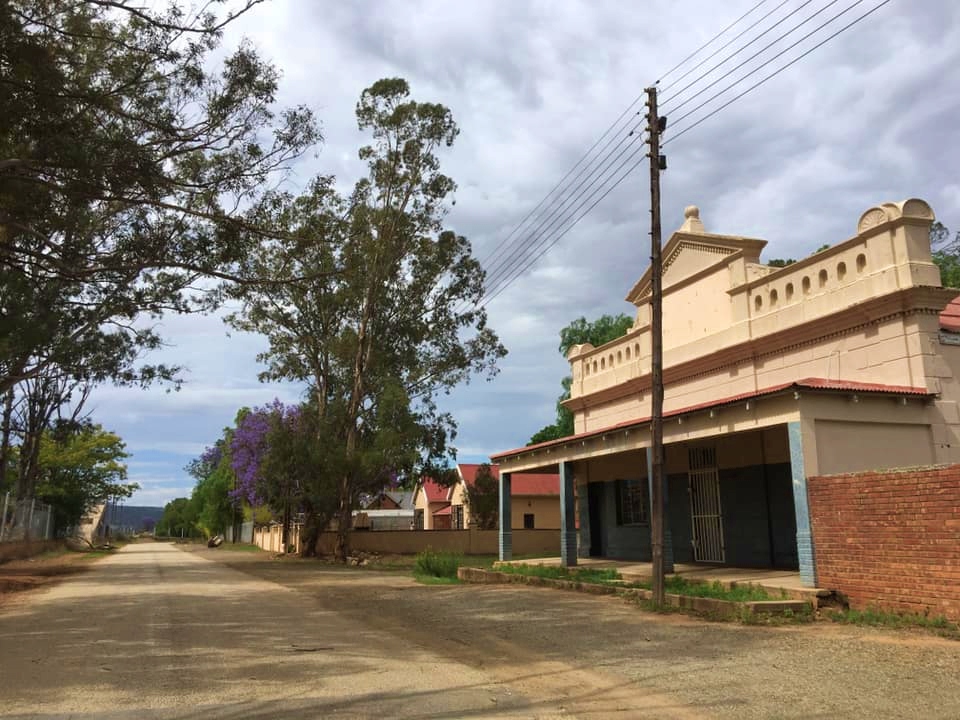
For nearly a century, the railway system fuelled a virtuous cycle of growth. Cookhouse became a vital node in South Africa’s agricultural logistics chain. The fertile Karoo and surrounding districts produced wool, mohair, and livestock. The railway provided the only viable route to coastal ports. Massive sheds were built to hold bales of wool before their journey to Port Elizabeth. Livestock pens, some of the largest in the region, filled with the bleating and lowing of sheep and cattle destined for the abattoirs or the mines up north. The town’s social and economic geography followed the tracks. The grand, Victorian-style station building was the civic heart. Pubs, boarding houses, and general dealers sprouted along the road parallel to the line. The railway provided not just transport, but jobs, hundreds of them. Firemen, drivers, shunters, signalmen, porters, clerks, and maintenance workers formed a stable, skilled working class. There was a primary school, a police station, churches, a hotel, and even a cinema. In its heyday, Cookhouse was a bustling, confident hub. The railway was not merely its employer; it was its identity.
The Demise: The Reversal of the Loco Motive
The demise began quietly, with a decision made far from the dusty platforms. The first blow was the national shift from steam to diesel and electric traction. Cookhouse’s lifeblood was the steam engine’s need for water. Diesel and electric locomotives, more efficient and requiring less frequent servicing, could bypass the town. They no longer needed to stop for water, to change crews, or to take on coal. The town became a blur seen from a speeding cab window, no longer a necessary pause. Then came the existential catastrophe: the road. The improvement of the national road network, particularly the N10 highway, offered farmers a choice. A truck could take a load of wool directly from a farm gate to Port Elizabeth in a matter of hours, with no loading, unloading, or shunting delays. Road transport was flexible, point-to-point, and increasingly cost-effective. The state-owned rail system, burdened by bureaucracy and decaying infrastructure, could not compete. The final act was the dismantling of the very network that sustained Cookhouse. The passenger service, once a lifeline for domestic workers and students who travelled to the educational centres of Alice and Fort Beaufort, was terminated. The branch line to East London was ripped up. The once-massive marshalling yards fell silent, their tracks growing rust-coloured and weeds. The station, once a cathedral of commerce, was downgraded, its grand building falling into disrepair. The signal boxes are empty. The livestock pens are eerily vacant.
Reflection: The Indifference of Infrastructure
The story of Cookhouse is a powerful lesson in the nature of infrastructure. We like to think of railways as permanent, but they are merely technology, a specific solution to a specific problem of geography and economy. When that problem changes (from steam to diesel, from rail to road), the solution becomes obsolete. The railway was never a benevolent parent to Cookhouse; it was a functional organ within a larger system. When the system evolved, the organ was no longer needed. The town’s tragedy is not one of malicious destruction, but of indifferent evolution. The very efficiency that created Cookhouse, the logic of the junction, is what unmade it. A bypassing train has no conscience. Today, Cookhouse survives as a shadow, a service centre for the surrounding farms, but its grand ambition is gone. Walking the crumbling platform, one feels a profound sense of a story interrupted. The railway gave Cookhouse a reason to exist, a rhythm to live by, and a status to aspire to. And then, with a final wave of the guard’s flag, it took it all away. The iron spine remains, but the life that once pulsed along it has long since bled out onto the tar of the national road.