Trim Park Monuments
Description
Trim Park, Cradock’s municipal park, was established in 1881 on the banks of the Great Fish River. It has several memorials and a historic building that most visitors to the town usually miss out on.
Great Trek Monument
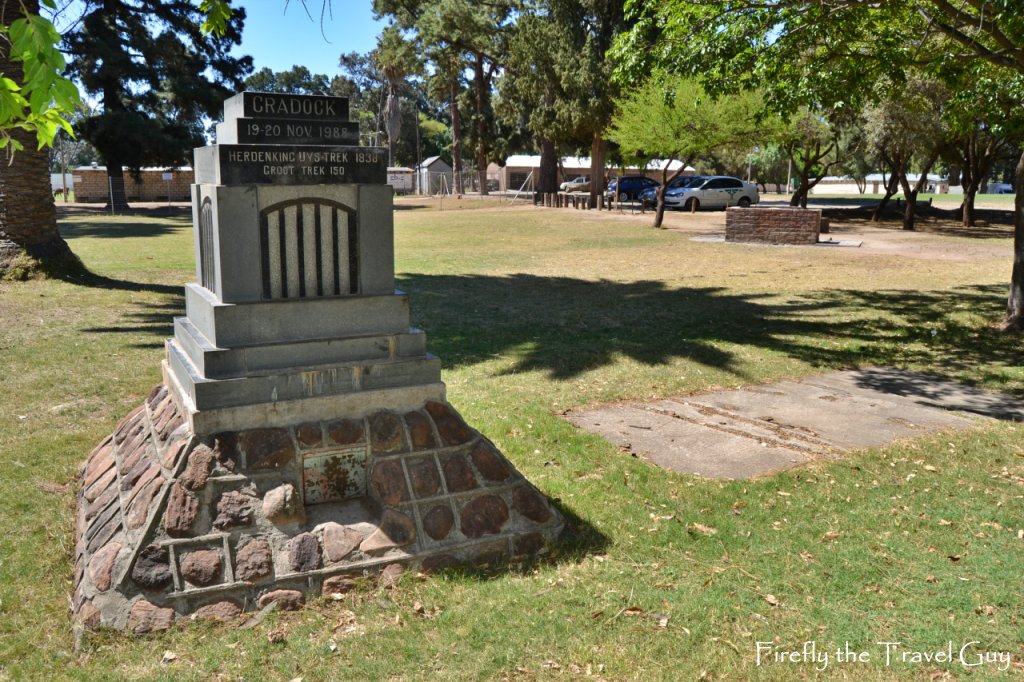
The Great Trek monument was erected in 1988 to commemorate the 150th anniversary of the Great Trek. The Great Trek was a mass migration of Dutch-speaking settlers, known as Boers, who moved inland from the Cape Colony between 1836 and 1840. They sought independence from British rule and established their own republics.
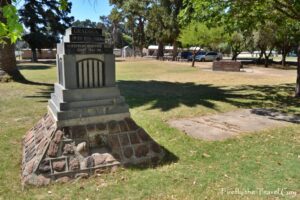
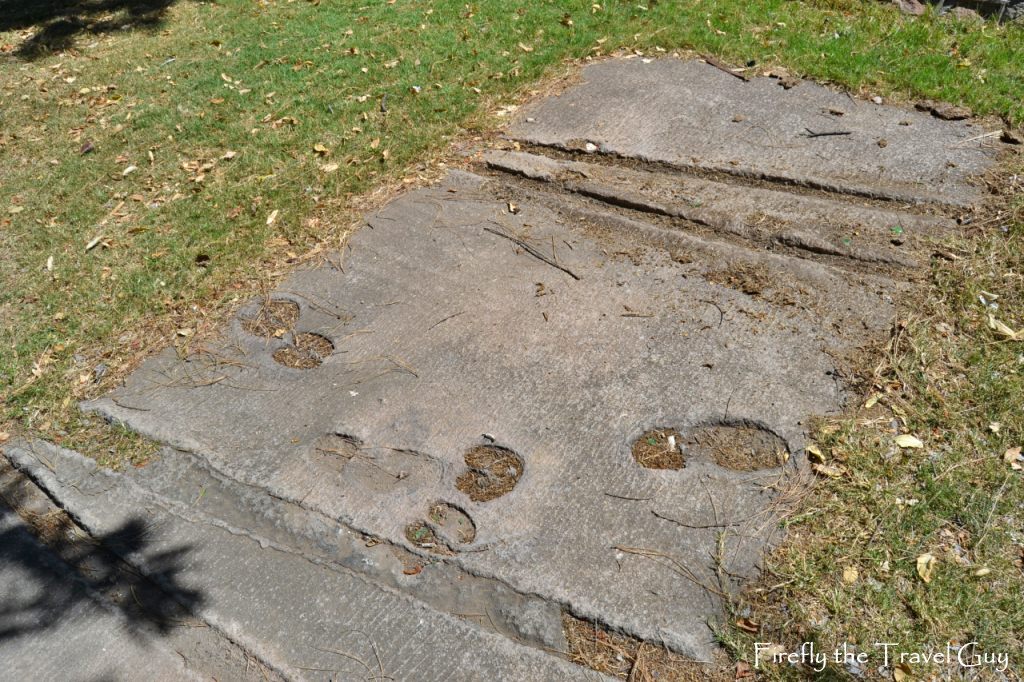
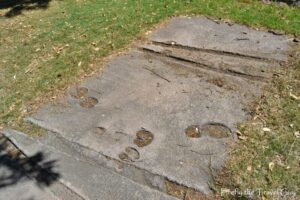
Like in 1938, the 1988 celebration involved replica wagons doing the trek to the Voortrekker Monument in Pretoria. The monument takes the shape of the Voortrekker Monument, and next to it is a slab of cement through which the replica wagon was pulled. The tracks of the wheels and the shoe prints of those leading the oxen can be seen in the cement.
Flame of Hope and Liberation Monument
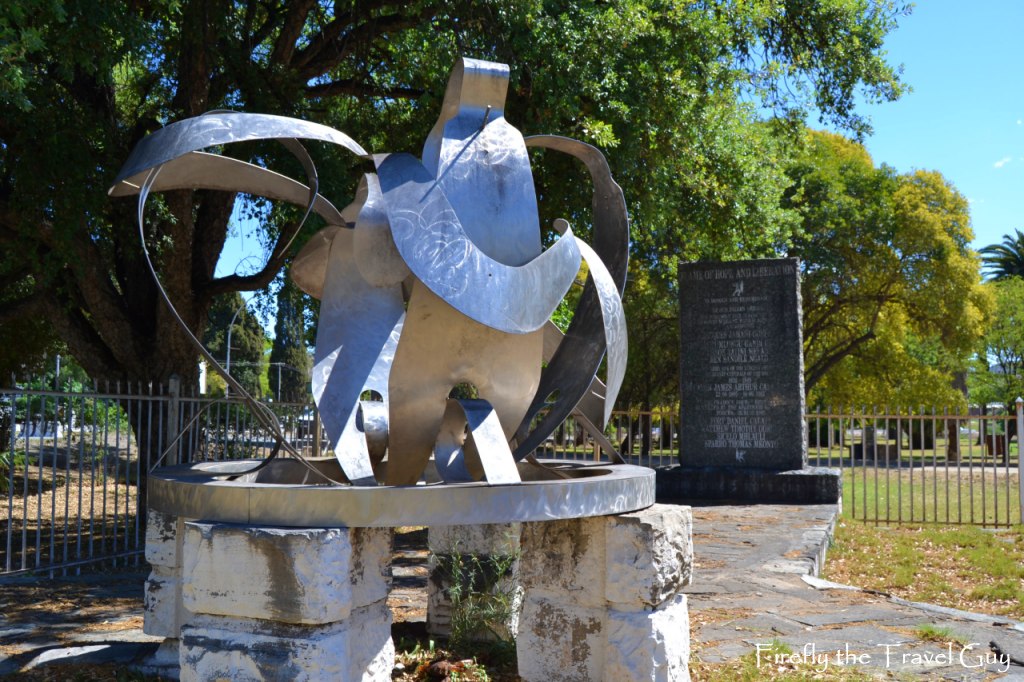
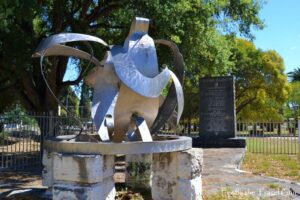
The Flame of Hope and Liberation Monument in memory of those who died in the anti-apartheid struggle. In addition to the Cradock Four, anti-apartheid activists Matthew Goniwe, Fort Calata, Sparrow Mkhonto and Sicelo Mhlawuli, the monument also contains the names of others from the region who died during the struggle.
Jurie Lombaard Watermill
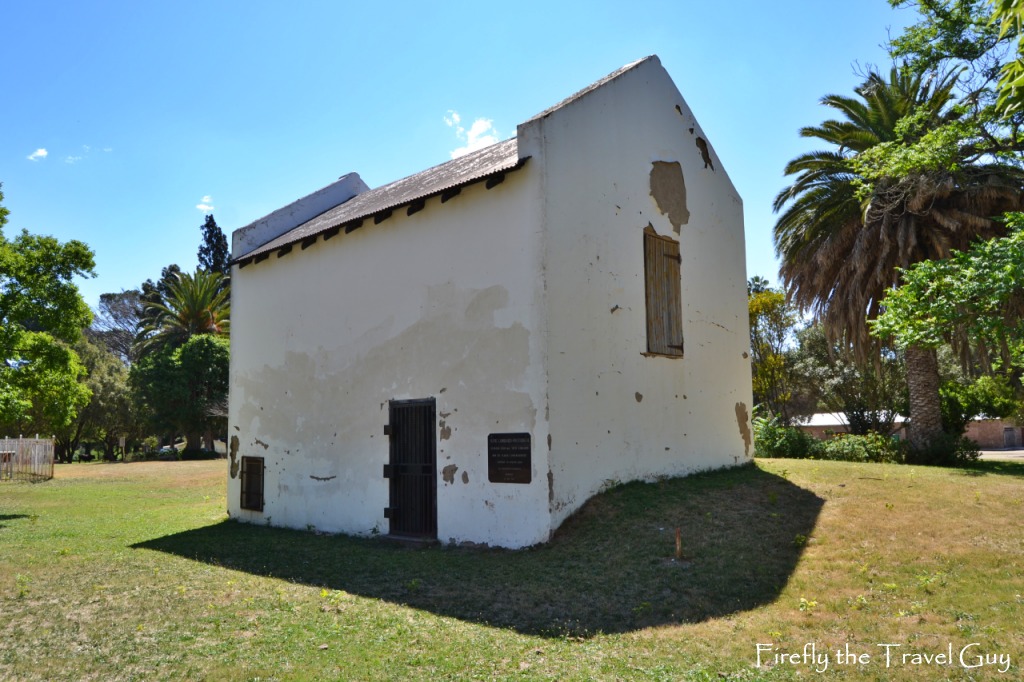
Mr Jurie Lombaard of ‘Lombardsrus’ (section of Cannavlakte) donated this historical old watermill. His great-grandfather, Hendrik Petrus Lombard, was also born on this farm. When the first Dutch Reformed Church, built in the form of a cross, was demolished in 1863, H.P. Lombard bought the yellowood with which the old mill was built.
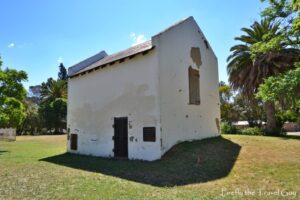
The mill was situated about 50 metres from the Tarka River and was driven by water from a weir in the river which was channeled to the mill. The strength of the flow governed the speed of the grinding. The wheat was ground to an unsifted texture which could then be hand-sifted to flour.
The double-storeyed building was built around 1864 with stone that was quarried on the farm. The original masonry was plastered with clay on the inside but, during the big flood of 1874 when the Tarka River overflowed its banks, the mill was practically under water and this rendering was washed out. Originally the mill had a thatched roof but this was replaced later with corrugated iron. The woodwork, including the ceiling, was built by an English carpenter. The mill was driven from a teak wheel with a thick axle of yarra wood which was resistant to water and decay. The cogs in the wheel were made of soetdoringhout (sweet thorn wood). The smaller wheel inside the building was made of yellowwood and had an iron axle which revolved the grindstone. This iron was practically the only metal used in the whole construction. From the funnel-shaped yellowwood bowl the wheat flowed through a square yellowwood gutter to the two circular grindstones and from there to a yellowwood container.
The mill was used up to 1928 and could grind up to twelve grain bags a day. Grinding was often done through the night as the mill served places up to 150 km distant such as the Baviaans River, the Winterberg, Adelaide and Fort Beaufort. The grinding fee was one rijksdaalder (15c) per bag weighing 203 pounds.
In August 1972 Mr Jurie Lombard donated the mill to the Cradock Foundation. As there were insufficient funds to transfer it, the Senior Rapportryers undertook to finance the transfer and re-erection of the mill. Later the Cradock Town Council agreed to take over the project from the Rapportryers.
Work commenced on 20 September 1982. The mill was dismantled at Lombardsrust and transported to Cradock. In preparation for the re-erection, 300 cubic metres of soil was excavated by a friendly contractor as a donation. The town’s engineers then meticulously re-assembled the mill, using 60,000 bricks in the construction of the building (which is, of course, not the original). The total cost of the project was R16,000.