Nqweba Dam (Van Ryneveld’s Pass Dam)
Description
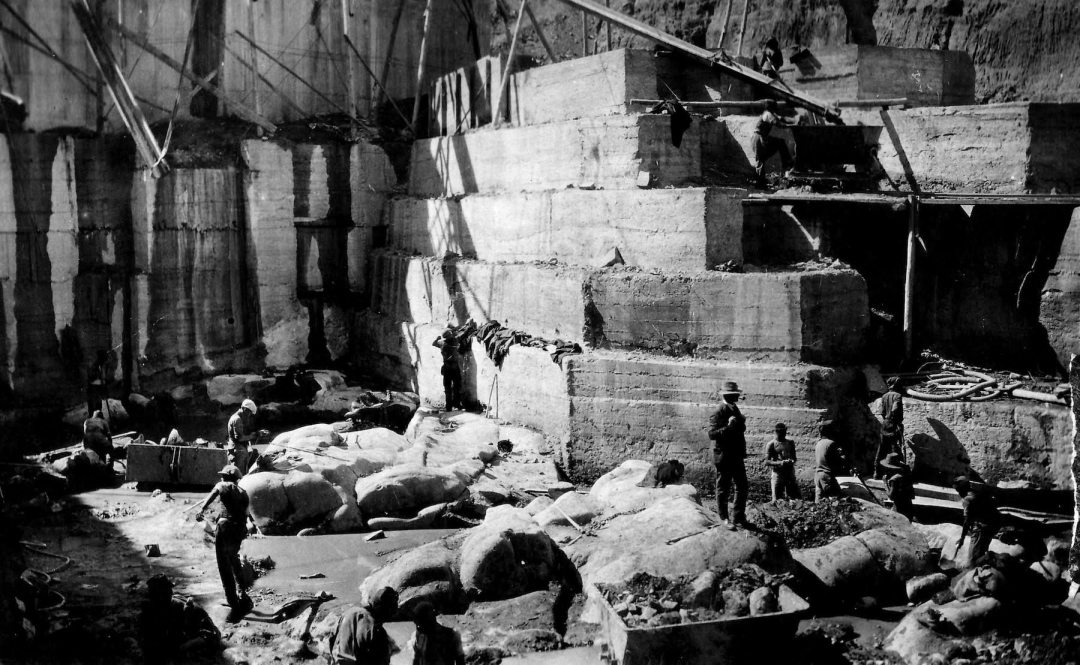
An influx of soldiers, farmers and their workers to the Graaff-Reinet district and town after the Anglo-Boer War led to an acute water shortage in the region. This set in motion a plan for a substantial dam on the upper reaches of the Sundays River at the confluence of four rivers, namely the Sundays River (or Nukakamma), Gatsrivier, Pienaarsrivier and Broederstroom. It was surveyed in 1918, and construction commenced in 1920. Excavations for the wall commenced in July of 1921, and by November, these had reached bedrock. Sand and stone were harvested from the immediate surroundings for the large volume of concrete required for its construction. Nearly 250 000 bags of cement were used in the dam wall alone, and around 2 200 cubic meters of concrete were poured into the main wall.
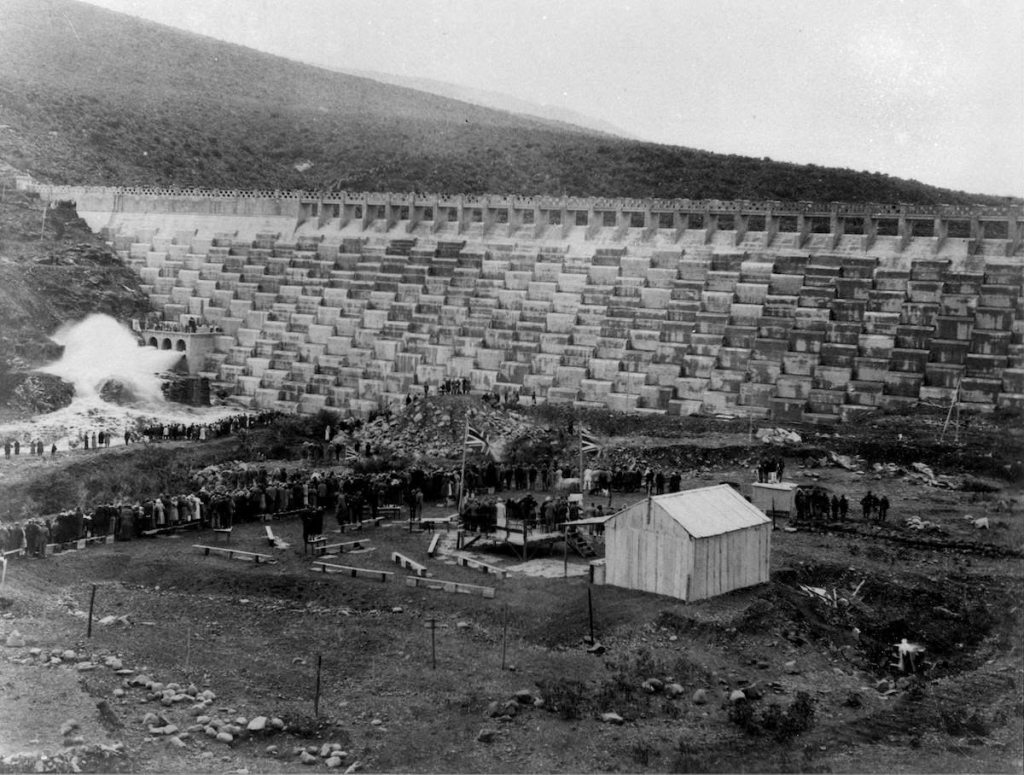
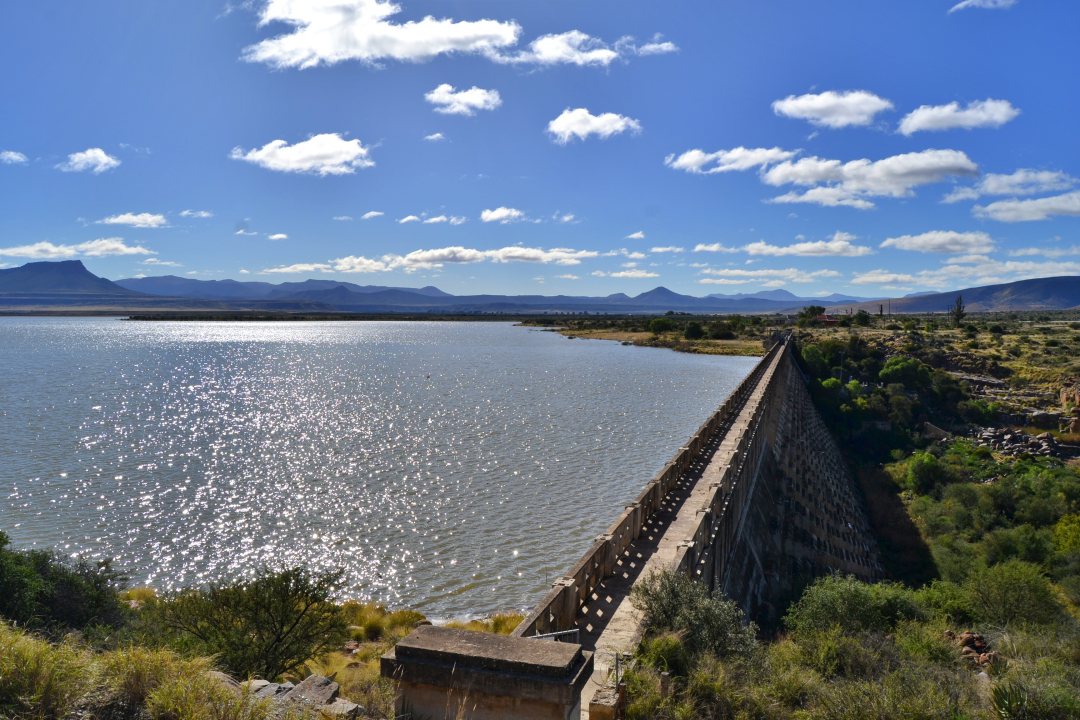
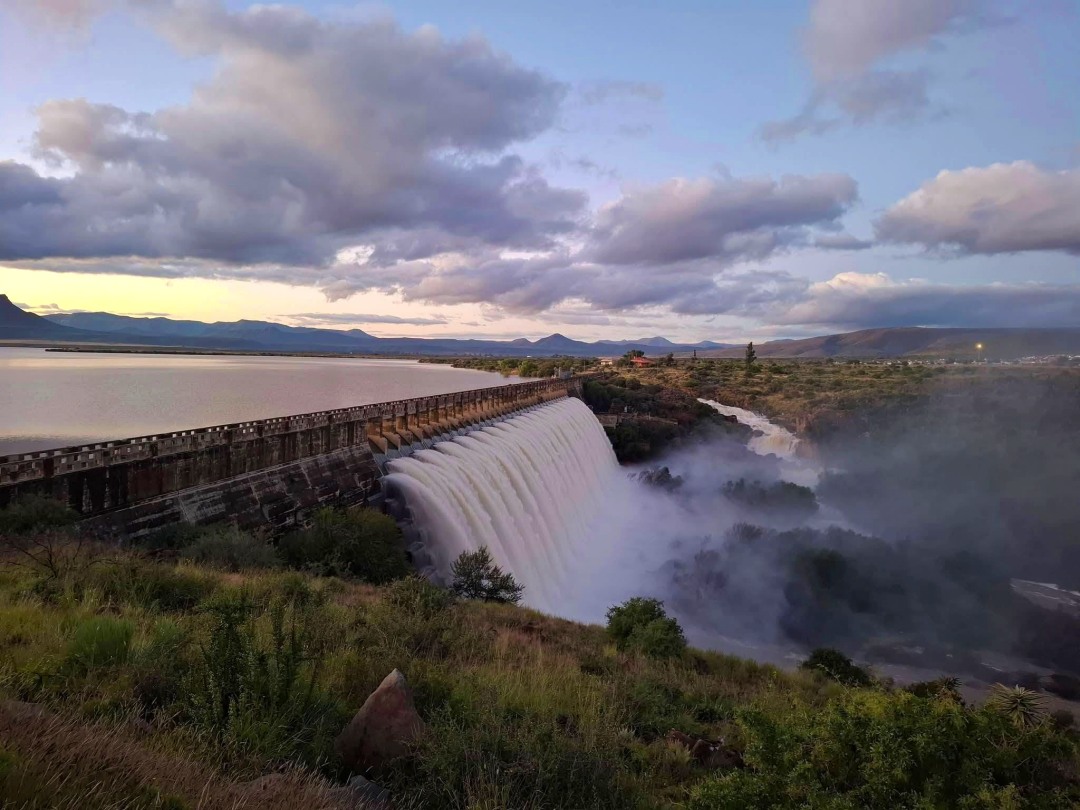
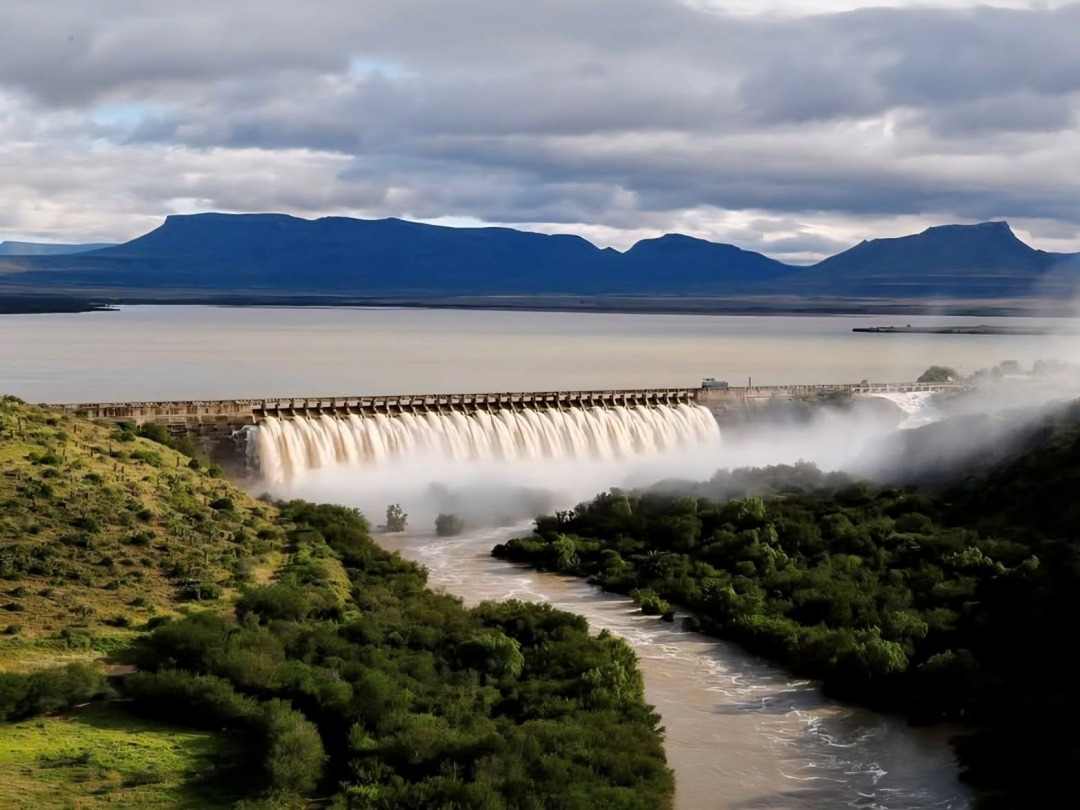
The dam wall has a triangular cross-section, 30m at its deepest and widest point at the base, tapering to 3m at the causeway above. By November 1923, the base of the wall had reached the river bed. As construction proceeded the stepped sloped facing of the river downside took shape, while the upstream face is vertical. These steps are staggered to break up water coming over the 169-meter-long spillway in case of high floods.
A flooding of the Sundays River on 24 March 1924 delayed the final closing of the wall gap. Once the flood had subsided the closing of the gap proceeded. Provision was made for controlled release of the water for agricultural use as well as by the town. Three large desludging outlets help control the build-up of sedimentation. The dam has a maximum height of 33 m above the riverbed level, but like other dams in the area it has lost much of its capacity due to excessive siltation. It was officially opened on the 14 July 1925.
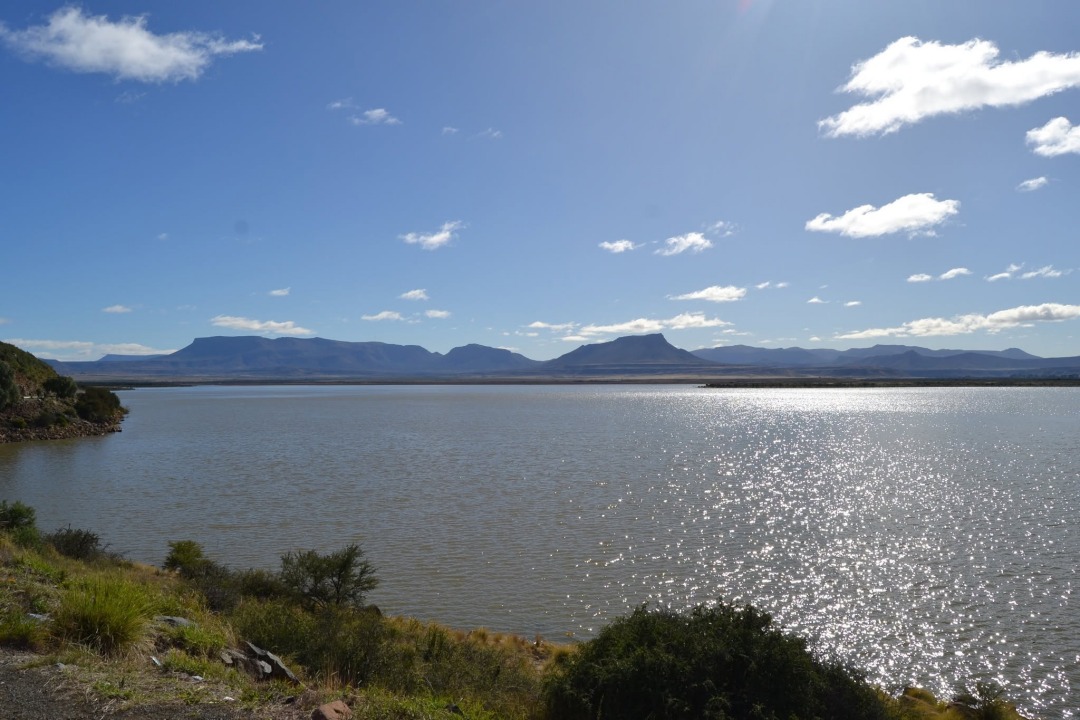
In 2001 the name of the dam, Van Ryneveld’s Pass Dam, was changed to ‘Nqweba’, the isiXhosa word meaning ‘meeting place’ or confluence. Located in the Camdeboo National Park, the dam has a catchment area of 3 800 square kilometres with a storage capacity of 80 million cubic metres covering 1 133 hectares when at its fullest.