
Slagtersnek Monument

Description
The whole saga around Slagtersnek started with a man named Freek Bezuidenhout, a farmer on the eastern frontier of the Cape Colony.
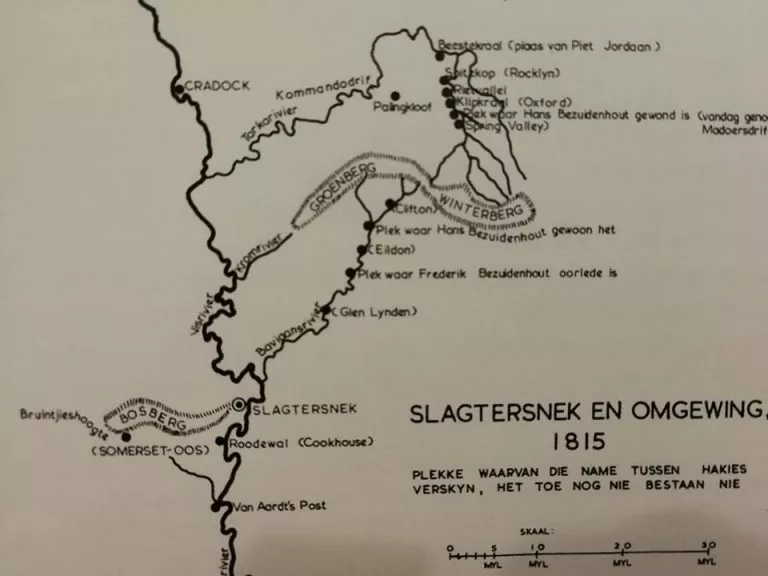
Cornelis Frederik (Freek) Bezuidenhout (24 August 1760 – 10 August 1815) lived a secluded life in the valley of the Baviaans River, east of Cradock. He was said to know no fear, to be full of self-confidence and decidedly arrogant and quick-tempered. Bezuidenhout was generally known as a difficult man and was accused by his servant, Booi, of ill-treatment and of holding back his pay due to a theft accusation against Booi. He was summoned to appear before the court at Graaff-Reinet, but after defying the court’s orders, he was sentenced in his absence. An order for his arrest was issued.
Bezuidenhout was confronted at the Baviaans River, where he refused to surrender and fired on the soldiers. With his mixed-race son and a friend, Jacob Erasmus, he sought refuge amongst the tumbled rocks of the nearby valley. He would not listen to reason and recommenced firing until he was mortally wounded by the soldiers returning the fire. His son and Erasmus, who took no part in the action, surrendered.
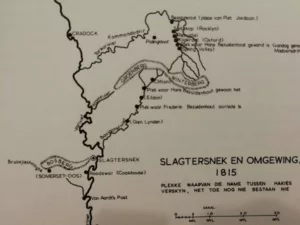
As things tend to go, one thing led to another and at his funeral, one of Bezuidenhout’s brothers, Johannes Jurgen (Hans Jan), swore revenge. Together with a neighbour Hendrik Prinsloo, Hans organised an uprising against the British colonial power and about sixty burghers took an oath of vengeance and loyalty. The motivation behind it was their belief that the British were hostile toward the Afrikaner farmers. On 18th November 1815, a commando of rebels met an armed force from Landdrost Jacob Cuyler, the military commander on the eastern frontier, at Slachter’s Nek.
The name Slagtersnek is derived from the British traders from Grahamstown who gathered here to buy the area’s farmers’ slaughter animals.
Negotiations followed but failed. In the following days, a number of rebels surrendered, although some of the leaders, among them Hans Bezuidenhout, refused to turn themselves over to the British authorities. On 29th November 1815, they were attacked by colonial troops and, like his brother, Hans died while resisting arrest.
All the arrested rebels were finally charged at Uitenhage. Some were cleared, others imprisoned or banished. Six were sentenced to death with one, Willem F. Krugel, being pardoned by the Governor, Lord Charles Somerset. Krugel was pardoned for his valuable service during the Fourth Frontier War. He was, however, banished from the eastern frontier districts for life.
On 9 March 1816, the remaining five were hanged in public at Van Aardtspos near present day Cookhouse. The hangman conducting the execution didn’t realise that five were to be hanged and didn’t bring enough rope, so he used old leather riempie rope. Four of the nooses broke during the process. The four whose ropes broke, as well as the public, pleaded for their lives as prisoners would normally be set free if the rope snapped. Culyer resisted and ordered that they be hanged a second time. This time they were hanged one by one while their wives and children, who were forced to attend the hanging, had to watch. The names of the five who were hanged were Hendrik Prinsloo, Stephanus Bothma, Abraham Bothma, Cornelius Faber and Theunis de Klerk and their names appear along with those of the Bezuidenhout brothers on the monument erected 100 years after the execution.
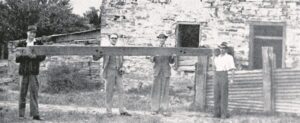
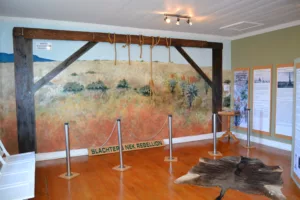
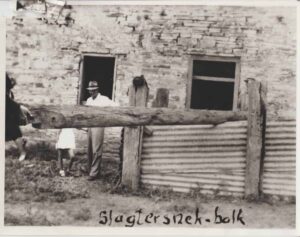
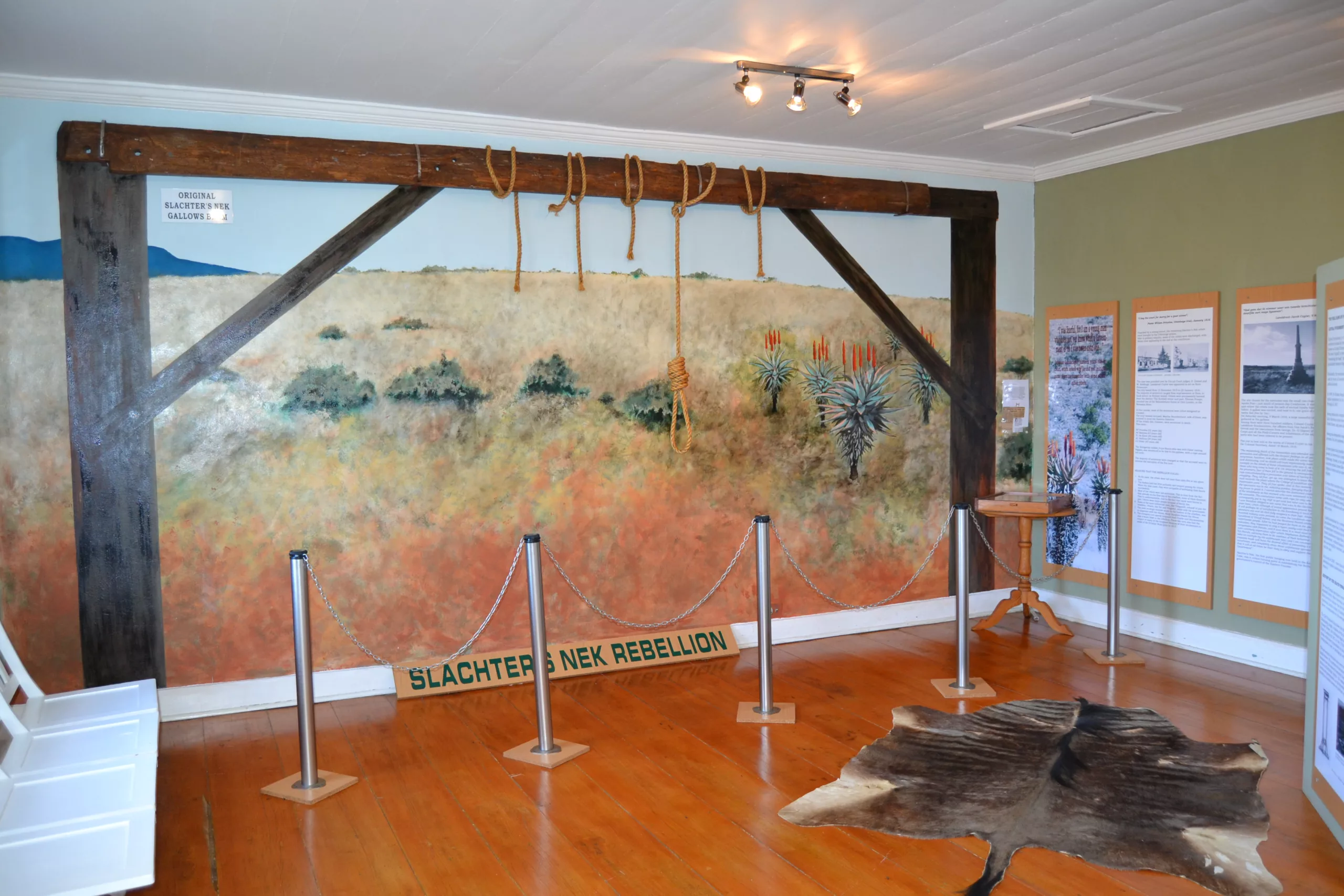
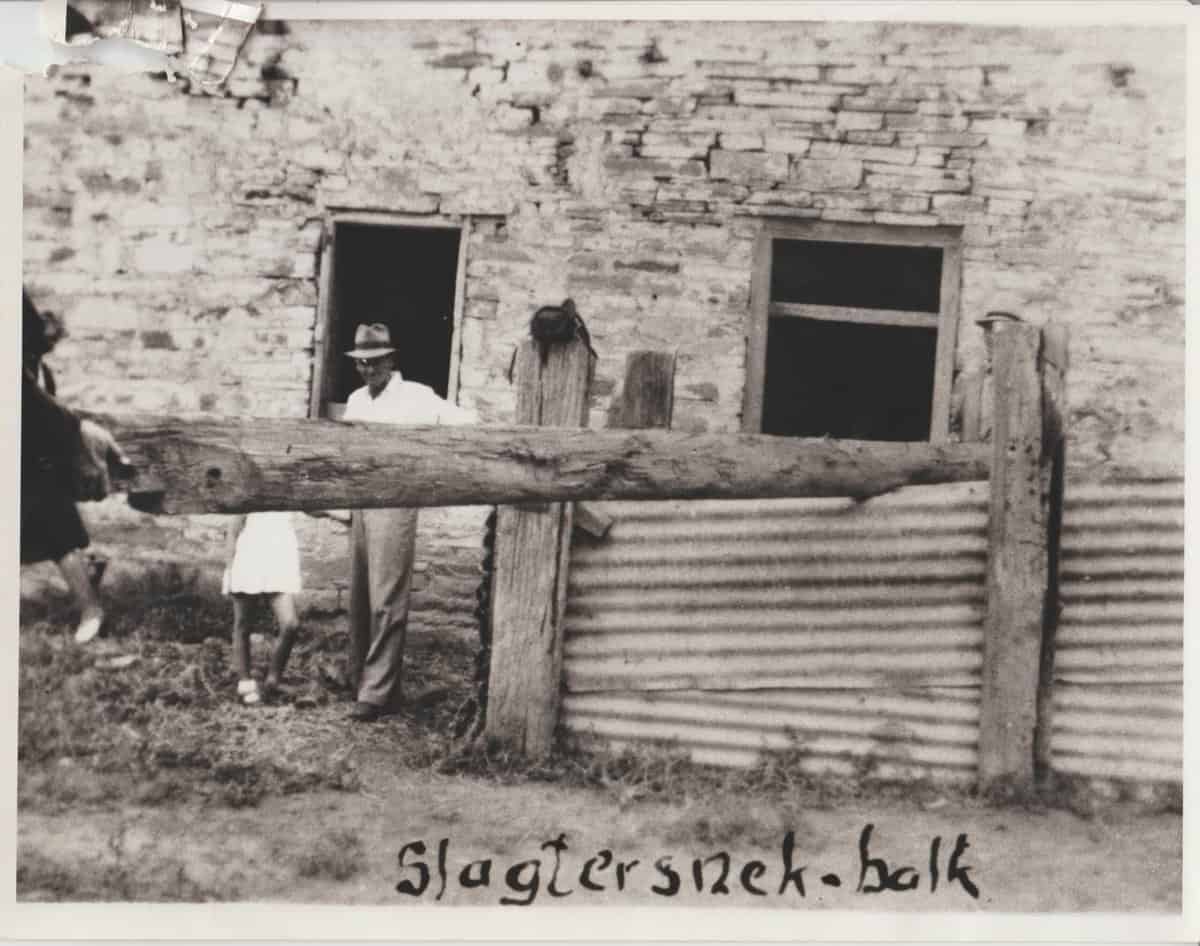
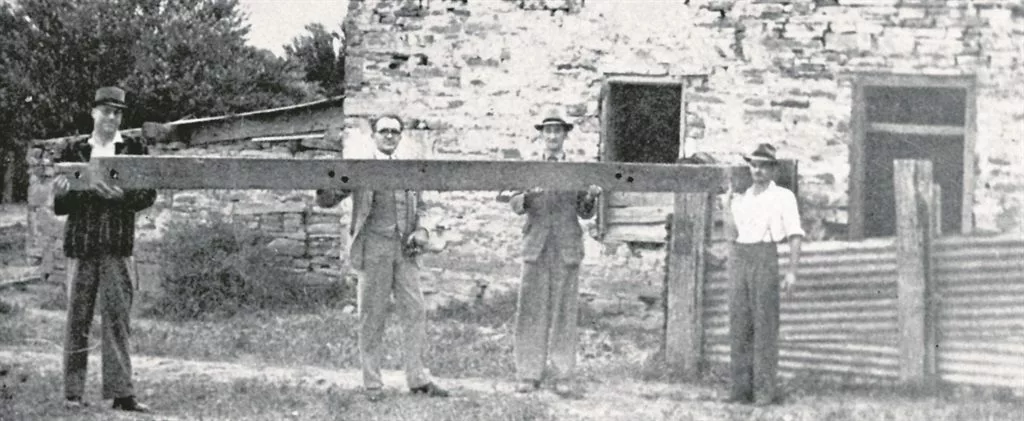
The actual beam used in the Slagternek hangings back in 1816 can be seen as part of the Slagtersnek exhibition in the Somerset East Museum. After the hangings, the beam was returned to its original purpose which was as ceiling support in a farm’s pigsty. It was eventually removed and became an icon of Afrikaner nationalism. In 1949, it was transported to the opening of the completed Voortrekker Monument outside Pretoria and then it ended up in the Cape Town Historical Museum. It was here the beam was rediscovered in one of the storage rooms and it took 5 years of phone calls before it was returned to Somerset East.


Contact Info
- N10 near Cookhouse