1820 Scottish Settler Memorial Church and Thomas Pringle grave

Description
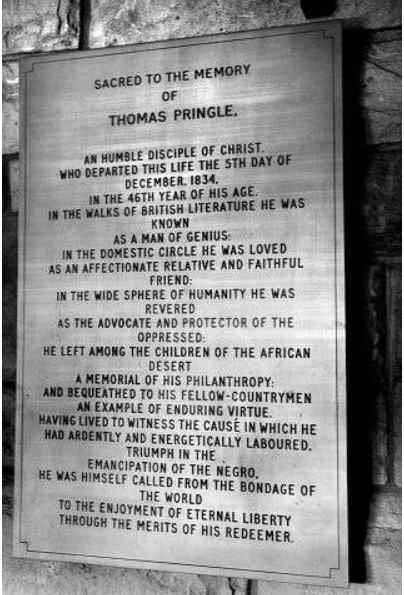
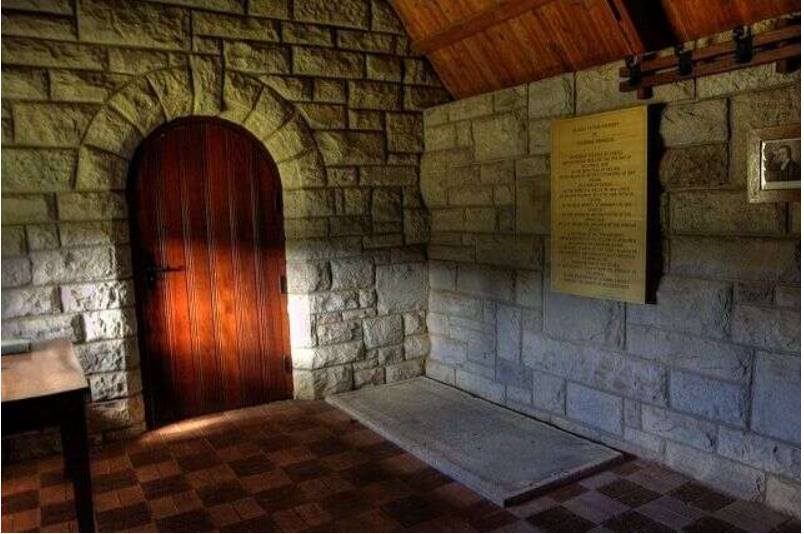
This Church was built by the local community in 1958, as a memorial to the Scottish Settler Party of 1820. It is situated on part of the original land allocation, and contains the remains of Thomas Pringle who was re-interred here in 1970, after his grave in Bunhill Fields in London had been earmarked for destruction. Thomas Pringle resided on this property from 1821 to 1822 and again during 1825.
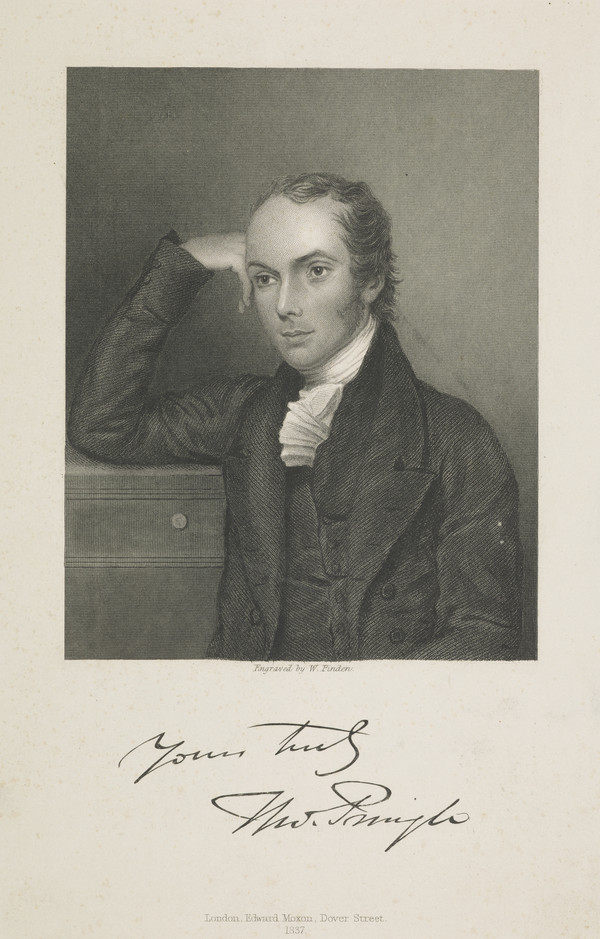
“Thomas Pringle was a struggling writer and poet and through an acquaintance, Sir Walter Scott, a patron of the arts, secured free passage to South Africa as part of the Scottish 1820 settler party. The British colonial government sent settlers out to South Africa in the early 1800s to settle on the land between the British Cape Colony and the Xhosa settlements East of the Fish River. Thomas Pringle was part of the Scottish settlers who were granted land in the area, which is today known as Bedford. Thomas was a cripple, having broken his legs as a child, and he couldn’t cut it in the frontiers of South Africa so he got his brother to come out and take over the family farm.
The Pringle family still lives on the farm in Baviaans River. After his family was settled, Thomas moved to Cape Town where he worked at the newly created South African Public Library and pursued his writing career. To supplement his small income, he opened a school with a friend from Scotland and in 1823 started a newspaper, the South African Journal, and a magazine, the South African Commercial Advertiser. He and his staff published editorials advocating reforms of the British colonial system. After both publications were censored by the government, Thomas resigned. His reformist views also led to the failure of his school. He resigned from the library and returned to his family’s property in 1824 however he continued to fight for the freedom of the native people. Eventually the harsh conditions took their toll and he and his wife returned to London around 1826 in financial ruin. Thomas’ work in South Africa attracted the attention of the British Anti-Slavery Society and they offered him a job as secretary, a job that suited him perfectly.