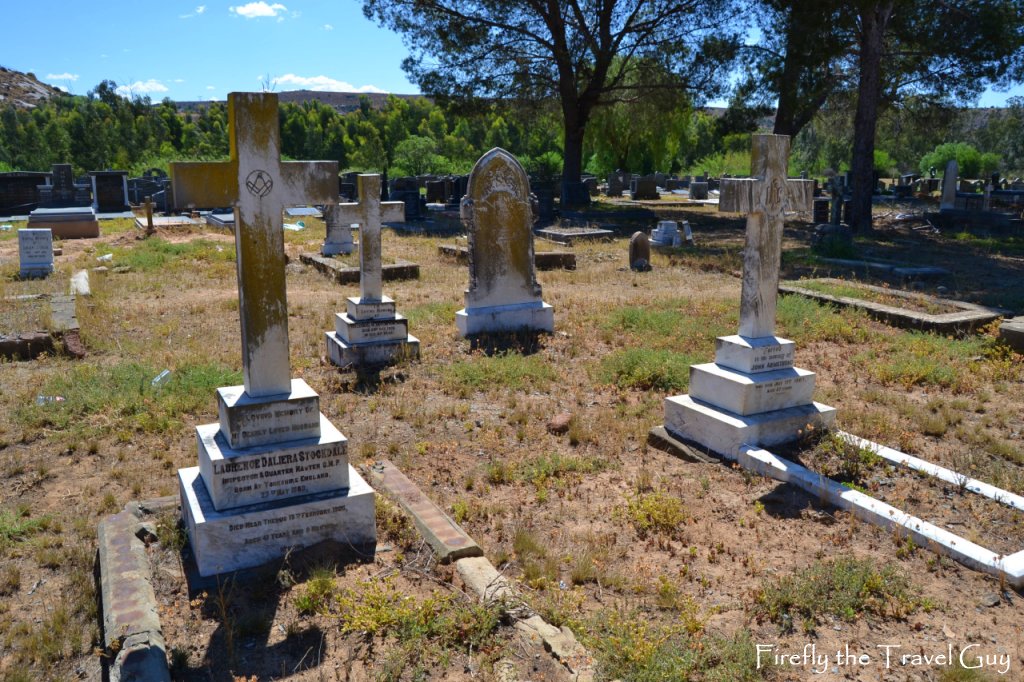
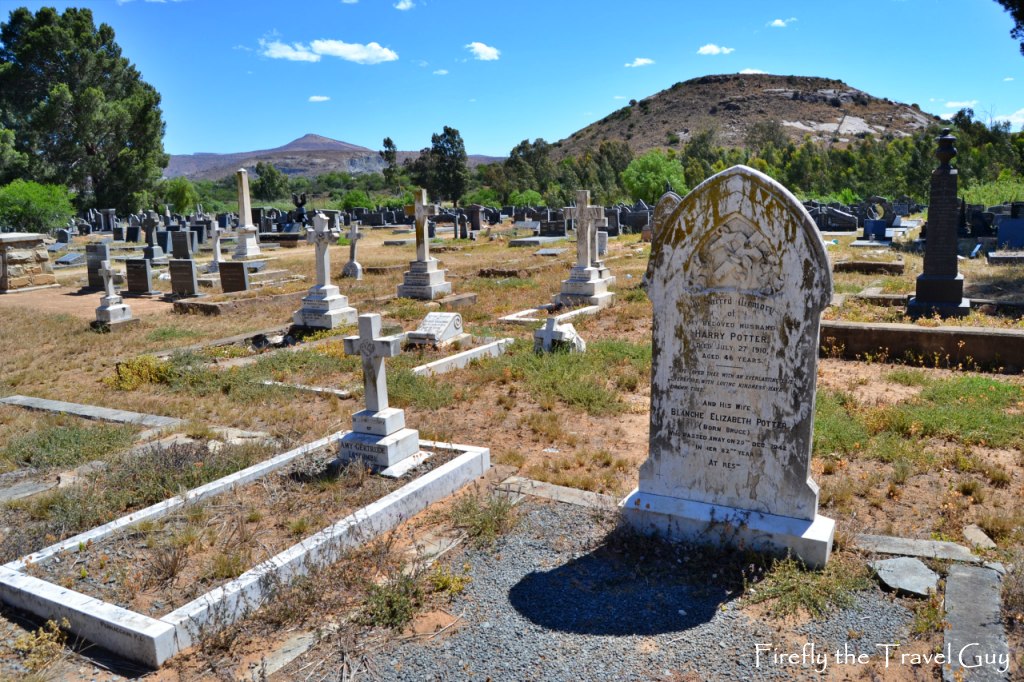
Cradock Cemetery
Description
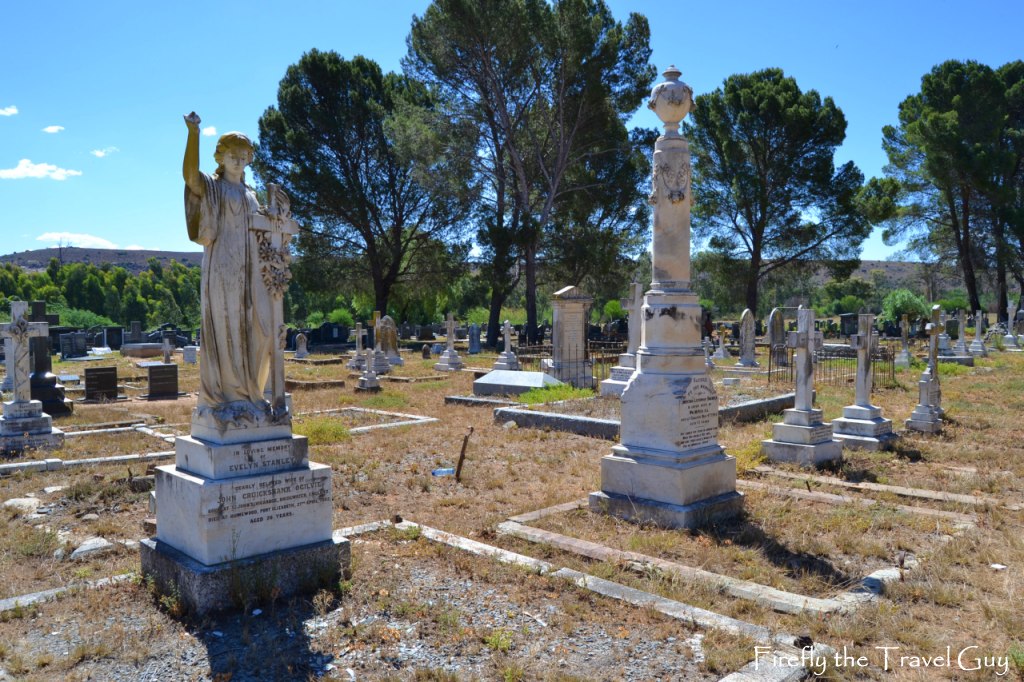
There are many stories – some sad, some wondrous, others downright weird – to be found at the Cradock cemetery.
Here’s a simple black stone in the ground that only says: “Harry Edwin Wood – Astronomer”.
Mr Wood, as recorded in history, was the official Astronomer and Timekeeper for the Union of South Africa. He is also famous for his discovery of a comet recorded as “1660 Wood”. In 1941, he retired and came to farm in the Mortimer area near Cradock. Legend has it Mr Wood, the one-time National Timekeeper, used to drive all the way into Cradock (30km) to synchronise his wristwatch with the time on the steeple clock of the Dutch Reformed Mother Church. The one that looks like St Martin-in-the-Fields, Trafalgar Square, London.
Nearby stands the imposing stone belonging to General Pieter Hendrik Kritzinger, who fought the British in this district during the South African (Anglo-Boer) War. Gen Kritzinger was one of the Boer warriors who led their British pursuers on a “devil’s dance” from the Free State through the Karoo Midlands, from Graaff-Reinet to Aberdeen and Willowmore and all the way across to Cradock. This intrepid Boer guerrilla fighter also farmed around here, and later became a member of the Cape Provincial Council. Although a fine soldier, he was also known as a “gentlemanly general”, and after the war his attitude to the British softened considerably. In fact, the good General was a bit of an agricultural guru to young British immigrants arriving in Cradock to set up a farming life.
You used to be able to find the graves of the four Cape Rebels who were executed in Cradock in front of the Victoria Hotel, and buried here. However, the devastating floods of 1974 washed them away. One of those executed was the 16-year-old Johannes Petrus Coetzee, captured in a fight in the Stormberg area. He thought they would treat him as a POW. They charged him as a rebel, convicted him of treason and made all the Afrikaners in Cradock come down to the centre of town and watch the hanging. One can just imagine the bitterness this evoked, and the subsequent fallout in the local community.
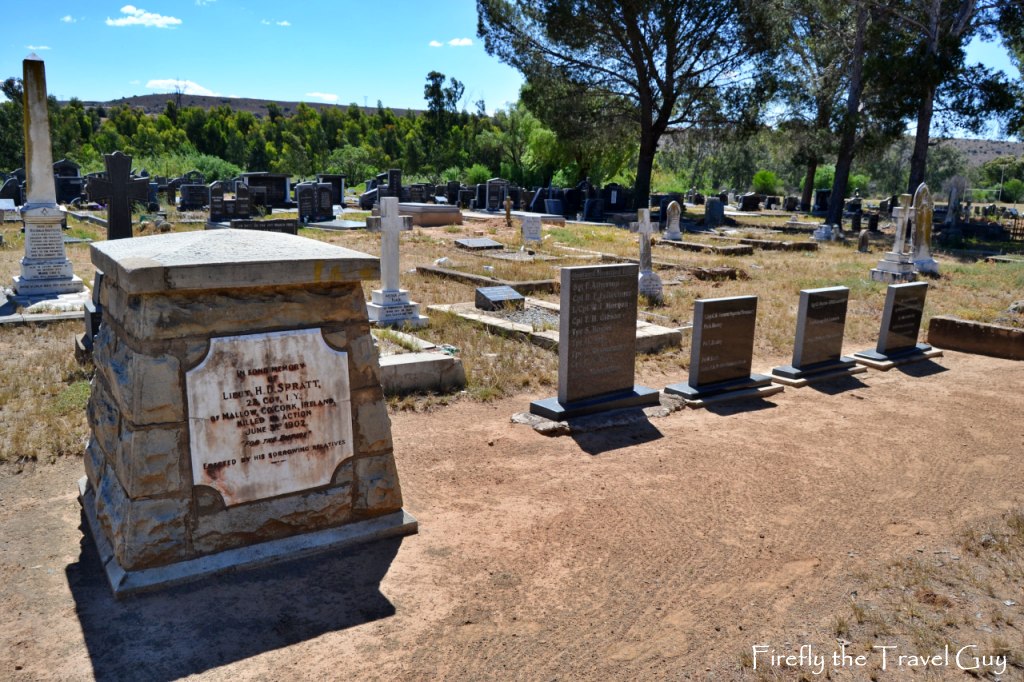
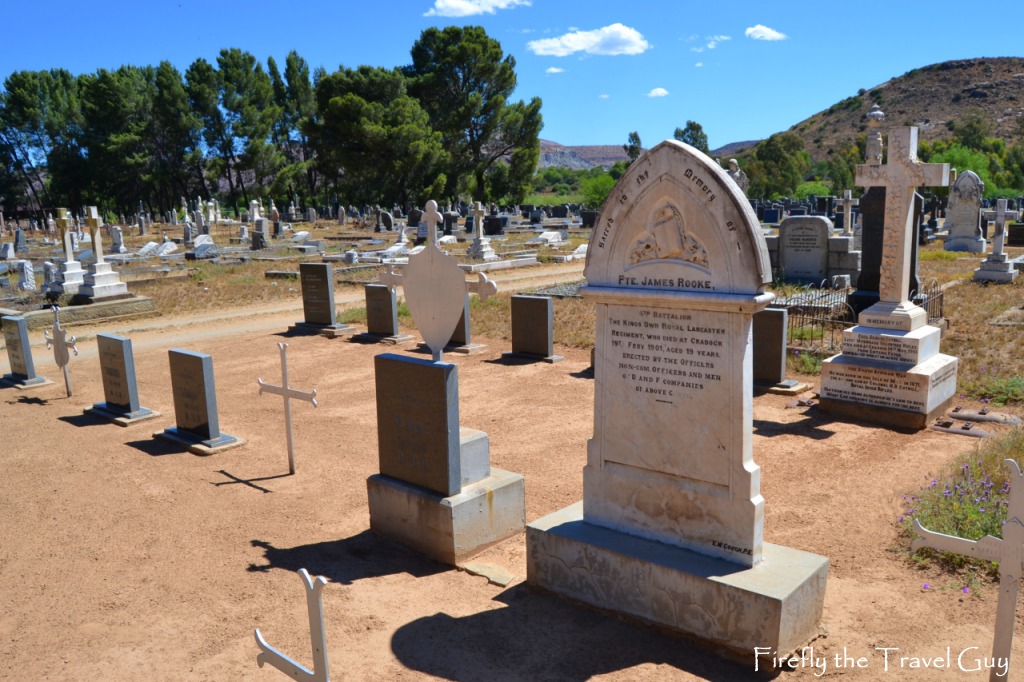
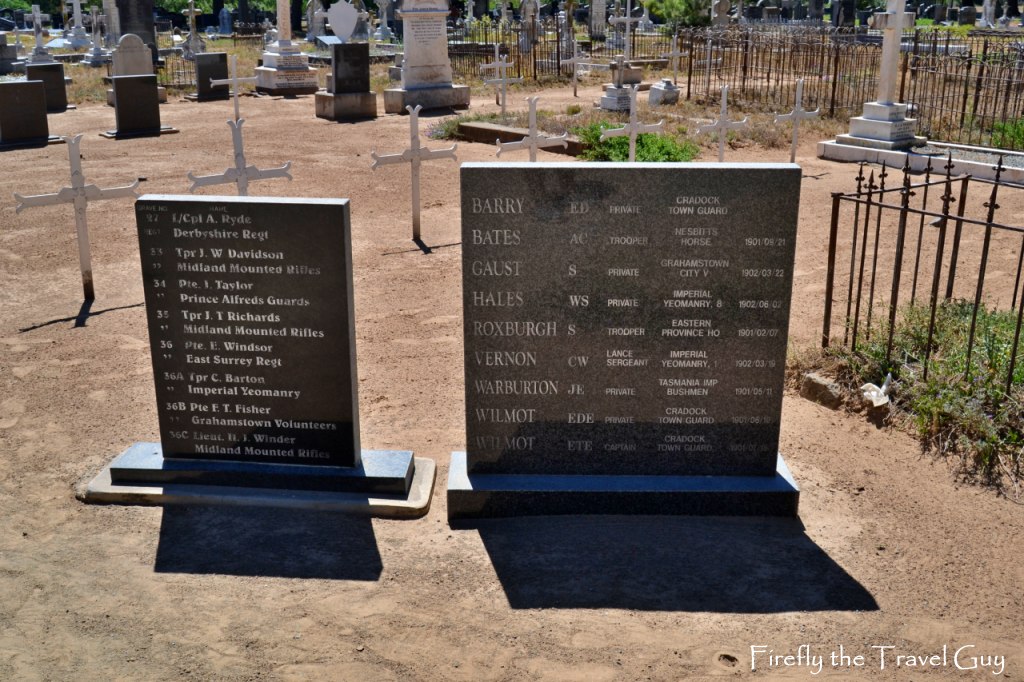
Nearly 70 British soldiers lie buried on these grounds. Some of them came back to Cradock after the Anglo-Boer War and made a life here.
One of them could have been a Harry Potter. It’s quite weird, really.
The tall heaven-pointing plinth with the Freemason’s mark at its base belongs to the Koettlitz couple. Dr Reginald Koettlitz was famous for being, according to his description, “An explorer and traveller, surgeon and geologist to Expeditions North Polar and Abyssinia and with Scott to the Antarctic”.
Along the path, there’s another large memorial to the Brothers Botha, who died on October 25, 1918, of Die Spaanse Griep – the Spanish Flu.
Which brings us to the children’s section of the cemetery, where wistful cherubs with downcast eyes guard the graves of babes, the pained messages of their parents on the stones almost too poignant to bear. Frontier life took its toll on the offspring of the pioneers and settlers along the Great Fish River. The Spanish Flu was but one of the many causes of infant death.
The grave of one Louis Levenstein, who has an etching of a rugby ball on his stone. The inscribed dedication tells that Louis died in Adelaide during a rugby match.
Nearby is another sports fan’s grave, that of Luzarian Vernon Holland. The stone is green and the base depicts an entire rugby field.
On the way out, notice the stone of one Peter Sidey, buried in 1864 with the help of the Cradock Teetotal Society.
Source – This is an extract from Karoo Roads II – More Tales from the Heartland, by Julienne du Toit and Chris Marais.