Grootfontein College of Agriculture

Description
The history of Grootfontein dates back to the 1790s, when Klaas van der Walt lived on Grootfontein and the farm covered 3,800 ha. The first official registration only took place in 1836, when it was awarded to Hendrik van der Walt and his brother Nicolaas as erfpagland. The farm Grootfontein was originally divided into two sections, with a dry river bed as the only separation.
Under the successive ownership of the Van der Walt, Vorster and Du Plessis families, Grootfontein gradually grew to its present size of 11,418 hectares. The farm’s last private owners were Jan and Nicolaas van der Walt and their sister Lucia, married to Schalk Willem Vorster.
After the Anglo Boer War, the farm was bought by the British Department of War in order to establish a peace-keeping force in the area. This was the beginning of the military era of Grootfontein that lasted from 1903 to 1910. During this military period between 12,000 and 15,000 British soldiers were stationed at Grootfontein.
During this period most of the soldiers lived in tents until prefabricated houses were imported, made of wood and corrugated iron. Some of these houses are still in use. About 7 000 troops from the Third Manchester Regiment were stationed at Grootfontein. Some of them were married, so about 3 000 women and children also lived at Grootfontein. The infrastructure was well-developed and included schools, a church, hospital and housing for the troops and their families. The troops brought 2 000 horses with them.
The foundation of the Grootfontein College of Agriculture dates back to the year after Union in 1910. The farm Grootfontein was transferred to the Union Government by the Imperial Government in 1911 and an agricultural school and experimental station was started in the same year. The total size of the ground 11 418 ha.
Discipline was strict, and permission was needed to leave the School. The paraffin lights had to be put out at 21:00 in the evening and the day started at 06:00 in the morning. The students worked on the farm in teams for a week and then spent a week in the classroom. A special dairy course was introduced in 1913 with 10 students, the maximum that could be taken. The first three-week short course was held in June 1913 and was attended by 30 persons. This was a course in Home Economics (Domestic Science).
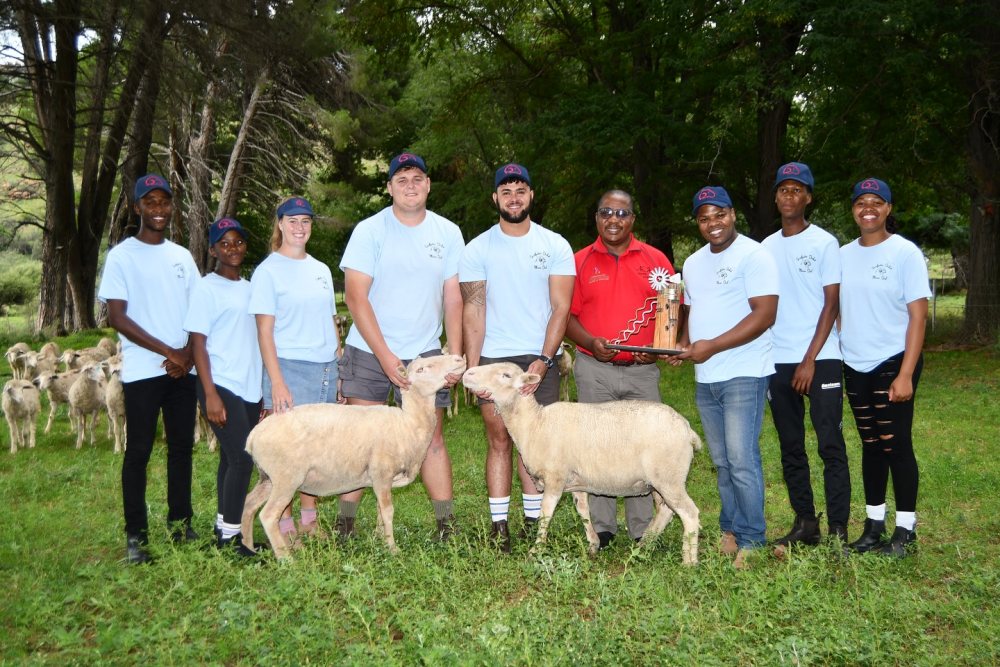
The well-known sheep-and-wool course was introduced in 1919. This course was extremely popular from the beginning and the School could hardly keep up with the demand. Grootfontein also took the lead in starting the first Wool Growers’ Associations – those of Middelburg and Graaff-Reinet in 1922. There were many ‘firsts‘ in the development of the Grootfontein Agricultural School in the years to come. In the course of time the number of students grew, the courses and syllabi were progressively extended and adjusted to the requirements of the time. The educational facilities and number of staff accordingly increased so that by 1939, Grootfontein could be given College status and became known as the Grootfontein College of Agriculture.
Because of the Depression, a two-year course in agriculture was introduced in 1934. It was subsidized by the Government and was followed by the introduction of an eight month sheep-and-wool course in 1936.
During the first week of October in 2001 the College was evaluated by the HEQC (Higher Education Quality Committee). Both the Higher Certificate in Agriculture, the Diploma in Agriculture and the Institute as a whole were accredited by the HEQC. This means that students who attain their certificates and diplomas, may further their qualifications (e.g. B.Tech), including degrees at certain technikons.
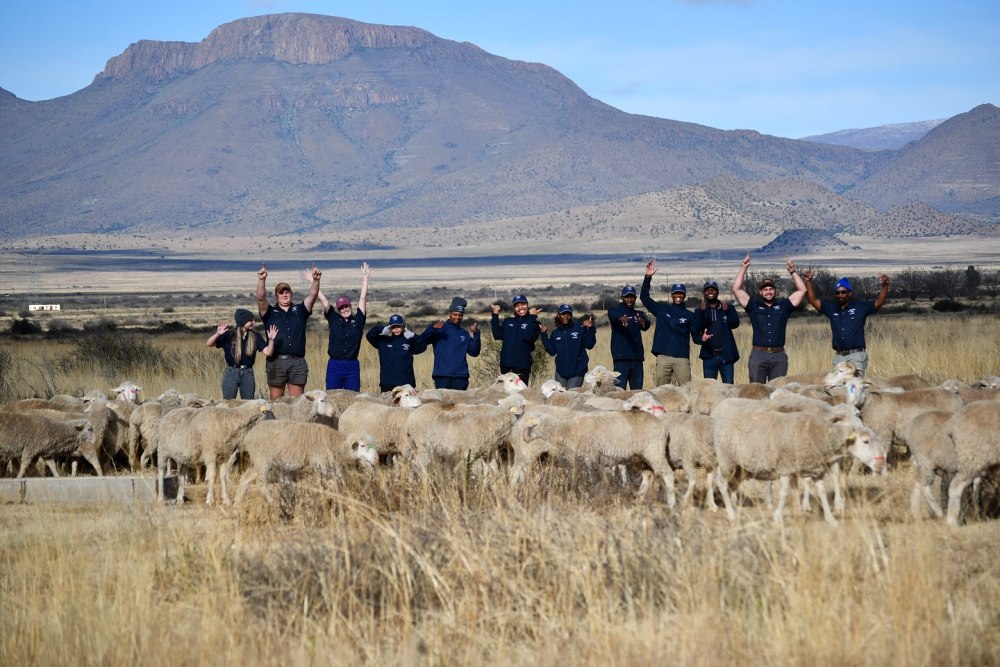
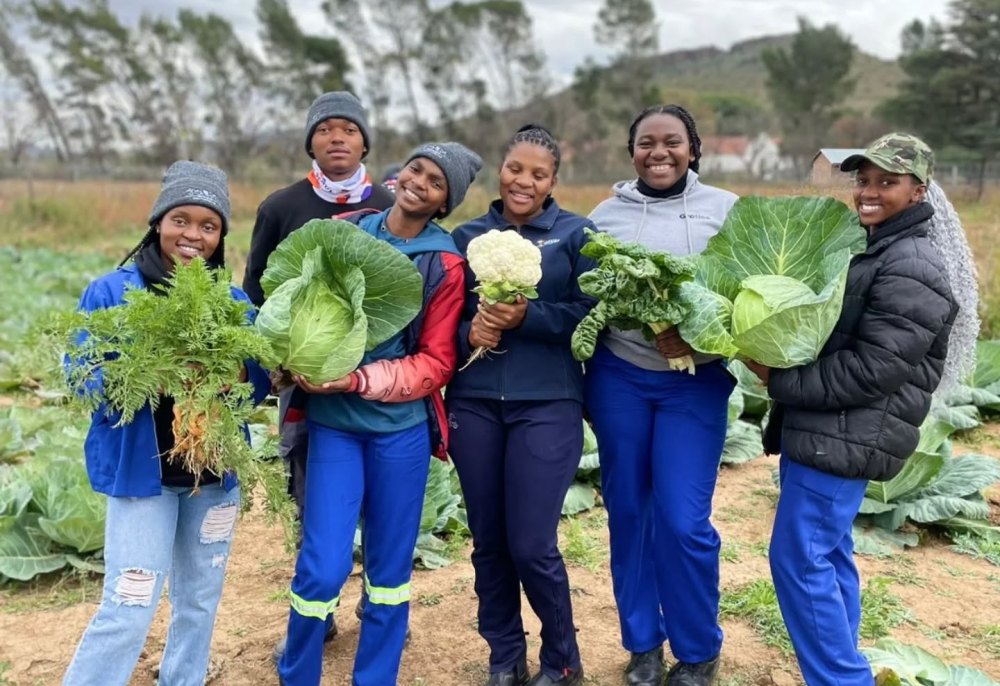
In 1939 Grootfontein gained College status and is one of the oldest agricultural colleges in South Africa. It has a proud training and research history contributing to the prosperity of livestock farming in the Karoo and other arid regions. The vision of Grootfontein is to be the world’s leading centre of excellence in training, research and extension in small stock and in agricultural production in semi-arid to arid climates.
Except for Grootfontein’s agricultural college image, it houses a rich and diverse history. Several of the original buildings and memorial graves from the British War Camp era can be seen.
Historic Buildings
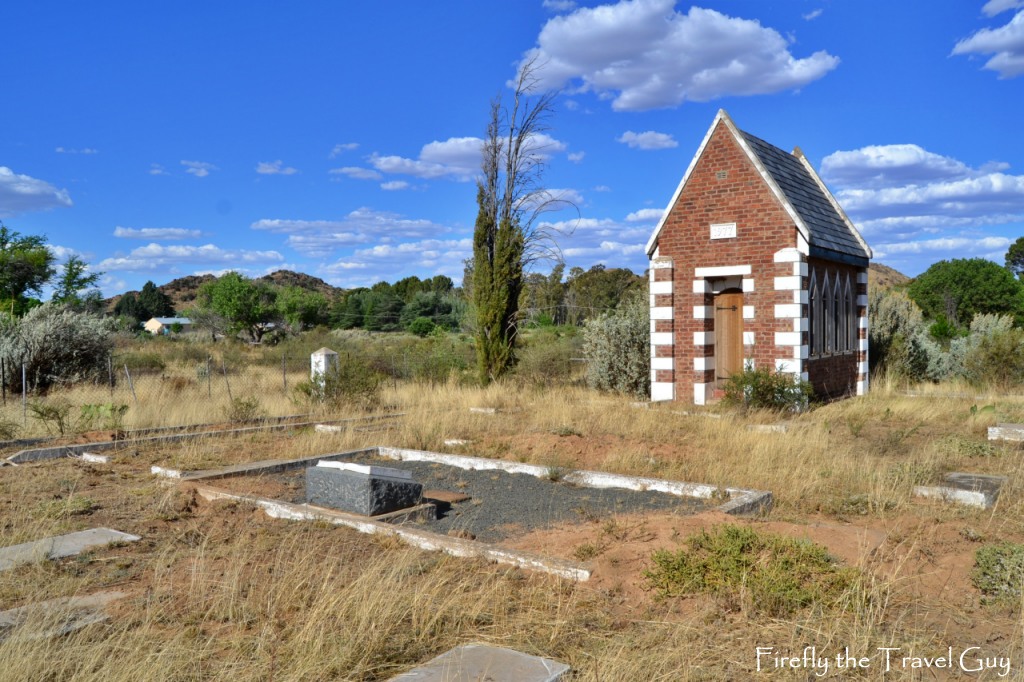
The Van der Walt and Vorster Cemetery at Grootfontein
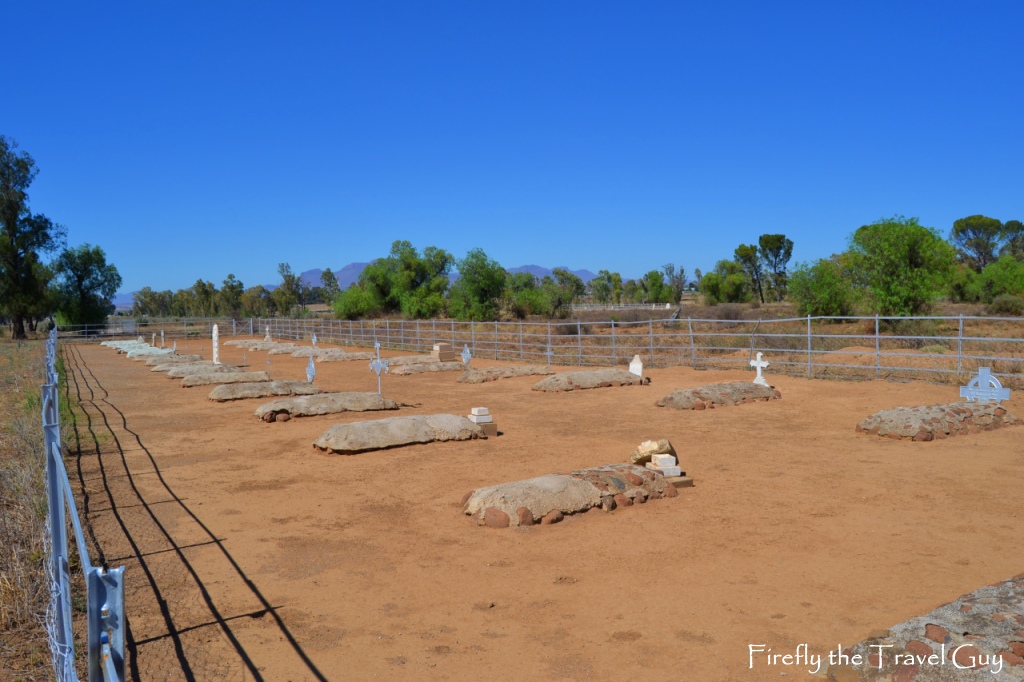
Grootfontein Military Cemetery (Kingsway Cemetery)
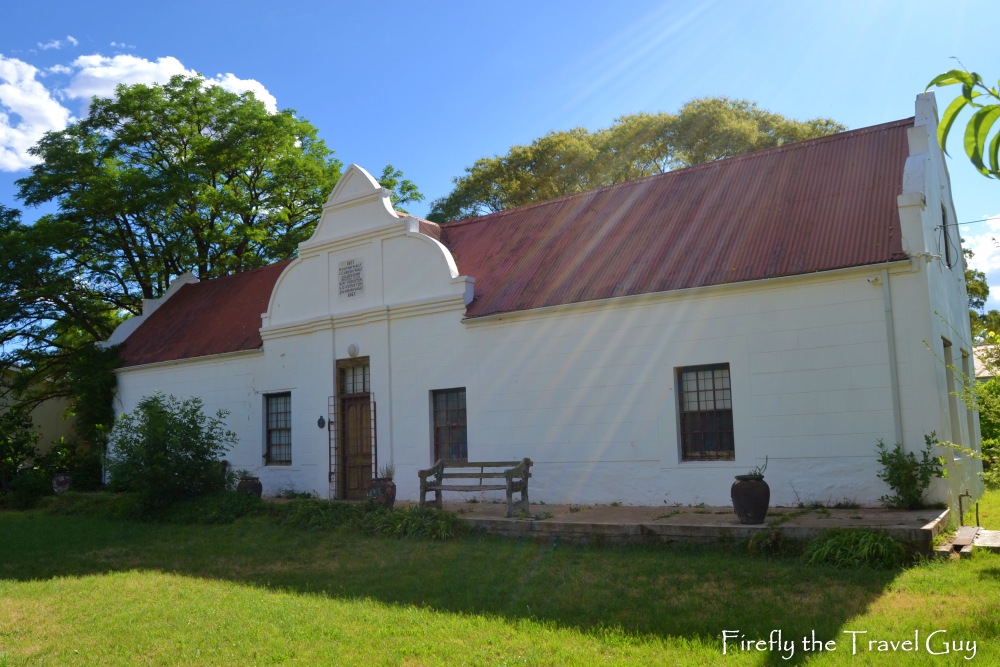
British Officer’s Mess
Many old students know the Officers Mess, situated on the grounds of Grootfontein as a former hostel named House Karoo. The mess dates from just after the Anglo Boer War period (1903-1910) and was one of many corrugated iron-and-wood structures that belonged to a vast British Military encampment on the farm. Both its façade and ground plan closely resemble two other famous old Officers Messes; viz The Wynberg Officers Mess and the Jan Smuts House, Doornkloof, Irene.
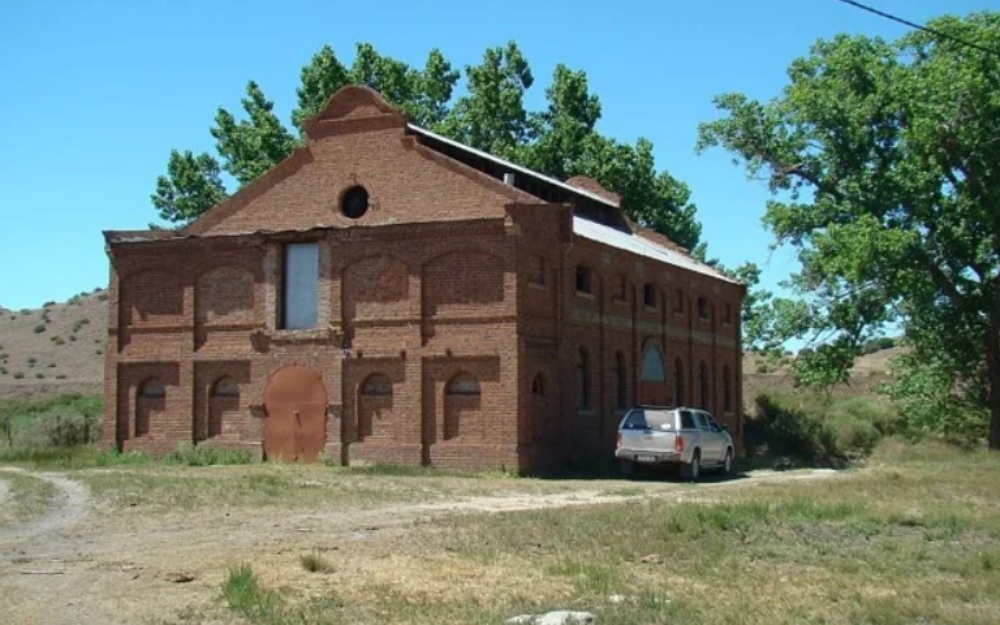
British Military Pumping Station
The pumping station was erected in about 1904 by the British troops that were stationed at Grootfontein. Its site is the marshland from which the actual Groote Fontein springs. Good quality bricks and cement were used to create the many Roman arches, which have subsequently been bricked up. On the other side of the hallway is an upstairs gallery, which originally accommodated water tanks used to cool the oil-driven pumps. Below are two storerooms. Nearby one can see the Mile Dam thus named because its wall was originally a mile long. This dam was built during the depression years (1930s) by subsidized white labour to catch rainwater and augmented the fountain.
Visits by prior arrangement only: Elana Kitching – Tel: 049 802 6600, mobile: 084 244 6373 or email: elanak@daff.gov.za