Steynsburg Reformed Church
Description
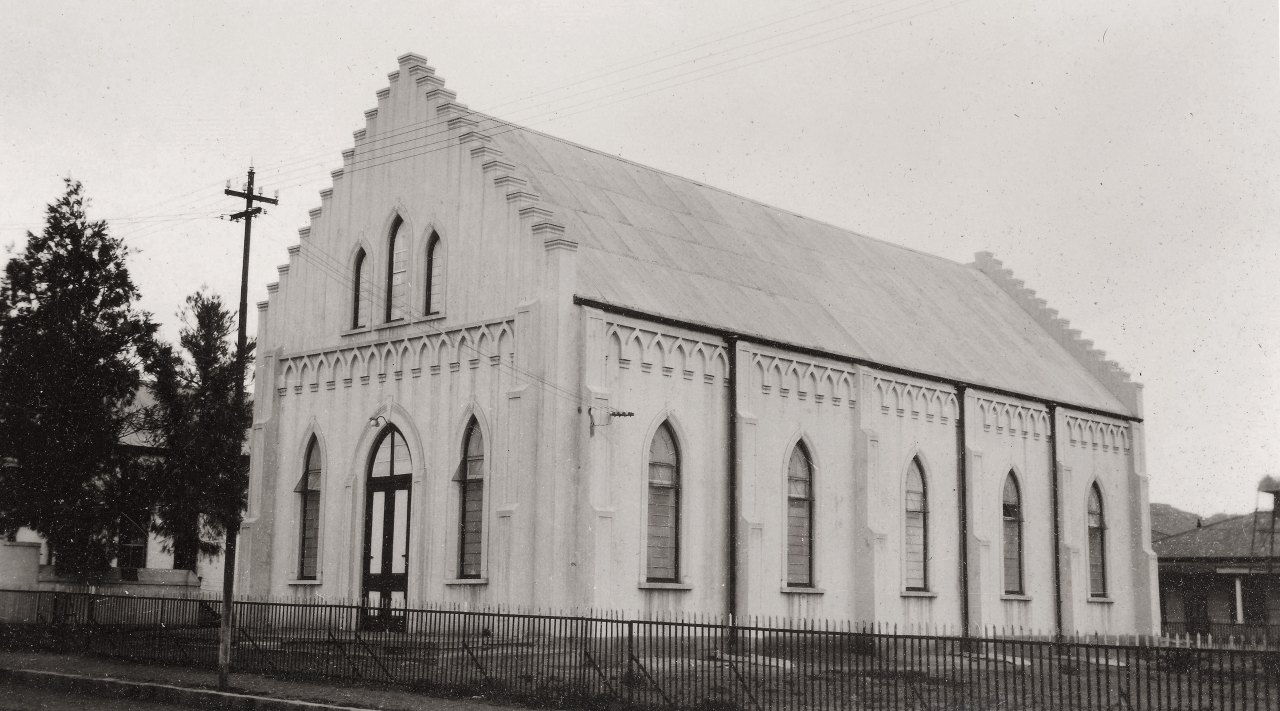
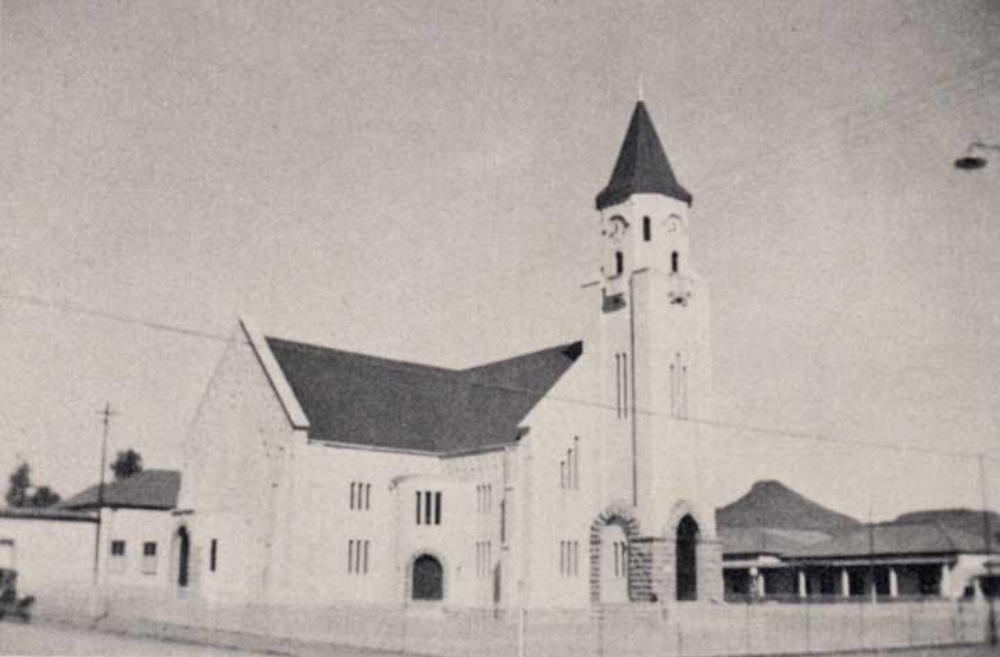
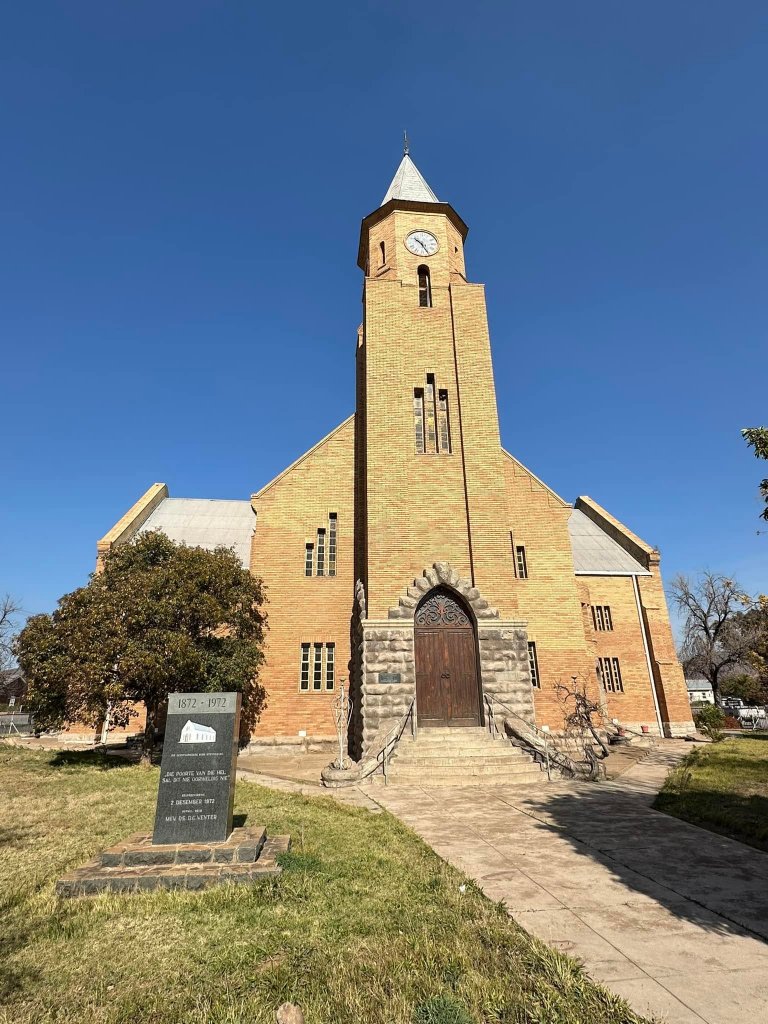
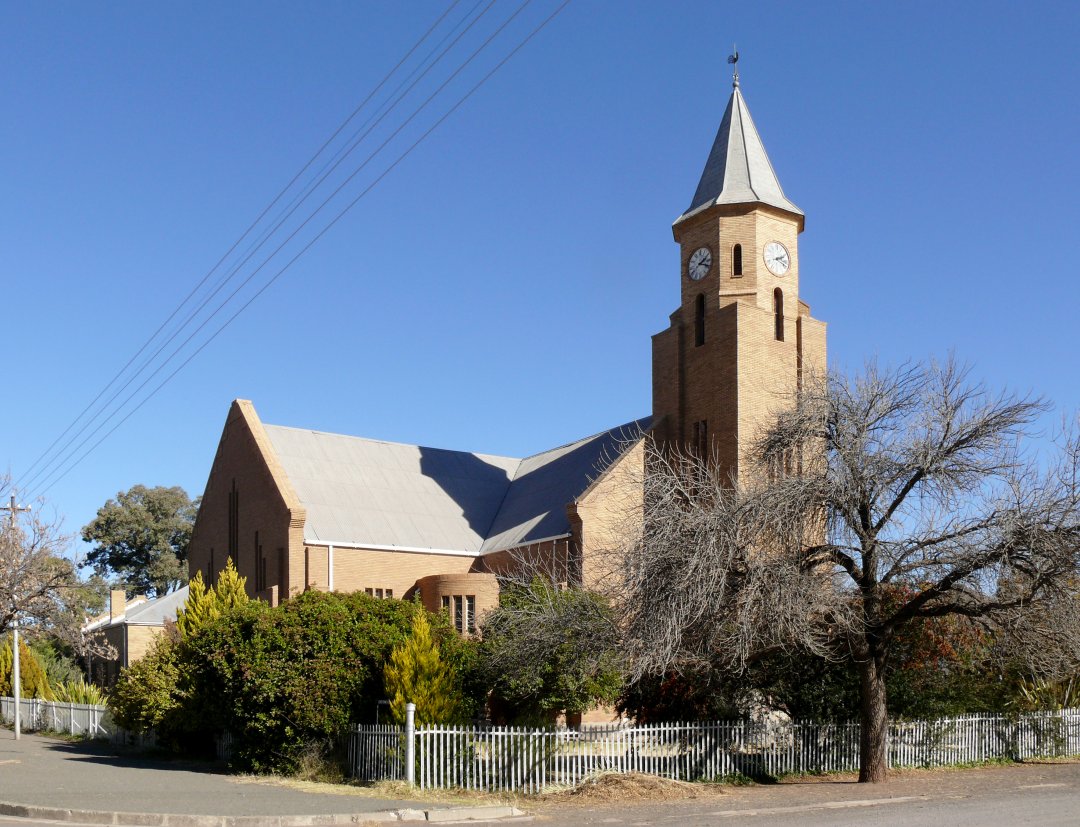
The cornerstone was laid on 2 August 1879 by ds. Dirk Postma and the church was inaugurated on 4 September 1880. In 1939, it was enlarged to the present building and the tower was added. In 1952 it was clad in face brick.
The Steynsburg Reformed Church was founded by the church council and named after elder A.P.J. Steyn, who took the lead in founding the congregation. Because of the congregation’s zeal for education, it took an important place in the Reformed church association, especially during the first almost 80 years of its existence until around 1950. A school with 100 learners was opened here in 1875, and in 1905, a school for Christian national education (a counter to the state’s anglicisation policy) was established, from which a teaching college developed.
A number of members of the Reformed Churches of Middleburg Cape and Burgersdorp lived in the district where Steynsburg is today. The distance they had to travel to church was great, and the need for their own hometown and church became stronger. Elder A.P.J. Steyn of Middelburg, a brother of President Paul Kruger’s mother, was the soul of the enterprise. He was undoubtedly a man of exceptional ability and great influence. Rev. JA van Rooy later described him in his memories as “a venerable figure, his countenance and entire physique show that he is an uncle of President Kruger.”
A commission of two persons, the aforementioned A.P.J. Steyn and L.S. van der Walt, was assigned to buy land with a view to establishing a new town and a congregation. The farm Grootvlei was purchased. The land for a village plant was ready, but the beginning of a town was closely linked to the establishment of a new congregation. On 16 August 1872 elder Steyn approached the church council of Middelburg to nominate a commission, not to establish a new congregation, but to determine the boundary of the new town. The church council agreed and nominated a committee to do so.
The congregation of the Reformed Church of Steynsburg was established on 7 December 1872.
At its second meeting (8 March 1873), it was decided to ask the congregation about the construction of a “helper church”. The church council also had to stand father to its other child, the future town. The clerical council had already established the conditions for the sale of plots at this meeting. Somewhere along the way, a “village committee” was established, the members of which were nominated at a public meeting. They had to take the necessary steps to lay out the town. Plots were surveyed and sold by auction. All of this benefited the church treasury, as the town was transferred to the name of the Reformed Church Steynsburg.
The village committee came up with a recommendation to donate 22 plots to the Dutch Reformed Church. The Reformed congregants were jealous of their monopoly and they flatly refuse to give up the plots. Only six months later on 9 January 1874 it was decided to donate and transfer the plots as soon as a congregation of the Dutch Reformed Church was established.
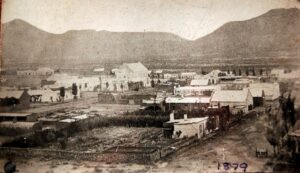
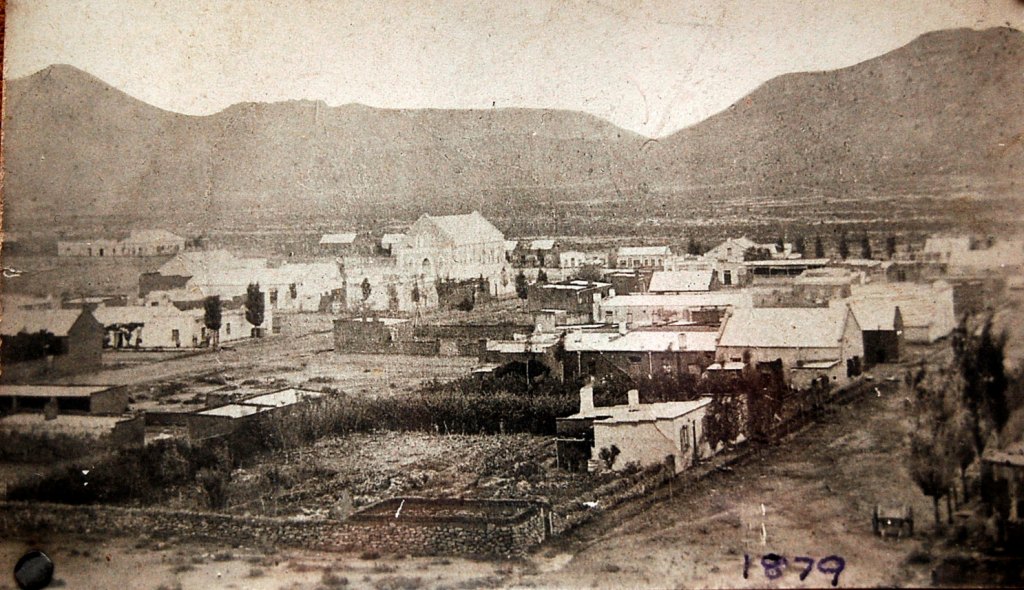
The “helper church” was always only a temporary church, so on 28 February 1879 the church council decided, with the full support of the congregation, to proceed actively with the construction of a new church. On 2 August 1879 the cornerstone was laid by Prof. Dirk Postma. The ceremonial inauguration took place on 4 September 1880.
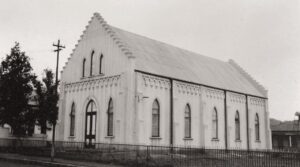
Running a town became a huge burden for the church, and in 1892, the church sold the town with the pasture to the municipality for the meagre sum of £750.
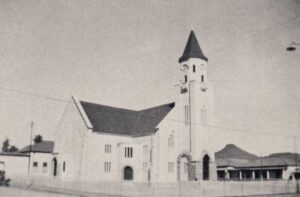
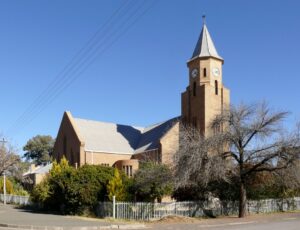
This church building was rebuilt into the present building in the 1939, and the face bricks were installed in 1952.