
Tarkastad Historic Buildings
Description
Tarkastad has a number of historic buildings, churches and monuments in addition to the main listings from the town on this website.
These main listings can be found on the following links:
Tarkastad Dutch Reformed Church
Tarkastad War Memorial
World War I gun
Battle of Elands River graves
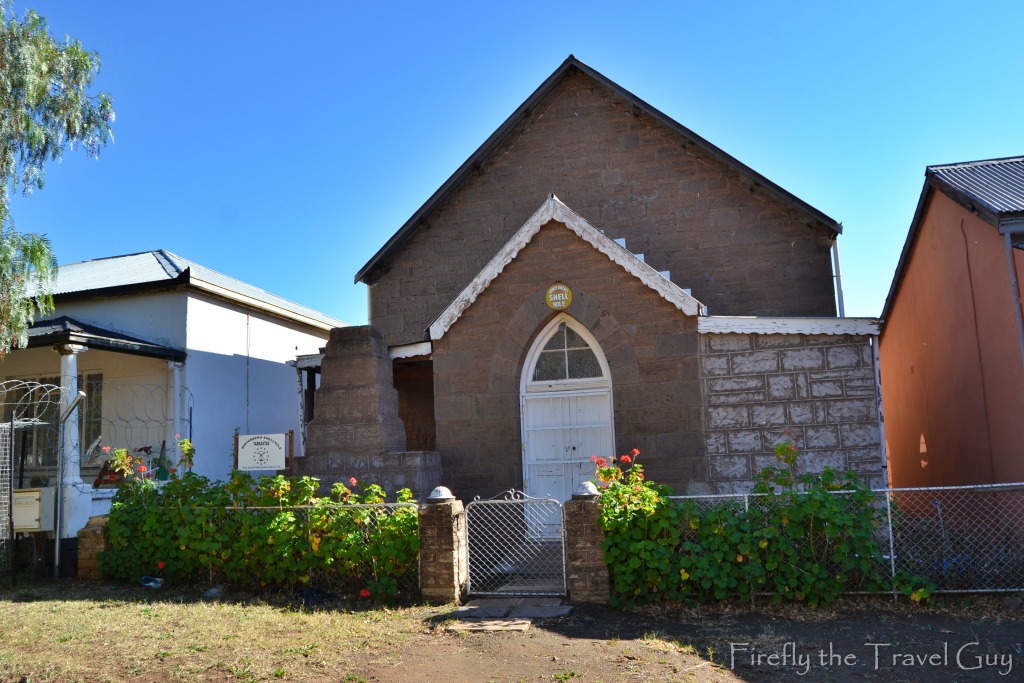
Tarkastad Freemasons Lodge
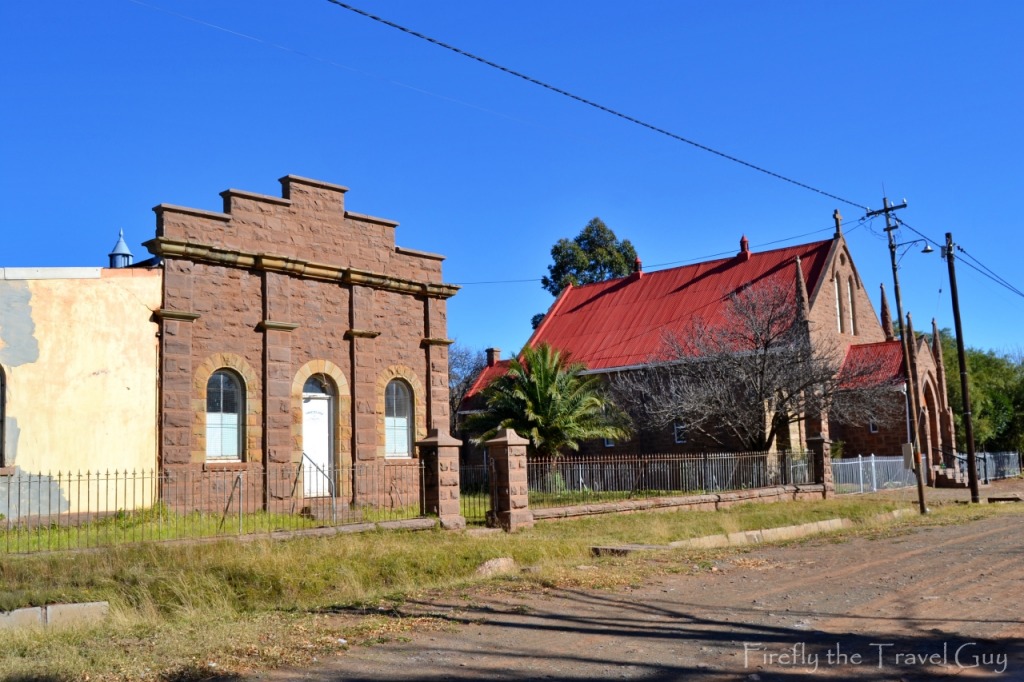
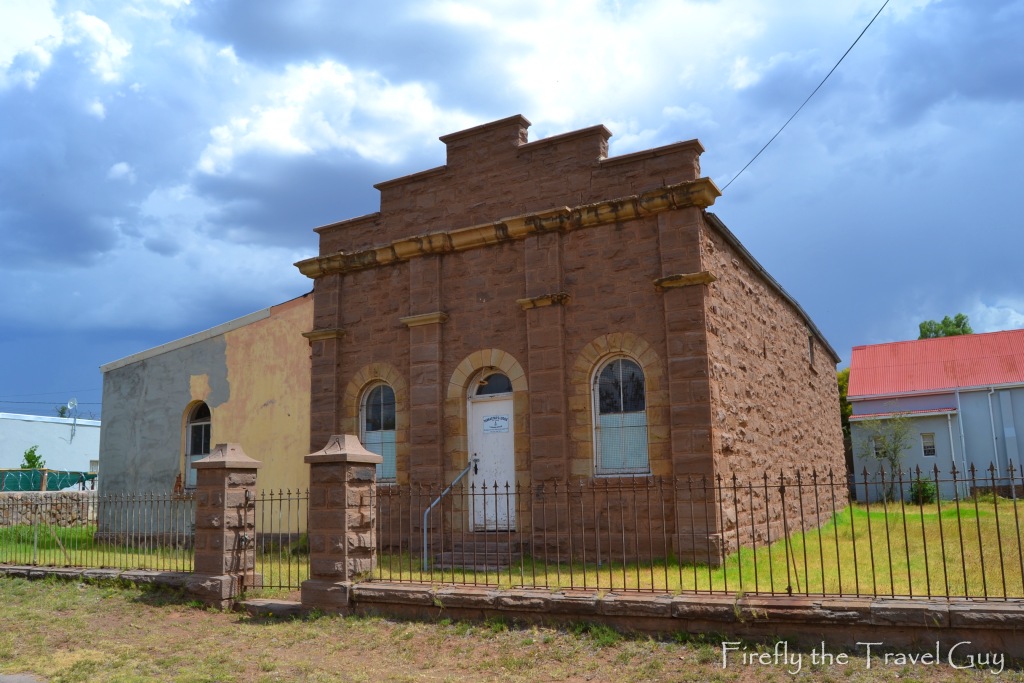
This little stone building next to the Presbyterian Church in Tarkastad is the Tarkastad Freemasons Lodge. It was built in 1881 with stone that came from somewhere between Tarkastad and Cradock. The Lodge is called the White Hope Lodge because of Mr White, the then local pharmacist, and his continued hope for a lodge to be built. The number 1939 can be found on the building, but it doesn’t refer to a year; rather is the lodge’s number. The Lodge was consecrated on 13 March 1882.
Read more about the Tarkastad White Hope Masonic Lodge
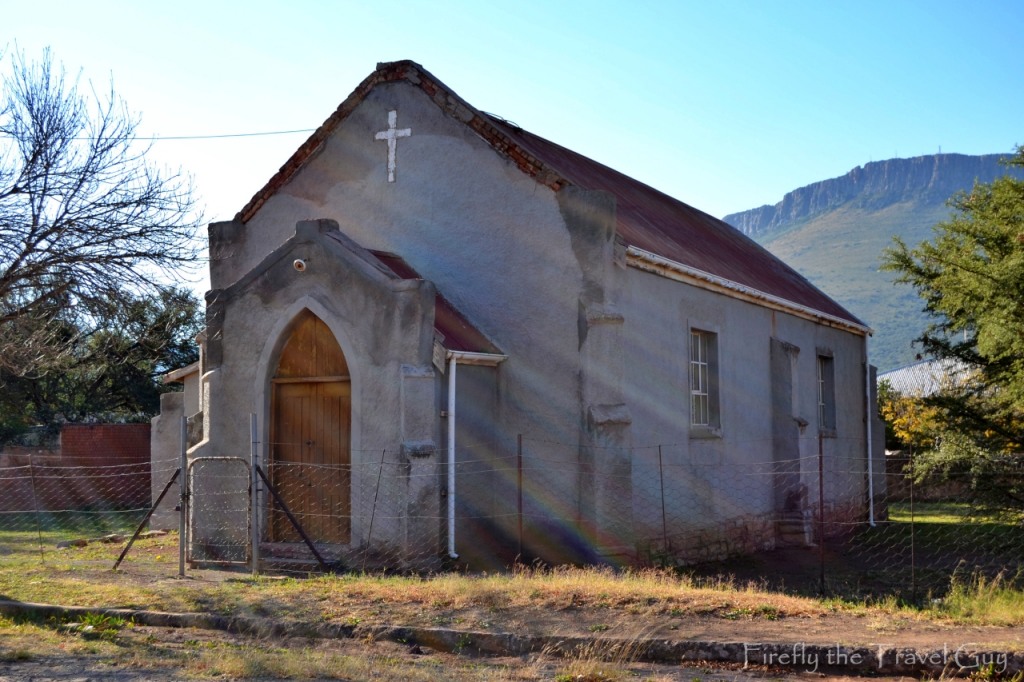
Tarkastad Presbyterian Church
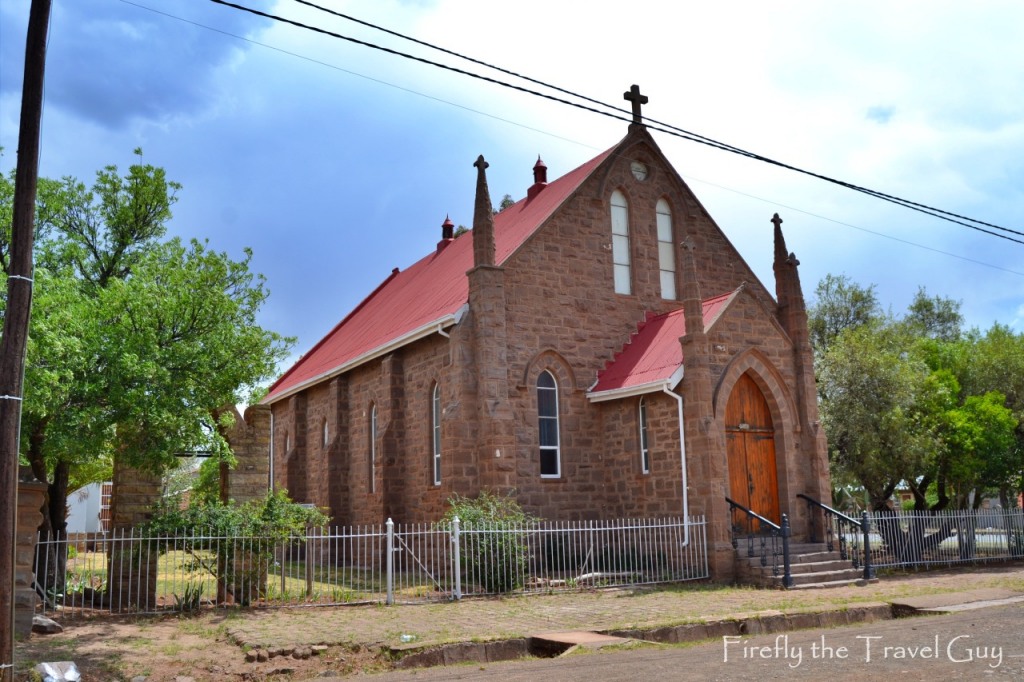
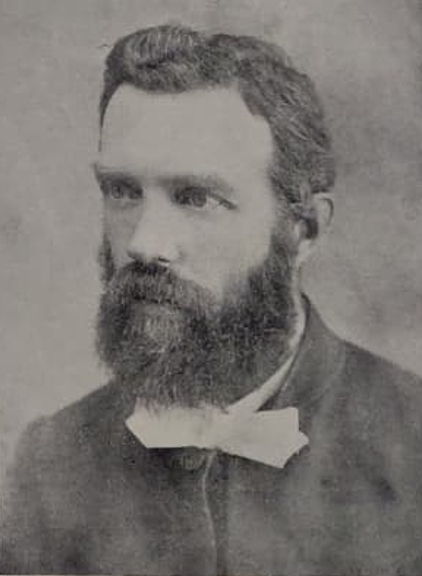
The Presbyterian Church was conceived in the early days of 1878. On the 5th of March a meeting was convened with the view of calling a minister to exercise spiritual oversight of the newly formed congregation and attempts were made to secure the services of a minister from Scotland. After these had proved unsuccessful it was decided to call the missionary the Rev. John Dewar, M.A., who was to receive the princely salary of £250 per annum and a manse.
The same year the Tarkastad Church was formally united to the Kaffrarian Presbytery, and on the 25th April the new minister was inducted to the Charge. Divine Worship in the late 1870’s was held in the Wesleyan Chapel. It was only later that the Presbyterians decided to build a church of their own. For thirty-six years John Dewar served his congregation and his Lord.
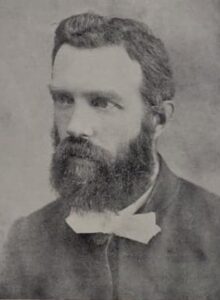
He was greatly beloved by both European and African and the success of the church in later years was due to the foundations he had laid. The Rev. John Dewar is the father of Presbyterianism in this district. When he was laid to rest in Tarkastad in 1916 he had left a Church free of debt.
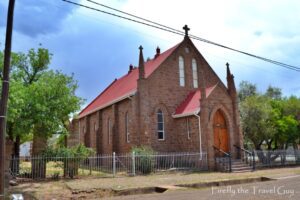
In 1880 it was resolved to build a Presbyterian Church in Tarkastad as the Methodists needed the Chapel for their own use. The response were soon under way for the building and subscription was good with all sections of the community showing their willingness to help. On 16 April 1881, the cornerstone was laid by the Rev. Peter Davidson of Adelaide, and on the 29 April 1882, the new church was opened by the Rev. John Chalmers of Grahamstown, with Ds. De Villiers of the Ned Geref Kerk, Tarkastad, assisting at the ceremony.
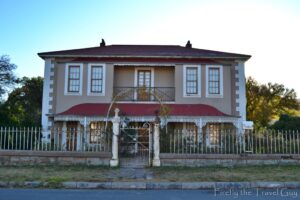
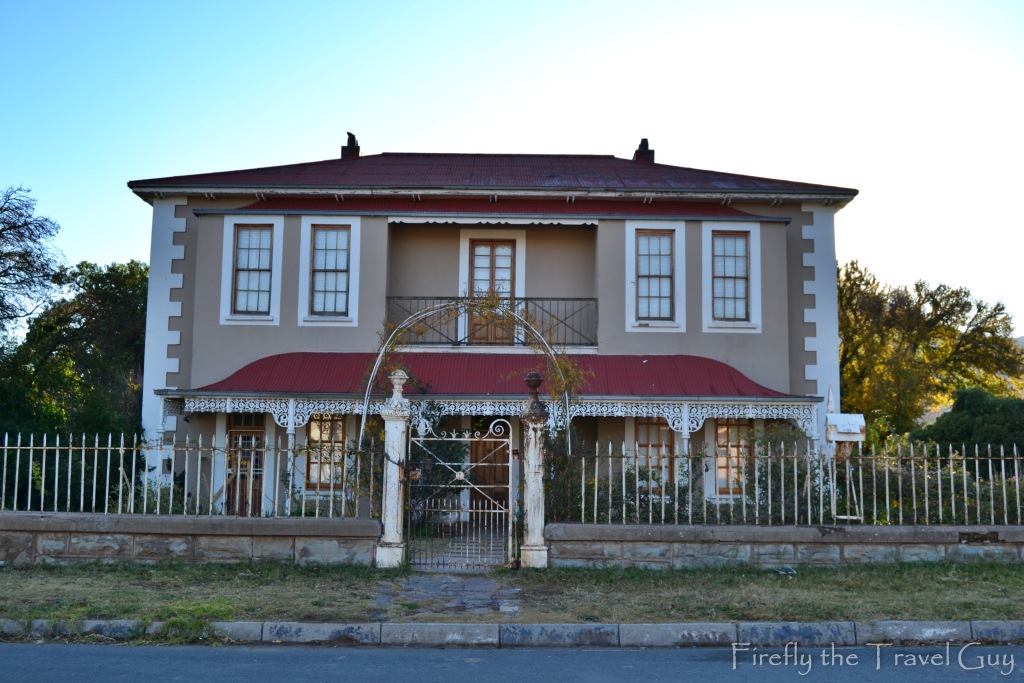
Old Dutch Reformed Church Parsonage
A house at 21 Grey Street, from Elder P W Hattingh, was rented as a temporary home for the first pastor, Rev. J G S de Villiers. The church council, however, intended to build a parsonage as soon as possible. At the meeting of 9 January 1864, this was decided in principle, but the opinion of the congregation had to be sought first. Although the majority of the congregation voted in favour of the matter, there was also strong opposition. A petition, with 61 signatures of dissatisfied congregation members, was submitted to the church council.
The church council discussed the matter further with seriousness. Rev. J H du Plessis of the Cradock congregation warned against “letting anything be built until all or the greater part of the money is in hand.” Special collections were held, but before the required capital was in hand, a tender was accepted. The building was completed during 1865 and occupied by the first minister.
The struggle over the rectory was not limited to its construction. Fire later threatened to destroy it and the church council was involved in the battle against the flames. On Saturday, 30 October 1880, the church council was busy in a meeting, which was called for 3 o’clock in the afternoon. The meeting was interrupted by a call for help. There was a fire in the parsonage! One of the bedrooms in the house was on fire. The meeting was immediately adjourned with the aim of extinguishing the fire. The members rushed away and after the task was successfully completed, the soot-stained church council members continued the meeting to adjourn at 8 o’clock in the evening.
Over the years, various extensions and improvements were made. During 1882, “a wooden room, a room for the boy and a shed for a wagon house” were erected and the perimeter wall at the back of the yard was raised. The garden was tended by an elder. He had to bear full responsibility for its maintenance, but all the “fruits from the garden will remain at the disposal of the church council.” This arrangement eventually fell into disuse.
Enemy soldiers caused great damage to the church property during the Anglo-Boer War of 1899–1902. The parsonage was also not spared. While the pastor was exiled to Cape Town, the soldiers occupied the house. After the war, in 1903, a latticework was erected at the front “on a single stone foundation 18 inches above the ground.”
Fourteen families inhabited the old parsonage. After this double-storey building with its spacious rooms and high ceilings had provided accommodation to parsonage families for 99 years, it began to show signs of deterioration from 1964 onwards. In 1976 the building was sold whereafter it was also proclaimed as a national monument.
Tarkastad MOTH Shell Hole
St Mary’s Anglican Church
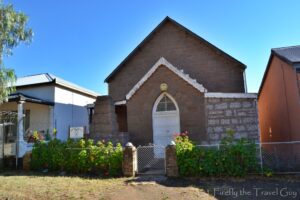
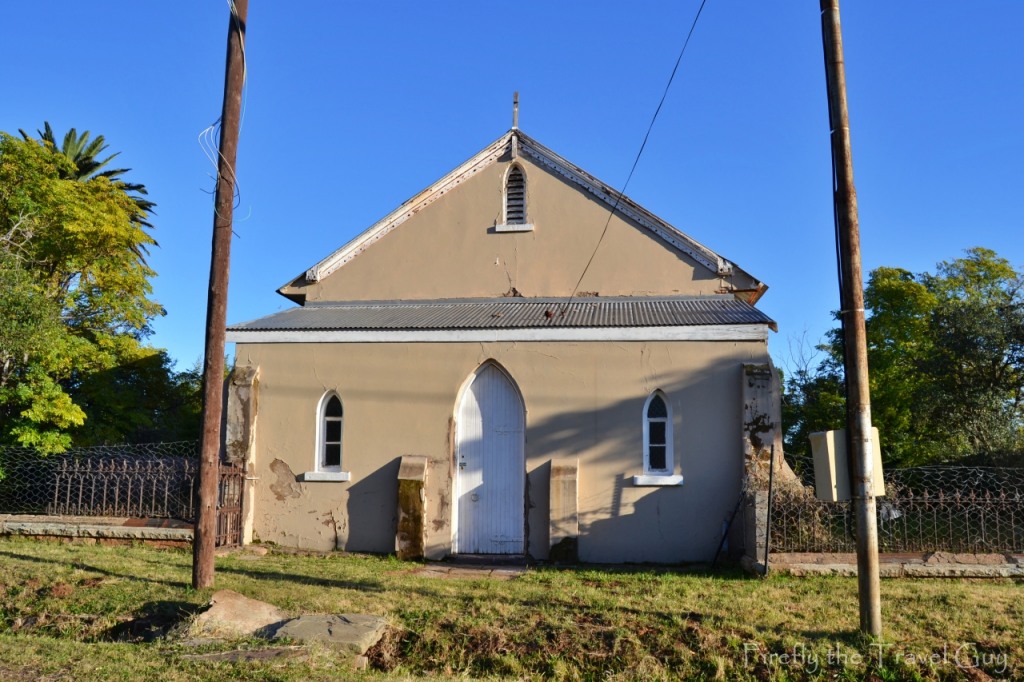
St Mary’s in Meurant Street, is the oldest church building in Tarkastad. The building was erected in 1870 as a Wesleyan Chapel. From 1878 – 1883 it was used by the Presbyterians, and from 1884 as an Anglican Church.
The building was consecrated as an Anglican church on 17 November 1891 and the church land was transferred to the Bishop on the 4 July 1892 by the churchwardens. The rectory was acquired in 1897.
NOTES OF A VISITATION JOURNEY OF THE LORD BISHOP OF GRAHAMSTOWN”
January 1882 – “Leaving Grahamstown on the 26th of October, the first place visited was Tarkastad. This place has hitherto received only periodical visits from the Rector of Queenstown, but now the parishioners have decided to have a resident clergyman of their own, who will also keep a Grammar School. He is expected to arrive soon after New Year.
July 1882 – “The Rev. G. F. W. Kett has entered upon his work as Curate in charge of this district. Mr. Kett being in Deacon’s orders. Tarkastad, is still part of the Parish of Queenstown, but we hope in time to see it a separate Parish, under its own fully-ordained Pastor. We trust that Mr. Kett will be able to push forward the work of building a church, which is sorely needed, the services being held in the Court House, which is kindly lent for the purpose.”
August 1884 – “The Bishop arrived at Tarkastad, an outlying part of the above large Parish, on July 16th, after a toil- some drive from Cradock. Next morning his Lordship went and looked at the building (formerly a Wesleyan Chapel) which had been bought by the Tarkastad Church people for Divine Services. The internal arrangements will of course need some alteration, in order to make it more Church-like.”
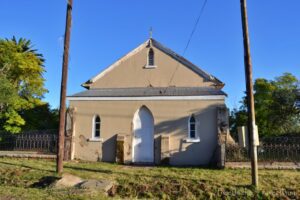
The Congregation Church
Wheatland Presbyterian Church
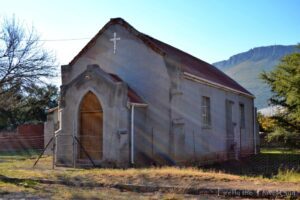
“Seventeen miles out of town on the way to Bedford is a little church tucked away in the mountains. The road approaches from a height and from this point of vantage, with the trees surrounding the edifice, and the dam mirroring the cattle which lazily partake of the water, it is indeed a picturesque sight.”
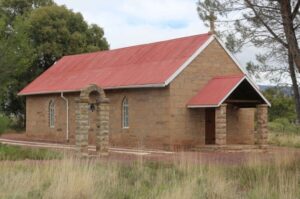
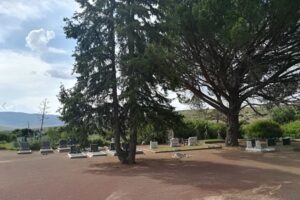
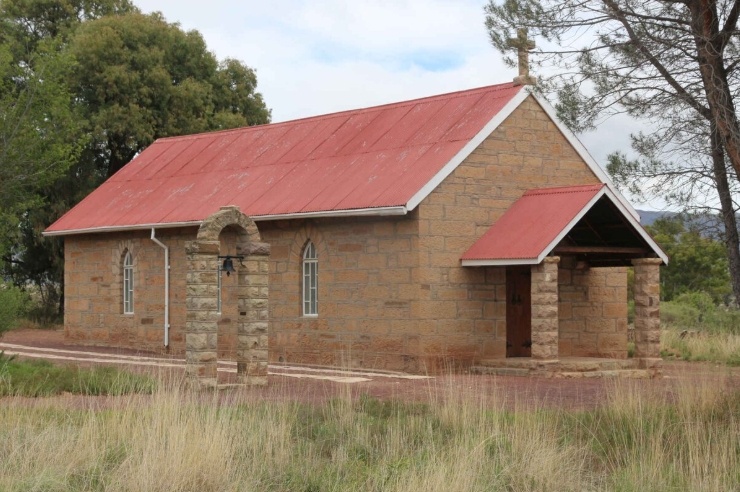
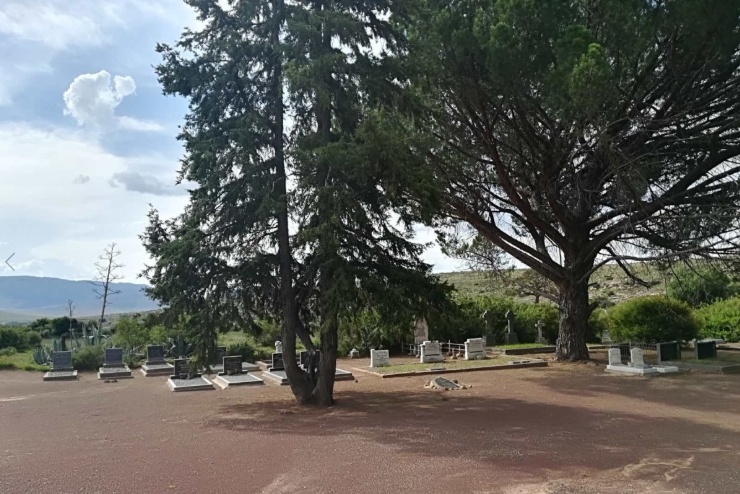
The Wheatlands Presbyterian Church is a charming country church situated about 27 km from Tarkastad on the road to Bedford. Built to serve the farming community of the district, the church stands beneath mature trees in a peaceful mountain setting overlooking a small dam. Together with its historic cemetery, containing the graves and memorials of many pioneering Eastern Cape families, it offers visitors a glimpse into the rich Presbyterian and agricultural heritage of the Tarka region.
The church was so called after the grain which used to grow in large quantities in this area, but which now supports the more lucrative sheep farming industry. The earliest records of this community go back to the 23rd January, 1876, when a meeting was convened at the farm “Nettle Grove” for the purpose of discussing the creation of a place of worship. It is therefore apparent that the Church in the Winterberg was formed earlier than the abovementioned date, and most probably divine worship was held in various homes. This congregational meeting did no more than appoint a building committee. The following year, in September 1877, the committee felt that the time for action had arrived, decided unanimously to under take building operations at “Spitz Kop Vlei,” on a piece of ground very generously given by Mr. George King for the purpose.
On 21 April 1878, the foundation stone of the Tarka church was laid. It was evidently called the Tarka Church because it was built before the one in Town. On May 1st, 1879, the church was opened and divine worship was held within for the first time. The records of the past inform us that this house of God was built for the convenience of the farmers and their friends residing in the district, as the subscriptions had been raised amongst them.
The Rev. John Dewar was the first Wheatlands minister, discharging his duties in the country as faithfully as he did in town. As in Tarka, he laid the foundations of the church in the hills, which have subsequently been built upon by those who have followed in his steps.
Contact Info
- Tarkastad