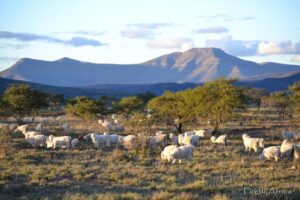
Across the vast, open landscapes of the Karoo Heartland, where hardy livestock graze beneath enormous skies, one of the Eastern Cape’s most distinctive agricultural traditions continues to thrive: Angora goat farming and the production of mohair, one of the world’s most sought-after natural fibres.
The story of South African mohair began in 1838, when Angora goats arrived from Turkey. According to the industry’s well-known origin story, 12 rams and one ewe were sent to the Cape. Because Turkey was very jealous of their strict global monopoly on mohair production at the time, it tried to protect their export of Angora goats by castrating all male rams sent abroad. Fortunately, the doe was pregnant and gave birth to a ram kid. More animals were imported to South Africa between 1857 and 1868 until the Sultan of Turkey stopped exports. That single ram kid, paired with local indigenous “Boer” goats and later importations, formed the entire genetic foundation of South Africa’s mohair industry. The goats eventually thrived in the Karoo, where the climate and natural vegetation proved well suited to their needs.
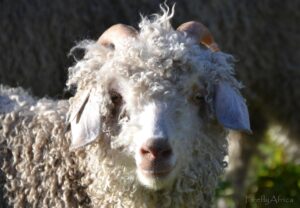
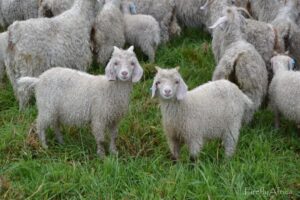
Mohair farming is also a story of knowledge, perseverance and opportunity. For generations, farming families across the region have raised Angora goats, carefully breeding their herds to produce high-quality fleece. The goats are shorn twice a year, and their soft, lustrous coats yield mohair, used to create everything from luxurious clothing and knitwear to upholstery, blankets and other textile products.
Mohair farming is more than an agricultural activity. It is a tradition built on generations of experience, resilience and an intimate understanding of the land. The work follows the rhythm of the seasons, linking the Karoo’s natural environment with a global industry that reaches textile manufacturers, designers and consumers around the world.
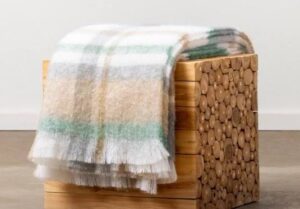
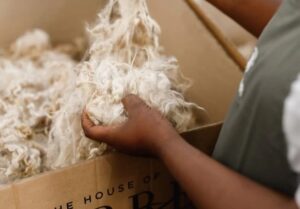
The Eastern Cape remains at the heart of South Africa’s mohair industry, and the Karoo Heartland’s farming landscapes form part of this remarkable agricultural story. Alongside established farming families, emerging farmers are also finding opportunities in the industry, helping to preserve its future and support rural livelihoods.
So, when travelling through the Karoo Heartland, take a moment to look at those flocks of curly-coated Angora goats grazing in the veld. Their fleece has a story that stretches far beyond the farm gates, from the wide-open spaces of the Eastern Cape to the world’s fashion houses.