
Willowmore historic buildings and monuments
Description
Willowmore has a number of historic buildings, churches and monuments in addition to the main listings from the town on this website.
These main listings can be found on the following links:
Steytlerville to Willowmore cement road
Die Wonderboom
The Old Blackstone Power Station
Die Rooi Bruggie
Other interesting places include:
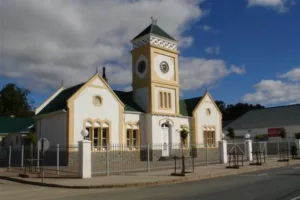
Willowmore Town Hall
Willowmore’s iconic town hall stands in Knysna Street and has a very unique-looking clock tower. The building was built around 1896 and is the centre point of the Willowmore community. It has been used for film shows, amateur theatrical productions, soirées, wedding receptions and funerals.
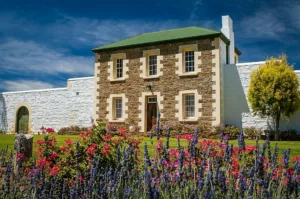
The Old Jail – Willowmore
The Old Jail was constructed from local stone and the walls are half a metre thick, and was completed in 1880. The outside corners, windows and doors are decorated with plaster quoins. The Old Gaol, as it was then called, consisted of a hospital cell, hard labour cells, awaiting trial cells, a female cell and a kitchen cell. It was decommissioned as a prison around 1950, was abandoned for more than a decade, and then converted into a luxury guesthouse by its current owners.
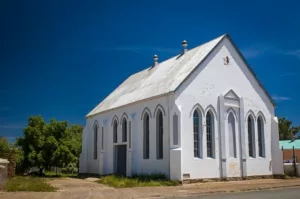
Jewish Synagogue
At one stage Willowmore had a thriving Jewish community and so a synagogue was erected. The building is no longer in use, but can still be viewed from the outside. The erf was purchased for the building of a synagogue in 1906 and the foundation stone was laid on 8 April 1907. The Jewish community applied for a loan for the building in 1908 and by 1917 the Willowmore Hebrew congregation had 30 members.
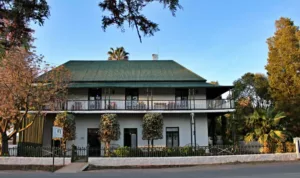
The Old Dutch Reformed Parsonage
The Dutch Reformed congregation was established in Willowmore in 1864. Before the construction of the church a spacious parsonage was designed and built by the renowned architect Carl Otto Hager from Stellenbosch. The parsonage was built for the first minister, Reverend P N Ham who arrived on the ship Brasilië from Holland. Reverend Ham stayed for two years and was replaced by Reverend George Murray, brother of the famous missionary Andrew Murray.
Originally it was a single-story dwelling. With the need for school classrooms for the growing community and other social functions, it soon became too small. As a result, a second floor was added in 1897 together with all the usual Victorian-era embellishments to the architectural designs typical of the time. The building was later used as a girls’ hostel for the local school and later as a store for agricultural products.
Today it is an elegant guesthouse with Victorian architectural adornments, a yellowwood top-story floor and the other Oregon pine woodwork well preserved.
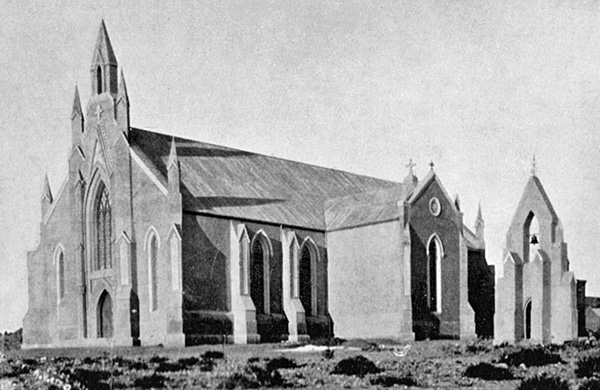
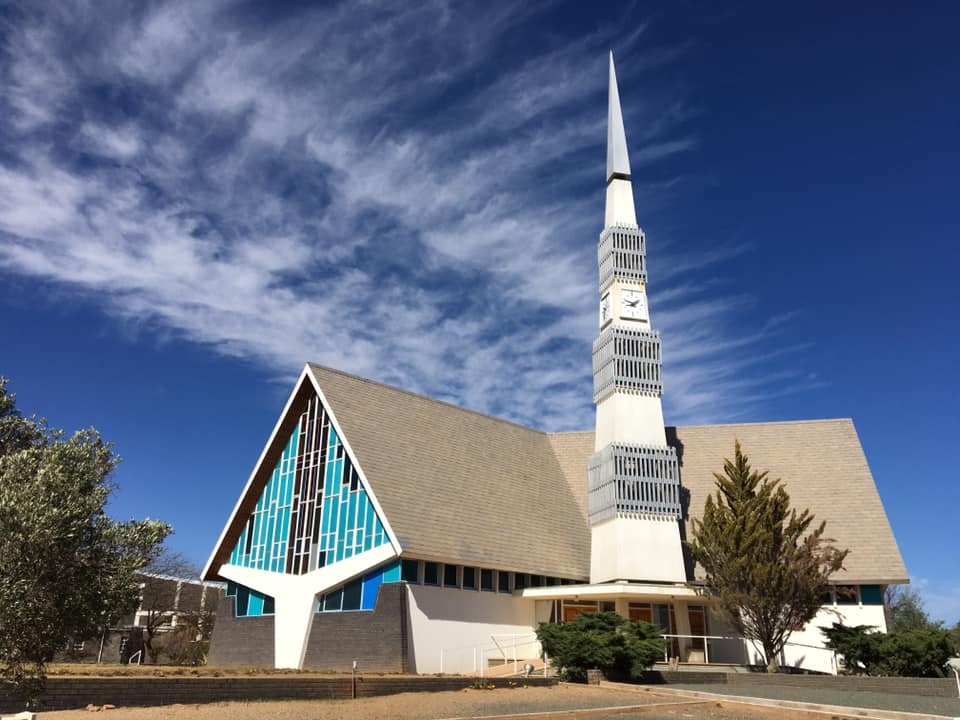
Willowmore Dutch Reformed Church
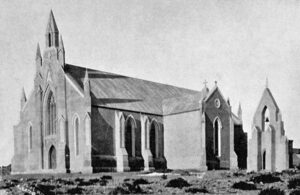
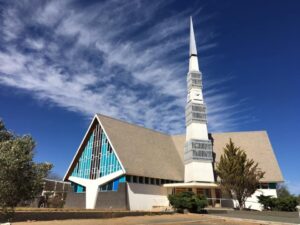
Eight years after it’s establishment in 1856 Willowmore was growing at a rate that justified a Dutch Reformed congregation. Yet before even considering a proper church, a spacious parsonage was erected for the first minister, Dominee P.N.Ham. He only stayed for two years, and was superseded by Dominee George Murray, brother of the famous missionary Andrew Murray. He at least got a church, building work started in 1874, and the church was inaugurated on 12 October 1878. This church was demolished, making way for a church of modern design in 1963.
Willowmore Historical Graveyard
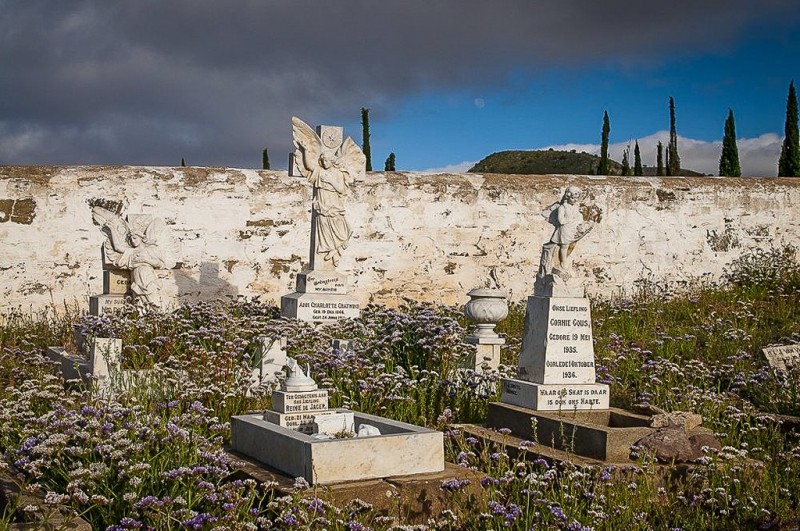
The historical graveyard in Willowmore contains the graves of those who died during the 2nd Anglo Boer War (1899 – 1902) as well as 13 residents who died during the Great Flu Epidemic that swept across South Africa in 1918.
From here, one can take a short hike to a small gunpowder chamber used during battle to store gunpowder and ammunition.
The old Jewish Graveyard is well maintained and can be visited by prior arrangement with the Tourism office since the gate is kept locked.
The Jewish graveyard is still beautifully maintained and open to interested visitors.
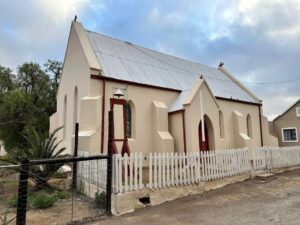
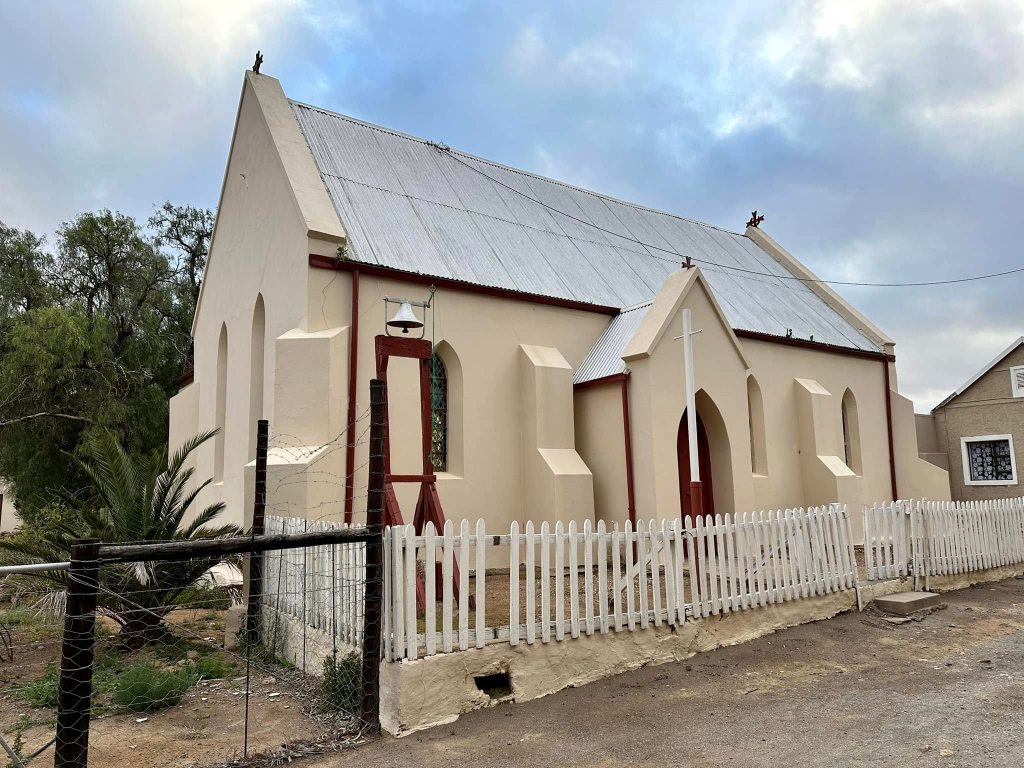
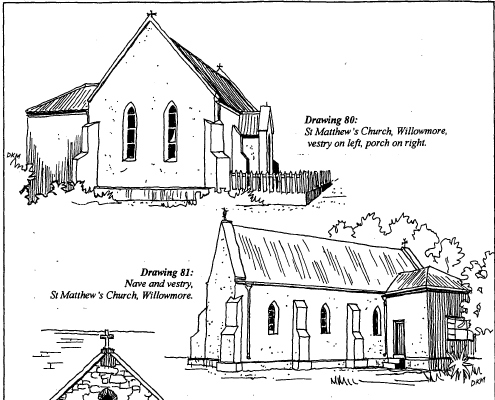
St Matthew’s Anglican Church
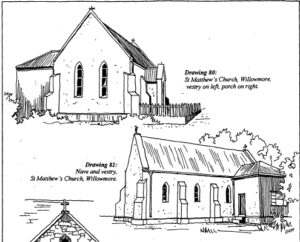
The last of the Bishop’s churches built to a Sophy Gray plan was most likely the humble whitewashed brick church at Willowmore. The church was built nine years after her death in 1871.
In Bishop Gray’s journal of 1865 he wrote, “On Monday, 25 September 1865, we had a long day’s journey over very bad roads to the new and rising village of Willowrnoor (sic), situated on the edge of the Karroo. It presented, as we approached a most dreary appearance, lying on a small plain of Karroo soil, surrounded by low, barren mountains, and without a tree to be seen anywhere.” The account continued, “Mr Lehmkuhl, the founder of the village, was
good enough to take us in. The present inhabitants are nearly all English. The land in the surrounding country belongs almost entirely to Dutch farmers. Mr Lehmkuhl was instrumental in erecting a church for the Dutch and he made a present of it to that community. He has also given certain erven both to them, and to the English Church.”
Gray recorded that at the evening meeting ” .. .it was unanimously resolved to erect a School Chapel, for which my wife had drawn a plan, and to obtain either a deacon schoolmaster or catechist. I promised help both towards the erection of the building and the support of a teacher.
The earliest recorded baptism in Willowmore (the village became a parish within the Diocese of George in 1911) is 1866. It would have been reasonable to assume that the Willowmore church was started some time after Bishop Gray’s September 1865 meetings, particularly as the first rector at Willowmore, Rev J L Samuels, was appointed in 1866. No church building however was erected at Willowmore for at least 11 years after Gray’s visit. During Bishop West Jones’ visit to the area in 1876, the services were held in the Court-room owing to the want of a Church. The building of the chapel at Willowmore took place some time between 1876 and 1881 because it was not until 9 August 1881 that the chapel was consecrated by Bishop Jones. It is possible that the building was completed closer to 1876 and that, as the building served as a school chapel, the consecration was delayed until alternative accommodation could be found for the school.


Contact Info
- Willowmore