Walter Battiss was one of South Africa’s most original and influential artists — a painter, printmaker, and thinker whose curiosity and imagination reshaped modern South African art.
Walter Whall Battiss was born on 6 January 1906 in Somerset East in 1906. His family rented the original two-storied English officers’ mess building and ran it as the Battiss Private Hotel between 1914 and 1917, when the recession which followed the First World War forced them to close and move to Koffiefontein. It was here that a young Battiss first became interested in archaeology and ancient rock art. In 1919, the Battiss family settled in Fauresmith where he completed his education, matriculating in 1923. In 1924 he became a clerk in the Magistrates Court in Rustenburg. His formal art studies started in 1929 at the Witwatersrand Technical College (drawing and painting), followed by the Johannesburg Training College (a Teacher’s Diploma) and etching lessons. Battiss continued his studies while working as a magistrate’s clerk, and finally obtained his bachelor’s degree in Fine Arts at the University of South Africa at the age of 35.
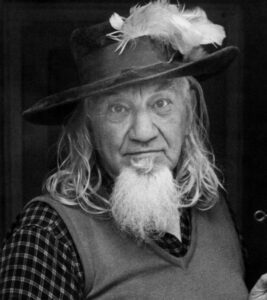
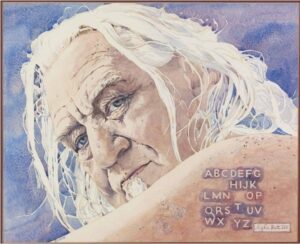

A pioneer of abstract and expressionist art in South Africa, Battiss explored themes of myth, fantasy, and humanity through vivid colour, playful forms, and bold experimentation. His work reflected an ongoing dialogue between African traditions and contemporary art movements, positioning him as both a scholar and innovator.
Battiss visited Europe for the first time in 1938. The following year, he published his first book, The Amazing Bushman, the first of nine books published in his lifetime. In 1949 he befriended Picasso who would have an influence on his style. He visited Greece in 1966-1968 and the Seychelles in 1972, which inspired his creation of “Fook Island,” a whimsical imaginary world with its own language, maps, and culture — a testament to his boundless imagination and belief in creative freedom.
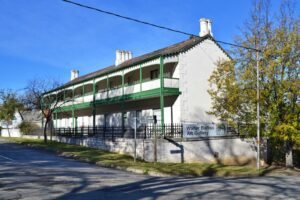
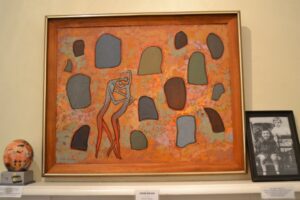
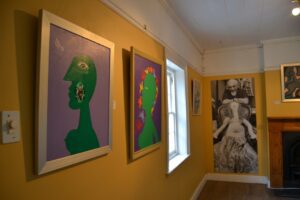
Today, Walter Battiss’s legacy lives on through the Walter Battiss Art Museum in Somerset East, housed in the building where he grew up. The museum celebrates his remarkable life and showcases a rich collection of his paintings, sketches, and personal artefacts, offering visitors a glimpse into the mind of one of South Africa’s true artistic visionaries. In 1981 when the museum opened, he brought a collection of over 70 of his oils, watercolours, and silkscreen prints; and many of the books he authored, and often printed himself.