Outer appearances can be deceiving. In life, Helen Elizabeth Martins was a shy, retiring figure, rarely seen outside on the streets of Nieu Bethesda. But this recluse was the custodian of a magical inner kingdom that she breathed into life.
Born in Nieu Bethesda on 23 December 1897, Helen was the youngest of six children, and her early years gave little indication of what the future would hold. She finished her schooling in Graaff-Reinet with a teaching diploma then married Johannes Pienaar, who was a teacher and dramatist.
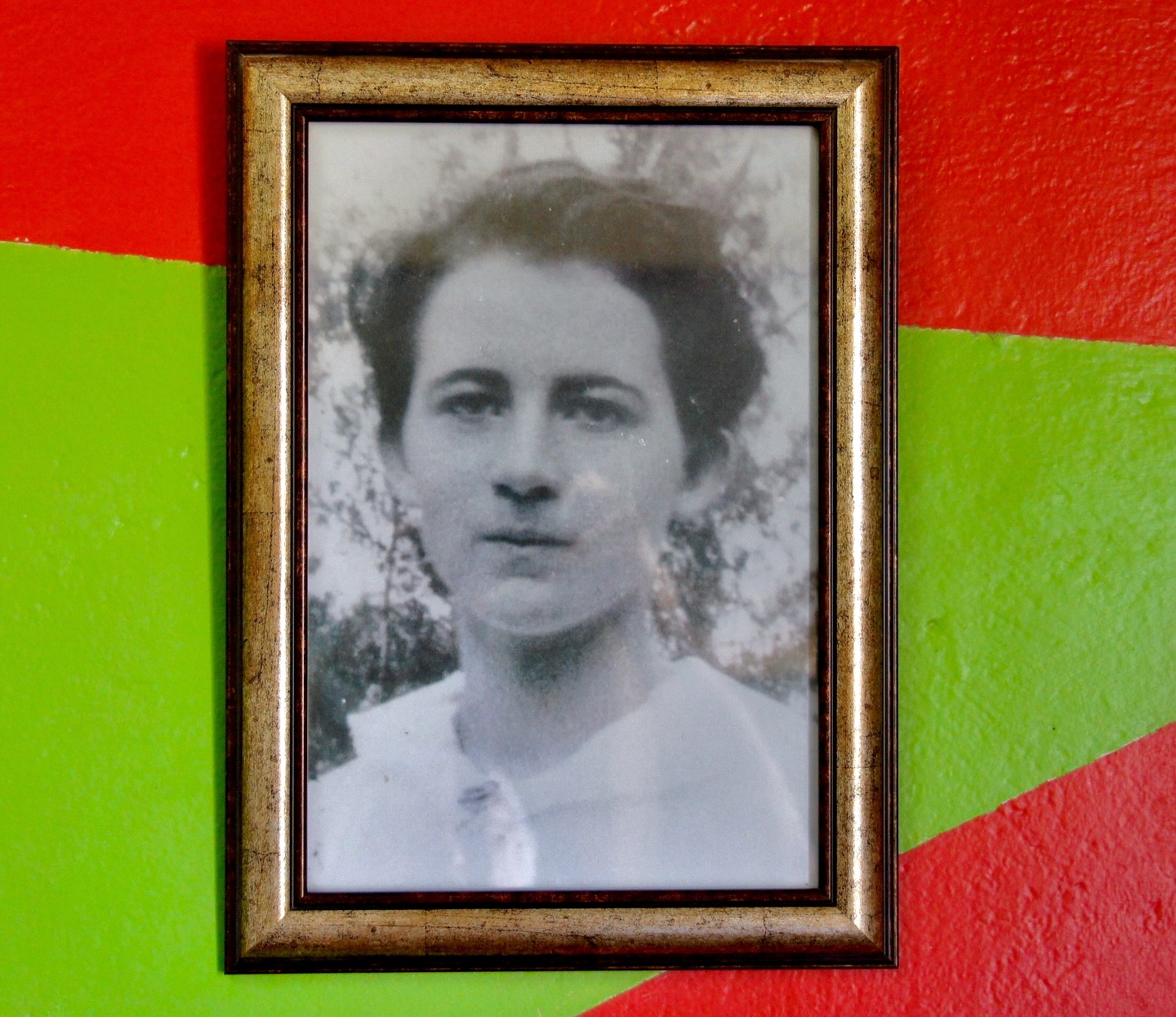
Their marriage was not a happy one, and after seeing parts of the country, Helen returned to Nieu Bethesda in 1928 so that she could care for her frail parents. Her mother passed away in 1941; her father in 1945. Helen’s relationship with her father was troubled and she had moved him into an outside room later named The Lion’s Den, its walls painted black.
Helen Martins, the Outsider Artist, left a legacy that continues to inspire and intrigue visitors from around the world. Her unique art, filled with symbolism and personal references, offers a glimpse into her extraordinary mind and life.
It was only once she was on her own, that she sought to transform her home, as a reflection of her quest to bring wonder, magic and light into her existence. Her passion for and involvement in her work was to the detriment of her own health, which may have contributed to her increased reticence to being seen in public.

In order to accomplish the transformation of her environment, Helen Martins hired the services of local workmen. First Mr Jonas Adams, and then Mr Piet van der Merwe were employed with structural modifications to the interior of the house – mostly replacing original windows with the vast panes of glass that would bathe Miss Helens’ home in multi-coloured hues of light. And when Miss Helen turned her attention to the outside of her house, she asked Piet van der Merwe to help transform her ideas into reality. An early cement owl constructed by Piet remains in the Camel Yard today.
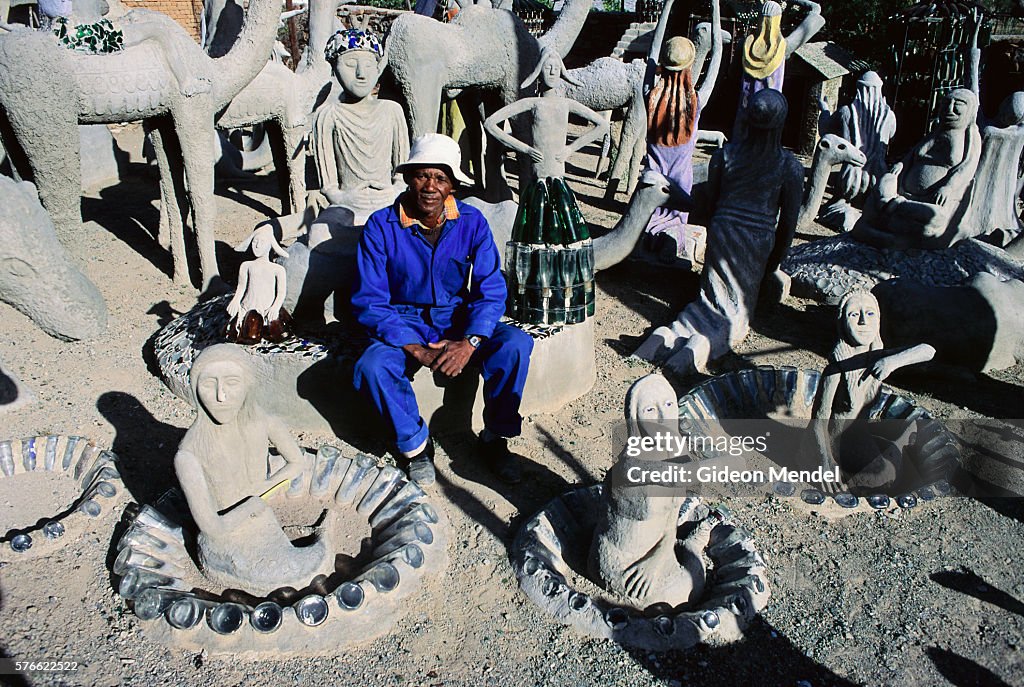
Helen Martins next employed itinerant sheepshearer and builder Koos Malgas. Koos also tried his hand at manufacturing cement and glass sculptures, and very quickly developed techniques for working with these difficult materials. Miss Helen obviously appreciated his ability to interpret her ideas and before long he was regularly employed on the creation of the Owl House. Every sculpture would be discussed beforehand, usually over early morning coffee in the kitchen, and although Miss Helen seldom did any of the physical work they would together engineer each new inspiration into being. This process developed into a uniquely symbiotic creative relationship that clearly defines Koos’ integral part in the creation of the Owl House. In all, Koos spent twelve years working with Helen Martins on the Camel Yard, until her death in 1976.
Helen, then 78, was crippled by arthritis and suffering increased loss of vision – the latter possibly damage caused through her working with ground glass. She took her own life by drinking a mixture containing caustic soda. She was rushed to hospital in Graaff-Reinet, where she died three days later, on August 8, 1976, though her legacy continues to bring joy and wonder to many who visit her home.

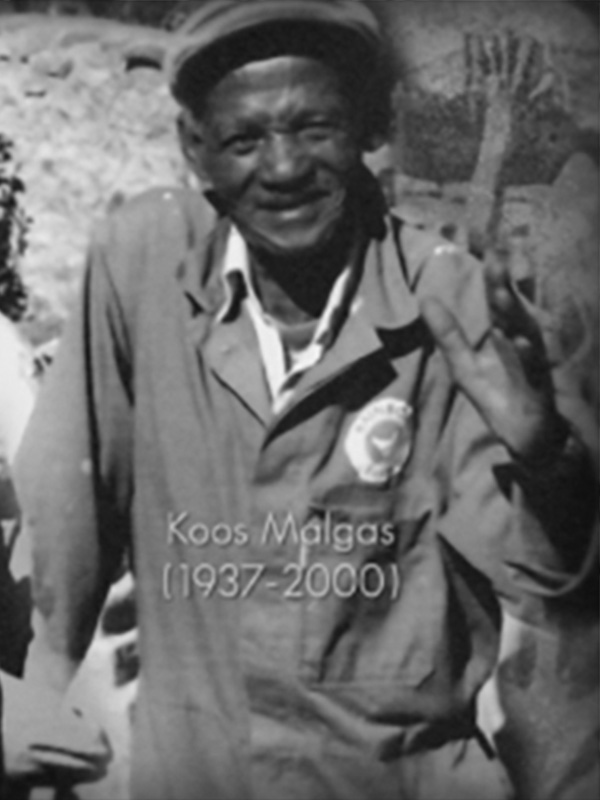
Koos Malgas stayed on in the district for a further two years, until he relocated to Worcester. The Owl House was declared a National Monument in 1986 and in 1991 Malgas was persuaded to return to Nieu-Bethesda where he was employed on restoration work to the Owl House until he retired in 1996. He passed away in 2000.
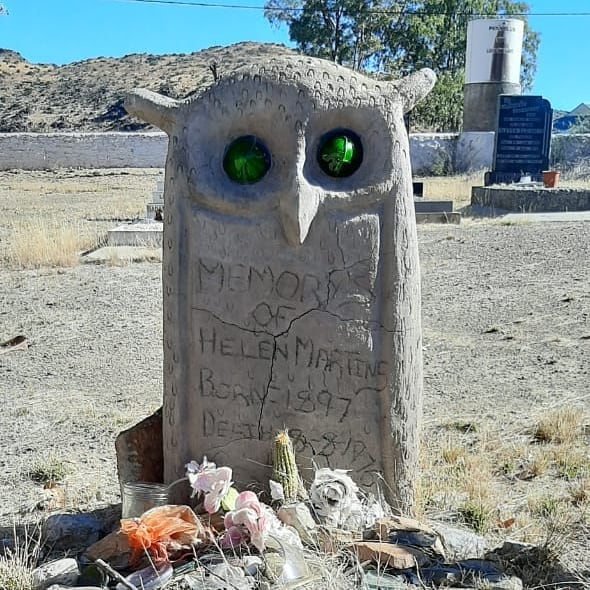
Miss Helen’s parents were buried in the Nieu-Bethesda Cemetery. There’s also an owl gravestone to her in the cemetery, although she was cremated and her ashes scattered in the Camel Yard of the Owl House.