
Somerset East monuments and historic buildings
Description
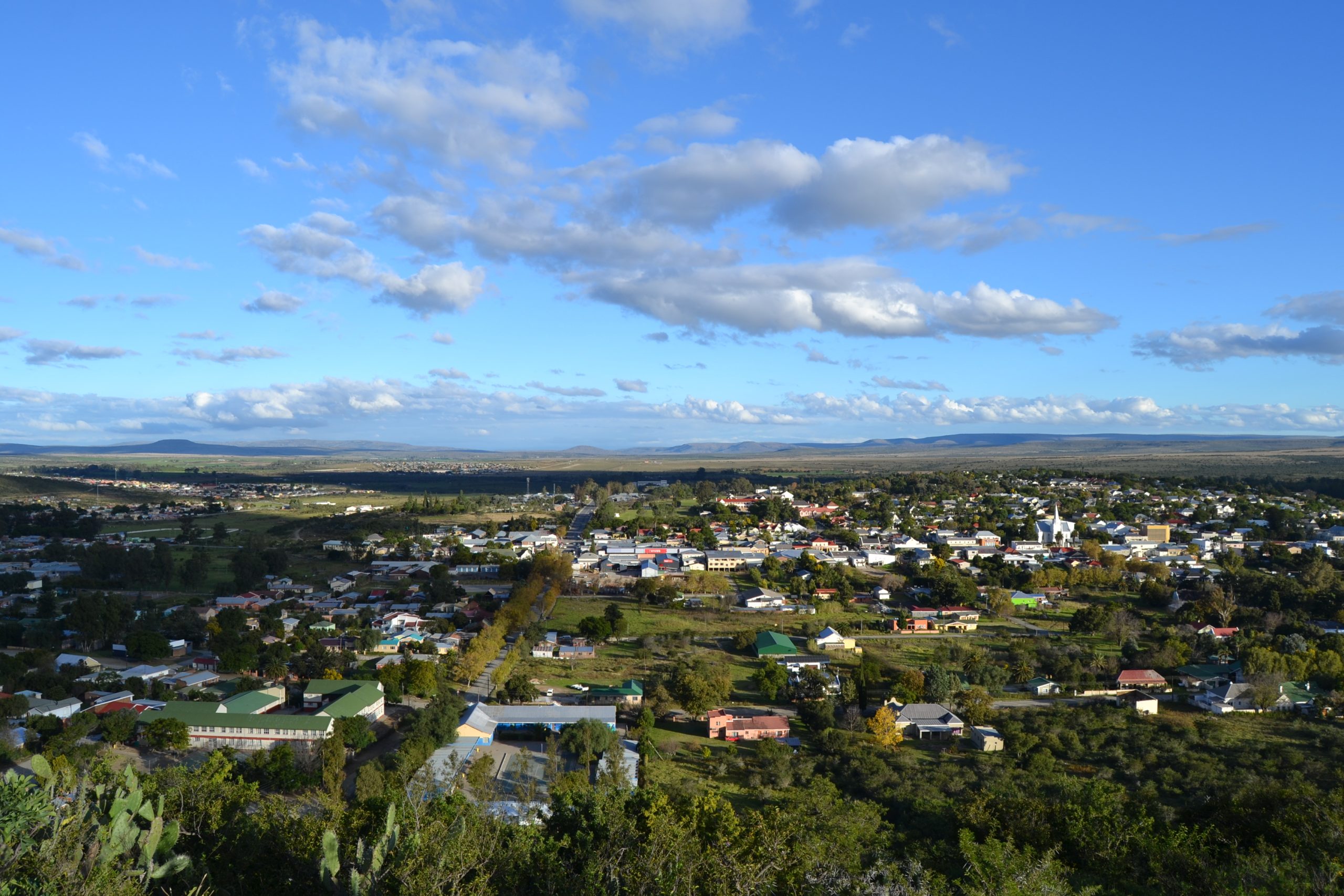
Somerset East has a number of historic buildings, churches and monuments in addition to the main listings from the town on this website.
These main listings can be found on the following links:
Delville Wood War Memorial
Somerset East Dutch Reformed Church
Glen Avon Mill
Gill College
Somerset East Museum
Walter Battiss Art Museum
Other interesting places include:
Old Mill Building
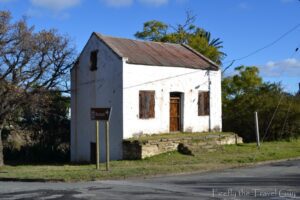
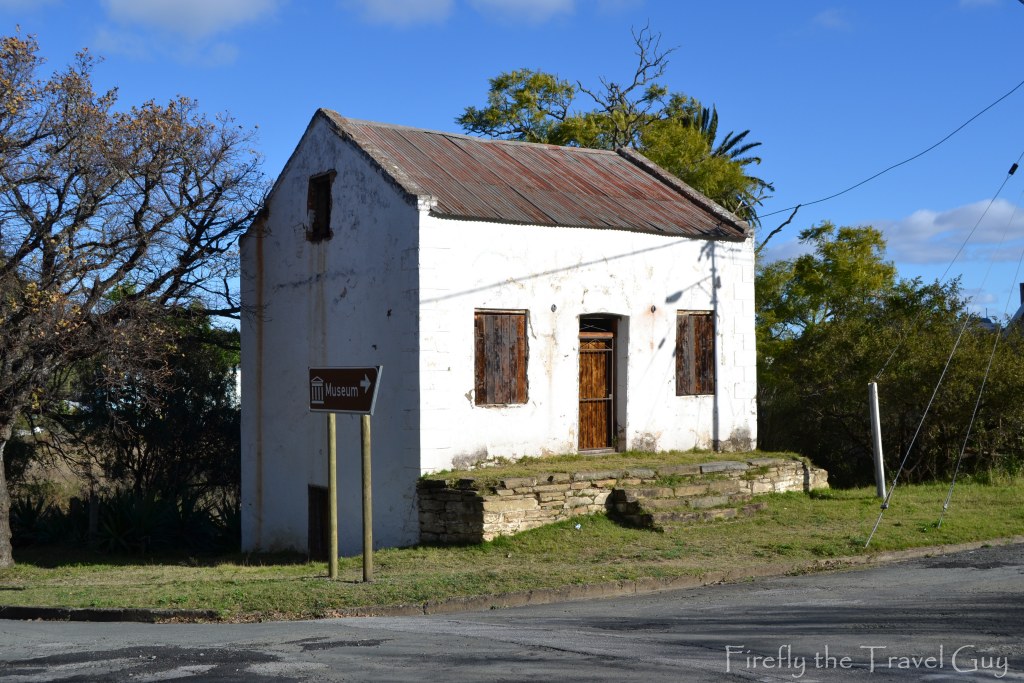
The little building on the corner of Paulet and Beaufort Streets draws a lot of comments and speculation about its origins.
Information collected by Sheila van Aardt suggests it was used as a mill with the water wheel on the Beaufort Street side of the building. The water used came from a small stream that flowed down the side of Beaufort Street. An aqueduct supported by crossed poles bridged Paulet Street so that it didn’t have to flow over the street and cause damage to it.
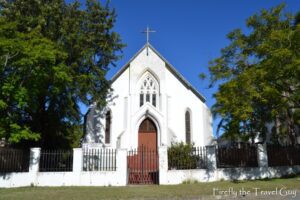
All Saints United Church
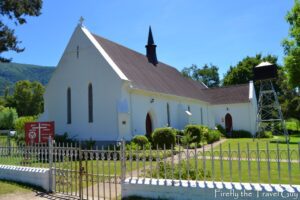
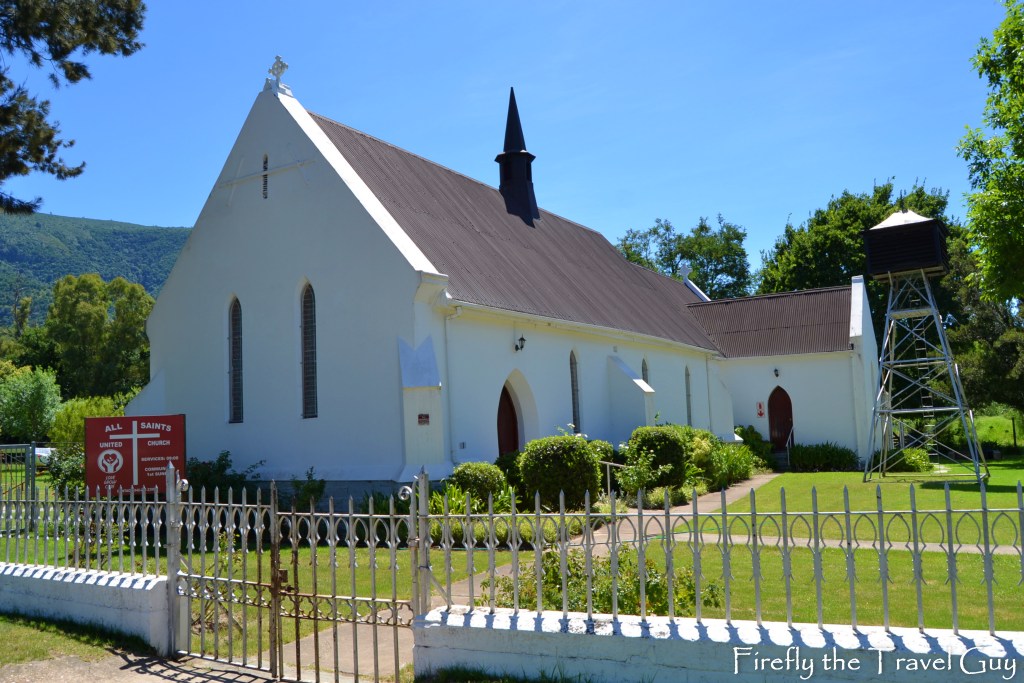
In 1848, during his travels through the Eastern Cape, Bishop Grey of Cape Town paid a visit to the young town of Somerset. He was struck by the scarcity of clergymen having only seen one in 900 miles of travel from Cape Town. He undertook to arrange for some 20 Anglican ministers to emigrate from England, and because he believed that there were sufficient English settlers and others to support an Anglican Church, he promised to provide the area with a suitable Rector.
Bishop Gray’s application for a site for a church in Somerset East was approved in 1849. Six years later in 1855 the small Anglican Church in Beaufort Street, along with an Anglican Burial Ground in Paulet Street, was consecrated. The chancel and vestry were added in 1881. The church is one of those with an external church bell which was installed in 1883.
The All Saints Church in Beaufort Street serves a number of different denominations in the town as sadly the congregations of the individual churches have dwindled.
The Congregational Church of Somerset East (Hope Church)
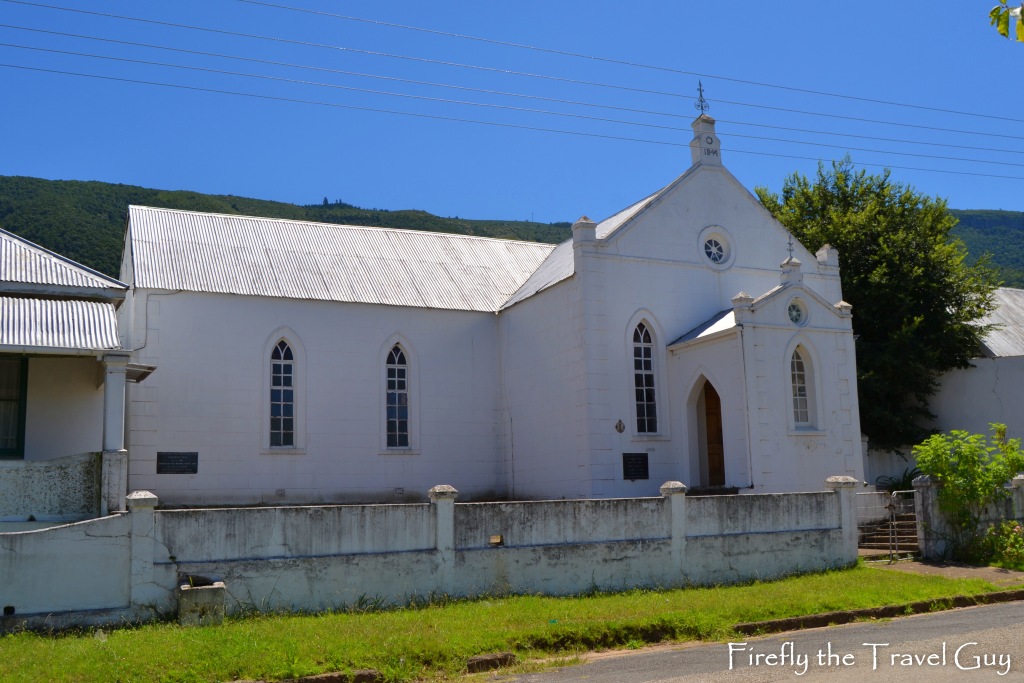
Shortly after the death of Reverend John Evans of Cradock, his wife, Dorothy Evans settled in the newly established town of Somerset, which would later become Somerset East. She died in 1842 and was buried in the old graveyard behind the Somerset East Museum. In her will, the house in Paulet Street was bequeathed to the London Missionary Society.
Towards the end of 1842, the London Missionary Society in South Africa requested an allowance of twenty pounds per annum from Sir George Napier who was the Governor of the Cape at the time. The requested funding was intended for payment of a teacher of coloured classes in Somerset. The funds were granted, and the minister was sent to South Africa a short time later. Following the arrival of the new minister, a church for the Coloured Dutch community was erected in 1844 in Dorothy Evans’ yard. It later became part of the Congregational Church. The Hope Church has been declared a national monument. The building was inauguration as the Afrikaanse Protestante Kerk in 1990.
Her home next to the new church was used as a Parsonage by the Hope Church.
St Andrews Uniting Presbyterian Church of Southern Africa
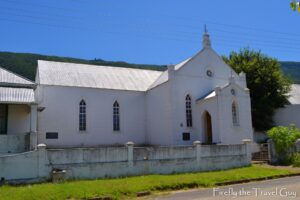
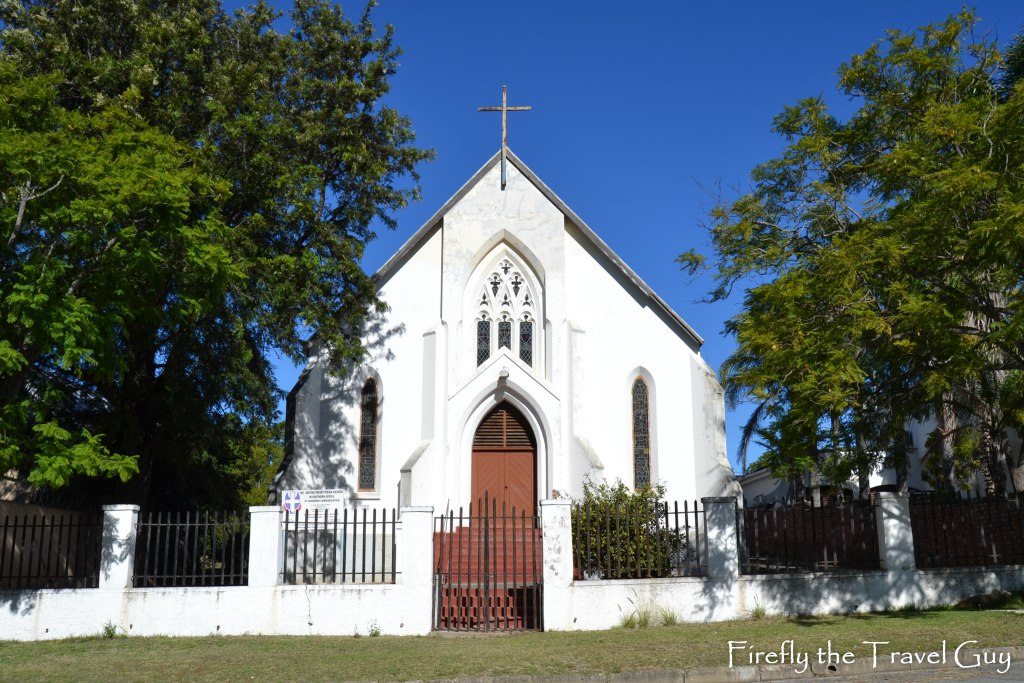
The St Andrews Uniting Presbyterian Church of Southern Africa in Louis Trichardt Street, one of the historic buildings in town that often gets overlooked by visitors.
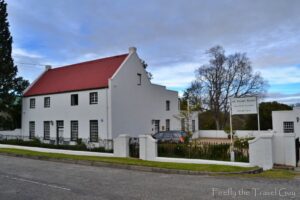
Paulet House
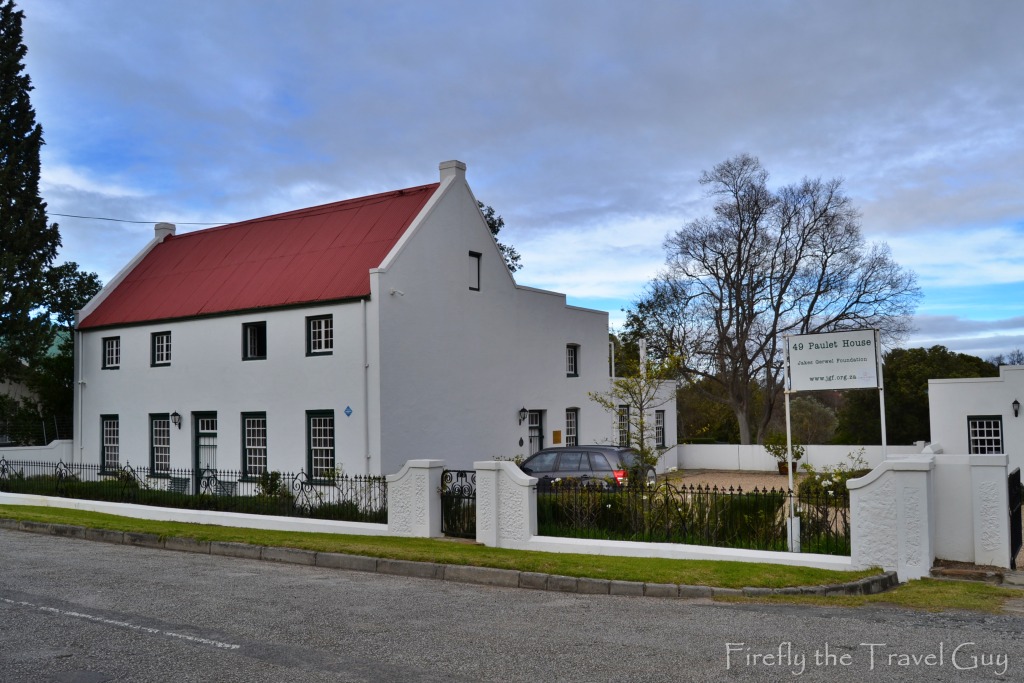
Paulet House at 49 Paulet Street is almost 200 years old and must have seen a lot of the joys and sorrows of her residents over the years. The house is named after Lady Mary Poulett, second wife of Lord Charles Somerset, governor of the Cape Colony from 1814 to 1826 after England bought it from the Dutch government. Why the spelling of the name changed to “Paulet” is unclear, but why the house has been named after her is more obvious. The story of Lord Charles Somerset played a big role in the establishment of this town, which has been named after him, at the foot of the Bosberg.
The house is home to the Jakes Gerwel Foundation.
Commandant Paul Erasmus Memorial
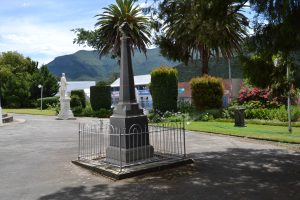
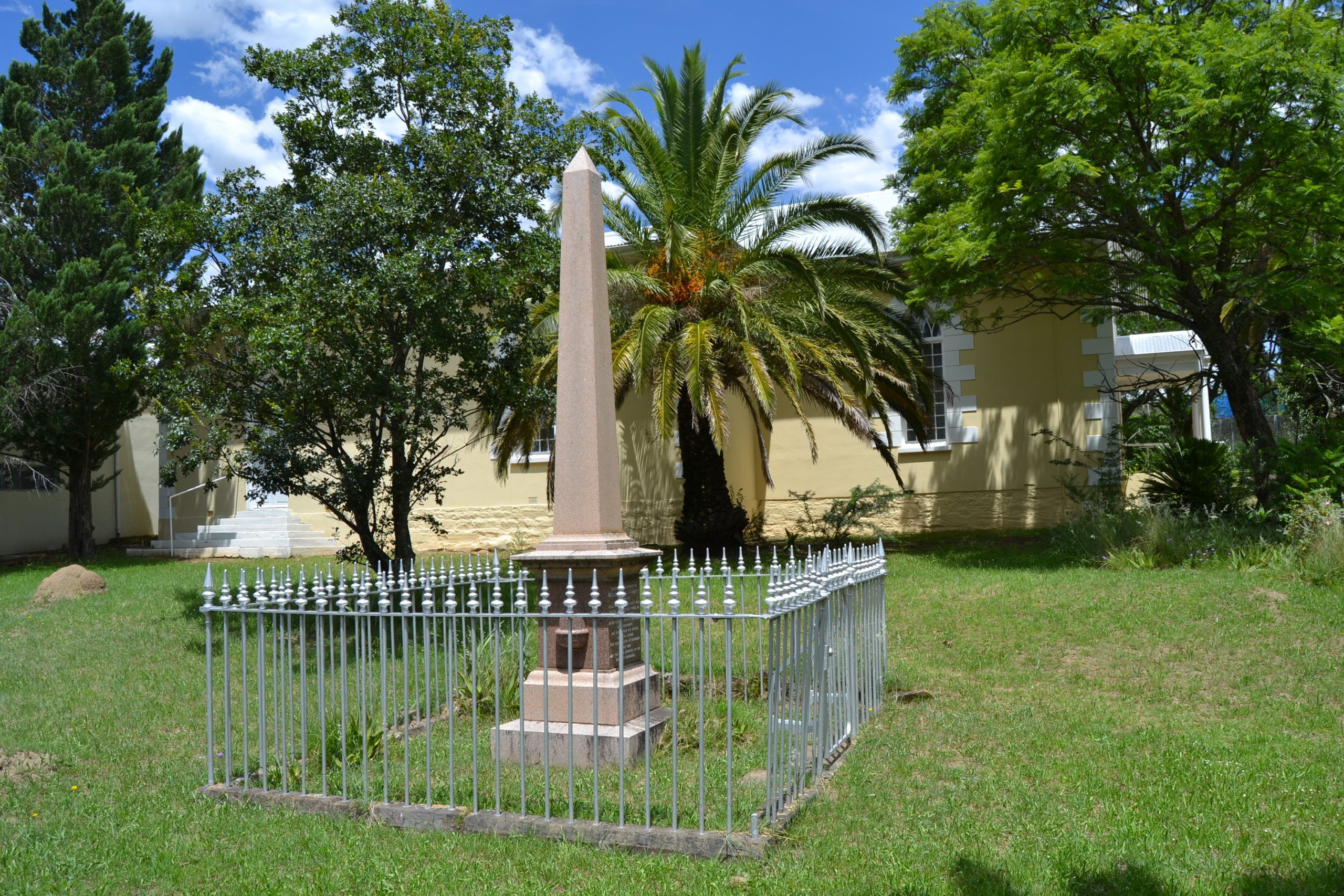
There’s a monument on the Dutch Reformed Church grounds in memory of Commandant Paul Erasmus.
Erasmus died in 1881 as Commandant of the Somersetters in Tweefontein in the then Basutoland. Basutoland was a British Crown Colony from 1884 to 1966 in what is now known as Lesotho. Interesting that the rule of the Cape Colony was not popular in Basutoland, and it was brought under direct control of the Queen of England. Basutoland gained it’s independence from the United Kingdom on the 4th of October 1966, and was renamed the Kingdom of Lesotho.
Commandant William Comley Memorial
The monument in memory of Commandant William Charles Comley stands on the grounds of the Apostolic Church (previously the Methodist Church) on Njoli Street.
Commandant Comley died in King William’s Town as a result of a fever contracted in combat during the Galeka War in 1878.
Who was William Comley? The following piece was found on the Genealogical Society of South Africa website (https://www.eggsa.org/) for those interested.
William Comley deserved well of his country. When the Government in sheer desperation resolved illegally to enforce the Burghers Act, and when the proceedings at Graaff-Reinet and Middelburg showed that the attempt to force people to go to the front was utterly useless, it was William Comley who first started the idea of getting the farmers to do willingly what they could not be compelled into doing. Quietly working in his own ward, quietly making use of his influence over his Dutch neighbours privately, and talking Dutch easily and good humouredly at private meetings, he got 41 men of his ward to come in with him, armed and mounted, and ready to follow him wherever he went. In January the burghers met under the oak trees whilst the Magistrate used his eloquence in vain to induce the burghers to go to the front. Then when everybody thought the movement would be a complete failure, William Comely cried out in Dutch “Let the men who came with me draw up in the street”. The 41 went out immediately and drew up in a line, and answered to their names. This was the turning point. The enthusiasm spread. Man after man joined them. Soon there were 80, before night there were a hundred, and in four days a force of more than 130 men started for the front. This was not all. The enthusiasm spread through the district, and in a couple of weeks Mr. Botha came in from Zwager’s Hoek with the information that 100 men were ready to start if Government required their services. Their services were declined, but the bravery of William Comley in the field, and his attention to the comfort and safety of his men, procured him such a high character that as soon as it was known that he was to lead the burghers a second time, so many offered themselves that it became possible to form a force of picked men. This force he again led to the front. He is the first whose life was lost in the war. Mr. Comley leaves a wife and two children, as well as an aged mother, and a large number of brothers and sisters to whom for many years he has acted as father. – Somerset Courant.
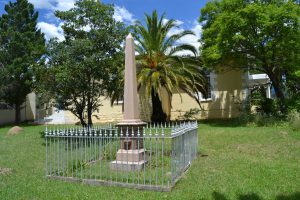
Voortrekker Centenary Monument
Located on the R63 west of Somerset East

Contact Info
- Somerset East