As you walk around the Kitching Fossil Exploration Centre in the Karoo village of Nieu-Bethesda, you will see, among all the grinning skulls of ancient beasts, a battered old hat on display under glass.
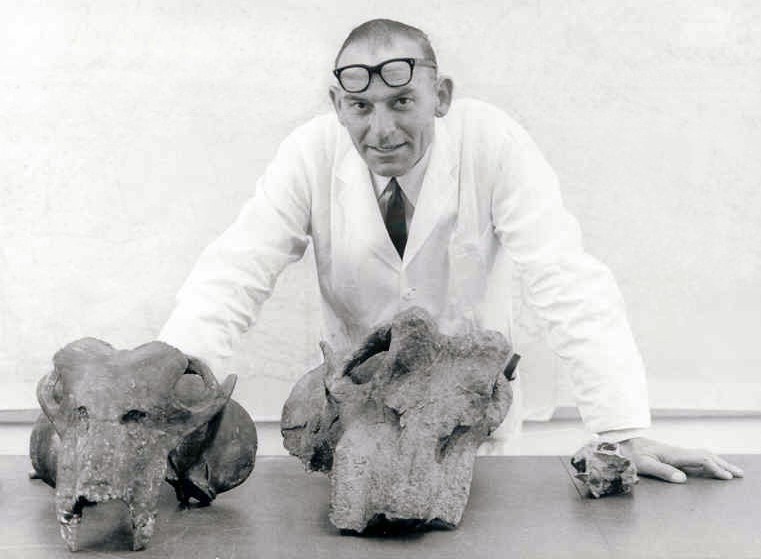
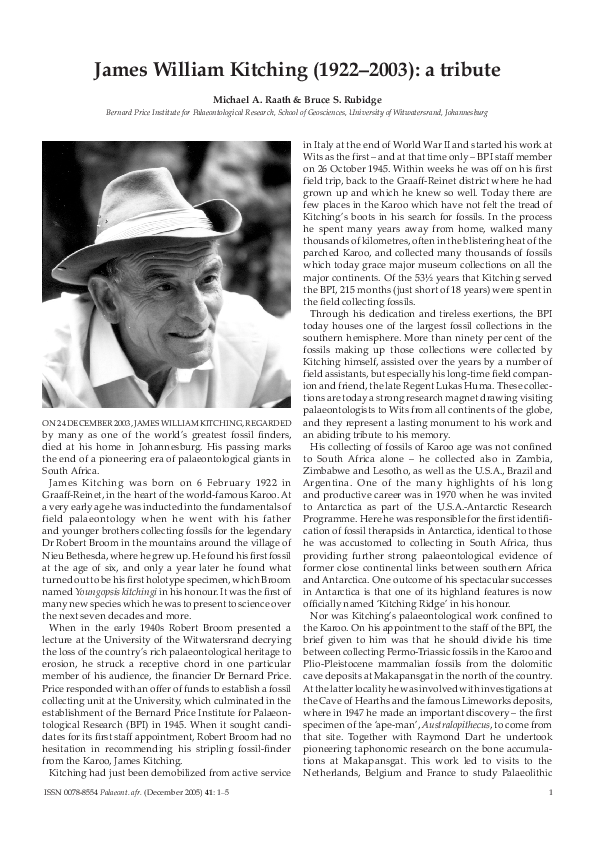
It’s the hat of the man who helped confirm the theory of continental drift, and who had an ancient lizard-like species named after him when he was only a lad of 7. He was also known as the ‘grand old man of Karoo palaeontology’ – James Kitching, South Africa’s king of old-bone detectives. He grew up in what some call South Africa’s ‘palaeontological paradise’: the mountains and valleys around Nieu Bethesda, in Eastern Cape province. His dad was Croonie Kitching, a local road builder, who was always collecting bones and stones during his working day. Croonie roped young James in to hunt for fossils, and the 7-year-old soon found his first new species, which was then named Youngopsis kitchingi.
After World War II, James went to work as a fossil hunter for the brand-new Bernard Price Institute for Palaeontological Research at the University of the Witwatersrand in Johannesburg. But his real ‘office’ was 800km south, in the vastness of the Karoo. For decades, working on more than 900 sites, Kitching and his devoted field staff combed the Karoo for fossils. He was also famous for growing fresh vegetables and sourcing the best meat cuts wherever he camped. Visitors would describe a Kitching camp as being a beautiful little patch of green in the middle of the brown Karoo. Kitching developed a deep insight into life in the Permian Period, populated by mammal-like reptiles called therapsids. This was a crucial time, more than 251-million years ago, when reptiles began evolving into mammals. And Kitching was on their case – he was almost superhuman in his ability to spot a fossil lurking deep in a rock formation.
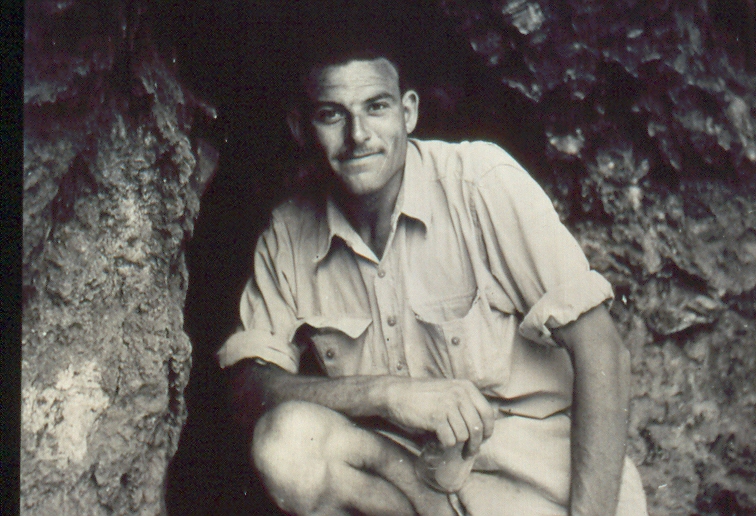
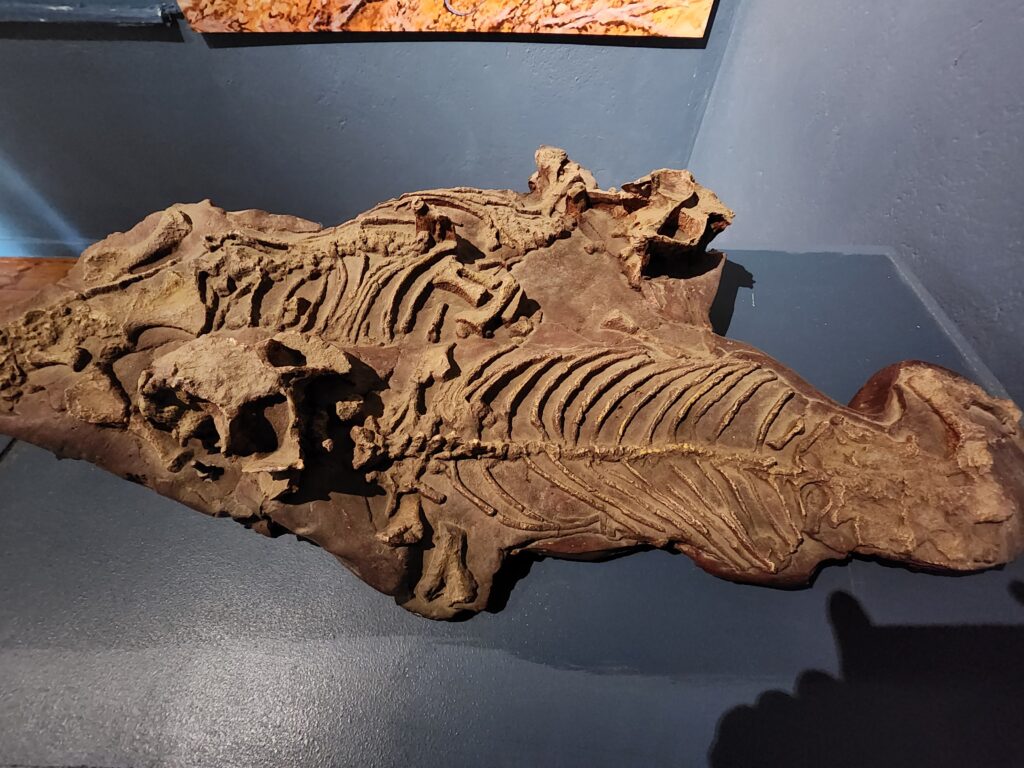
Not only did he find thousands of important pre-dinosaur fossils from more than 250-million years ago, but Kitching also established compelling evidence for the theory of continental drift. Nowadays, it’s not a controversial idea that Africa was once part of a much larger land mass (which we call Gondwana) that included Antarctica, India, South America and Australia – but in the 1970s, established science was still arguing about the ‘shifting continents’ theory fiercely. At one stage, there was a lot of debate about whether Gondwana had ever existed, so Kitching was recruited to fly from Africa to Antarctica and look for fossils common to both continents. And it was there, on a rocky shelf with snow falling all around, that he and US colleague James Collinson found the fossilised skeleton of Thrinaxodon, just like the one Kitching had found near Bethulie in South Africa’s southern Free State.
Interviewed by the prestigious New Scientist magazine in 1996, Kitching had this to say about the length and breadth of his travels: ‘My colleagues here tell me I’ve walked the equivalent of three times round the globe, but I don’t believe them. I’d say it was only about once round the world…’
Read more about James Kitching on Wikipedia