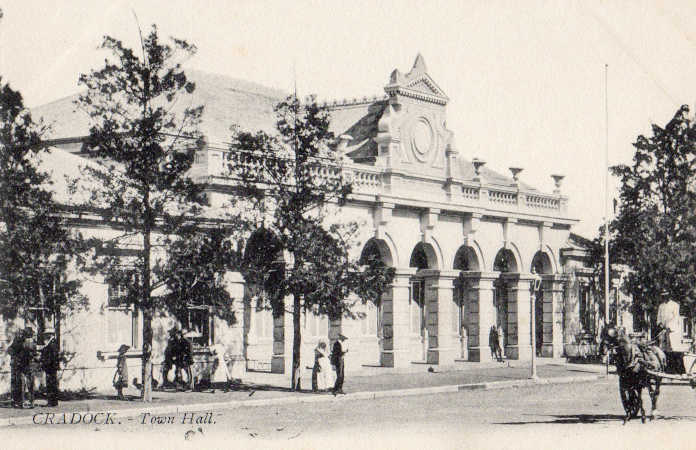
Cradock Historic Buildings
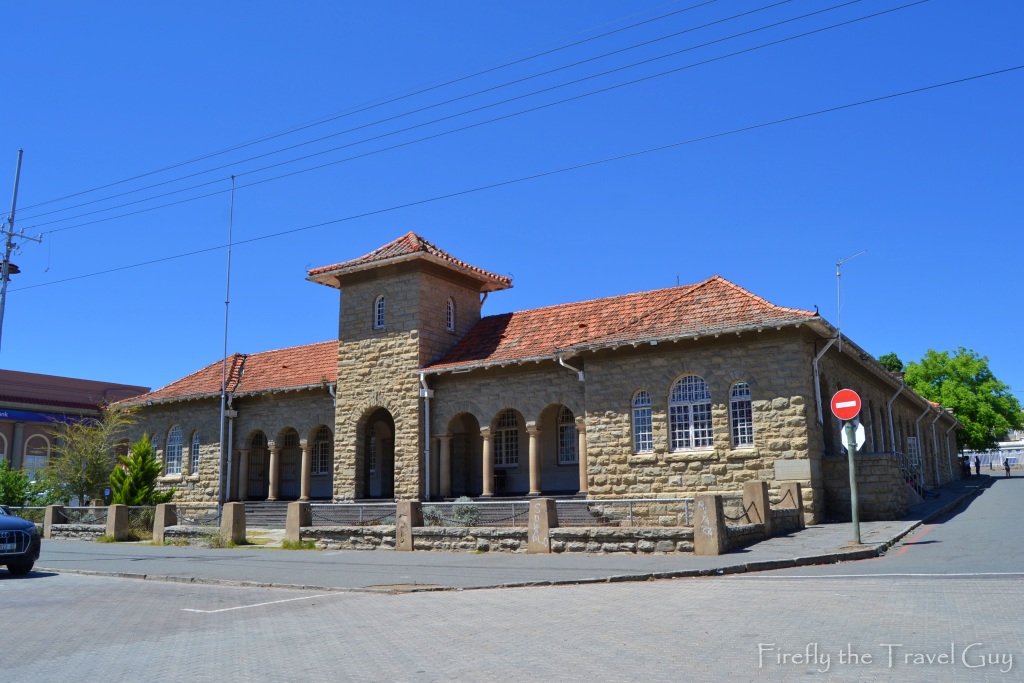
Description
THIS PAGE IS STILL A WORK IN PROGRESS
Cradock has a number of historic buildings, churches and monuments in addition to the main listings from the town on this website.
These main listings can be found on the following links:
Cradock Mother Church
St Peter’s Anglican Church and War Memorial
Cradock’s Tuishuise and Victoria Manor
The Cradock Four Monument
Great Fish River Museum
Our Heritage Arts Hub – Old Congregational Church
Olive Schreiner Sarcophagus
Olive Schreiner House Museum
Trim Park Monuments
Boer War Edgings on Oukop Hill
Other interesting places include:
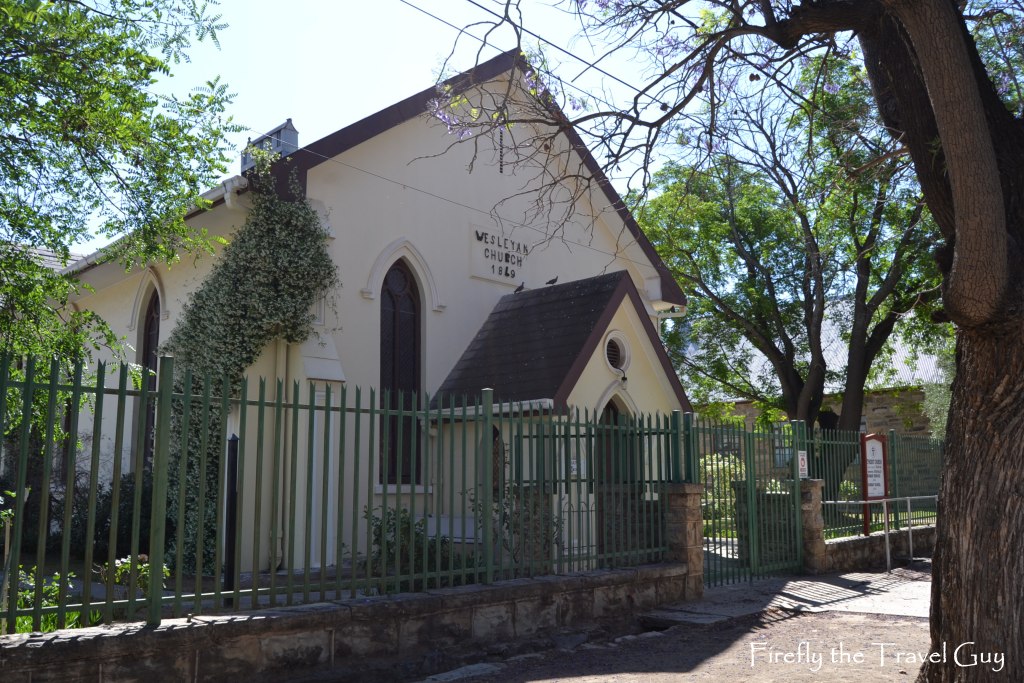
Wesleyan Methodist Church (1842)
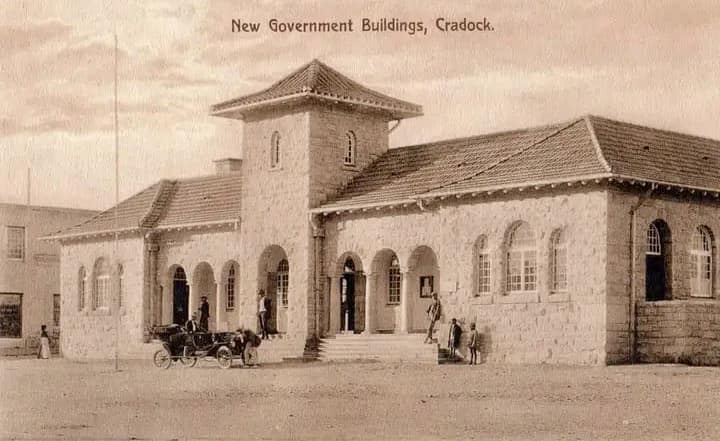
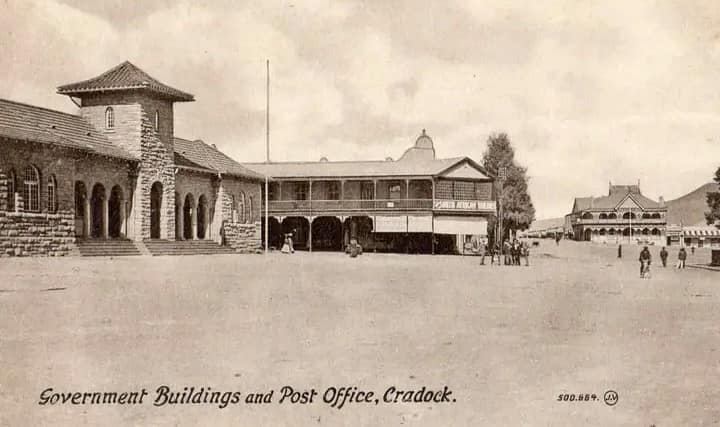
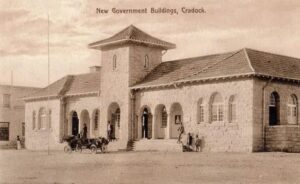
Magistrates Court
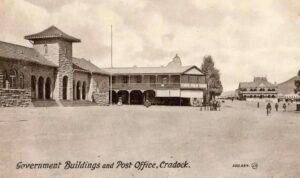
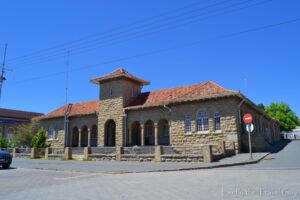
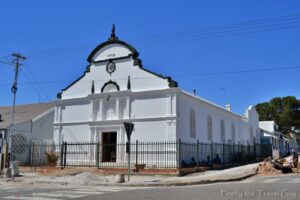
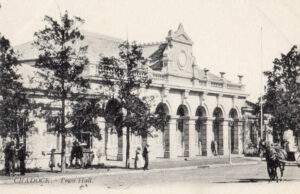
The Cradock Club
The Cradock Club was established in 1881, the same year the railway line reached Cradock from Port Elizabeth.
The Anglo-Boer War (now termed the South African War) put a temporary end to initial Boer-Brit cordialities. Cradock was firmly in British control and one of the occupying regiments, the Sherwood Foresters, took over the club. Many battles and skirmishes occurred all over the region, especially in the latter part of the war when Boer flying commando units harassed the British, who were initially less mobile. But there was never a fight in Cradock itself. In fact, there seems to have been a fair amount of “down time” because British soldiers dotted at various lookout posts in the impressive array of mountains around Cradock played heliograph chess against each other. The legend goes that occasionally a Boer farmer would secretly join in the game. You’ll notice on a walk-through that the Cradock Club has a very English air to it. Stained glass doors, dark wood, ancient hat and coat hooks, portraits of English kings, hunting scenes, a reading room, a billiard room and a distant lounge area where the bridge ladies (and some guys) now gather every week to play.
The club’s first location was elsewhere (a building no longer standing), but in 1955 it was moved to its present spot, a large 1850 period double-storey manse in Bree Street. A portion of the original bar was installed in the new premises. If you look carefully at the marble counter, you can see a small cross showing true north. That was scratched in by one of the Sherwood Foresters, who was missing England so far away.
When the Sherwood Foresters finally went home in 1901, they left behind the Burmese teak table, which now has pride of place in the club’s reading room. They also left behind a fantastical snuff box.
Built out of a hollowed-out Highland sheep horn and decorated with silver and amethyst crystals, the Sherwood Forester snuff box used to be passed along from officer to officer in the club. And although it’s hard to gauge its worth in coin, you get the notion that the snuff box in the Cradock Club has immense nostalgic value for members past and present.
Outside is a venerable Ilex (Holly) Oak, densely green and thick-stemmed. It was first planted in 1850 along with a nearby twin Ilex oak that was mysteriously burnt down in a fire in 2006. The trees are said to be the oldest in the world and the remaining one is a national monument. They were not used for ship building like other oaks because the wood does not split and it’s difficult to work.
And the club rules are quite clear:
Everyone entering the bar must shake hands with everyone else at the bar;
No flip-flops and T-shirts with advertising messages allowed;
No swearing allowed;
No ungentlemanly behaviour is tolerated anywhere in the club;
You’re not permitted to bring the club into disrepute;
Anyone caught talking about politics, religion or business has to buy a round of drinks.
The Horse Trough
Cradock being a market town, farmers and other travellers would need to refresh their horses after the journey to town. This drinking trough was erected for the purpose in 1902 to commemorate the coronation of King Edward VII and is a fine example of what was once a common sight in such towns.